

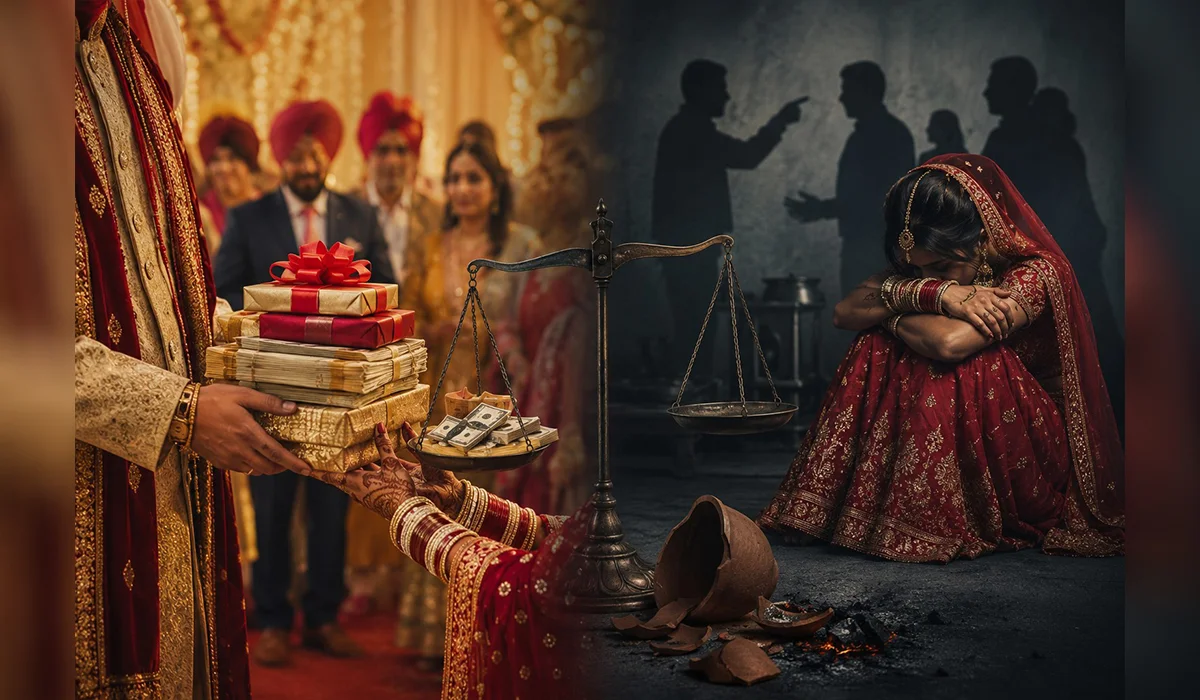

In the social fabric of northern India, certain customs do not fade with time. They adapt, take shelter under polite names, and continue doing damage. Dowry is one such custom. Despite legislation, court rulings, and decades of public campaigns against it, the practice persists in both Punjab and Haryana with a stubbornness that mocks the statute books.
What has changed recently is the tone in Haryana. The state is no longer treating dowry as a matter for occasional police action. It has begun treating it as a structural failure, one that requires coordinated effort across multiple government departments.
Haryana Moves Beyond Paper Commitments

A high-level review meeting chaired by Haryana’s Chief Secretary, Anurag Rastogi, has signalled that the state’s dowry prohibition machinery will be rebuilt from the ground up. The meeting brought together the Home Department, the Education Department, the Women and Child Development Department, and the State Legal Services Authority under a single administrative framework.
This coordination is significant. It signals that the government no longer views dowry purely as a law-and-order problem. It is being correctly treated as an educational and psychological problem as well.
Sub-Divisional Magistrates in Haryana have held the designation of Dowry Prohibition Officers since 2015, but that designation was largely ceremonial. Under the revised approach, these officers will be required to step outside their offices. Their contact details will be made publicly available so that affected families can reach them directly, without navigating bureaucratic channels or fearing social backlash.
Additionally, the Haryana Institute of Public Administration is conducting specialised training to equip officers with the sensitivity and procedural knowledge needed to handle dowry cases promptly, without inadvertently discouraging complainants.
What the Numbers Actually Show
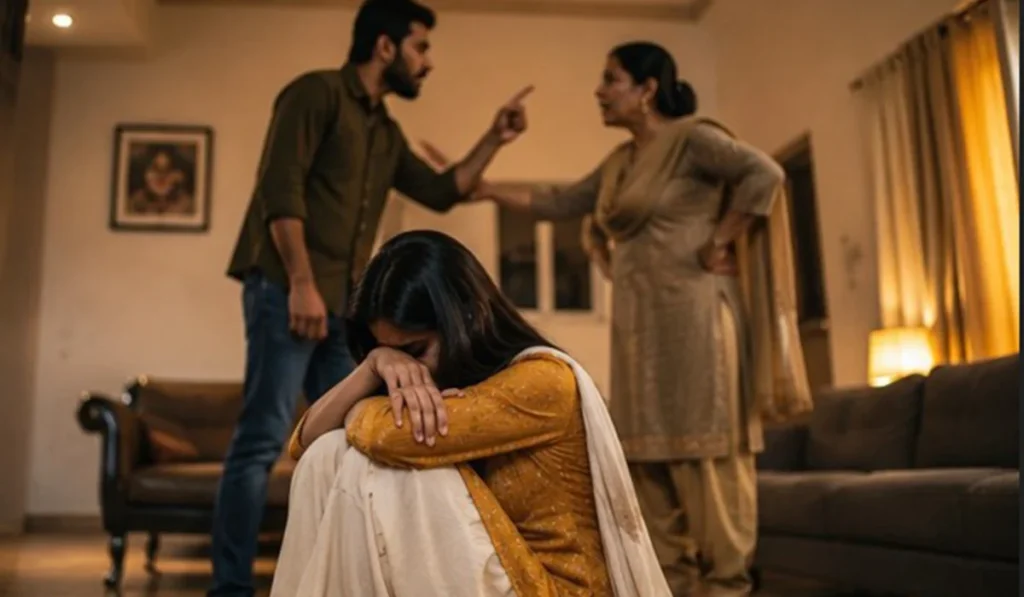
The National Crime Records Bureau report, Crime in India 2022, published in 2023, recorded more than 6,500 dowry deaths across India in a single year. Haryana alone accounts for more than 200 such deaths annually. These are only the registered cases. Thousands more are buried under family pressure, community mediation, or the quiet settlements that follow when a young woman’s death is classified as a domestic accident.
The real figure is almost certainly a multiple of what appears in official tallies.
Punjab Is Not a Different Country
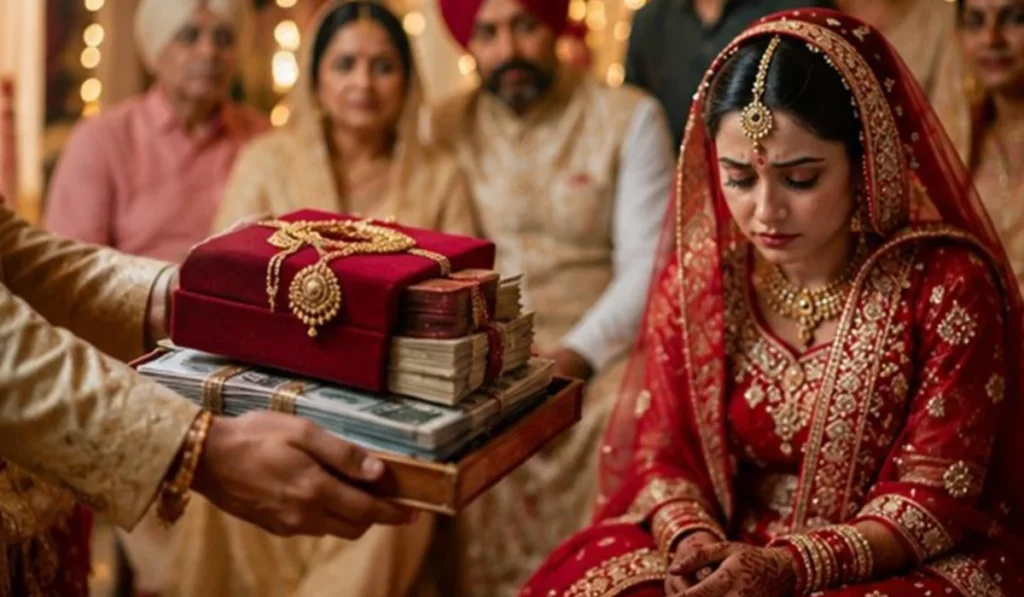
Punjab and Haryana share geography, agricultural history, and, regrettably, social attitudes. In Punjab, dowry is practiced openly, dressed up as tradition under the banner of family honour and lavish celebration. The culture of large, expensive weddings in the state provides steady cover for what is, in practical terms, a commercial transaction.
Punjab does have legal provisions, specifically Section 498-A of the Indian Penal Code covering cruelty, and Section 304-B covering dowry death. Prosecutions do occur. The problem is that action is almost always reactive. A woman is harassed, hospitalised, or killed, and then the Law stirs itself into motion. There is no comparable framework for prevention.
Punjab also has considerable underused resources. The state’s network of anganwadi workers reaches into villages and urban neighbourhoods across the state. Panchayats carry institutional authority at the local level. If both were systematically engaged in identifying families under pressure, or in registering complaints before a situation turns violent, the landscape would look different. That engagement has not happened in any organised way.
The Law Cannot Do This Alone
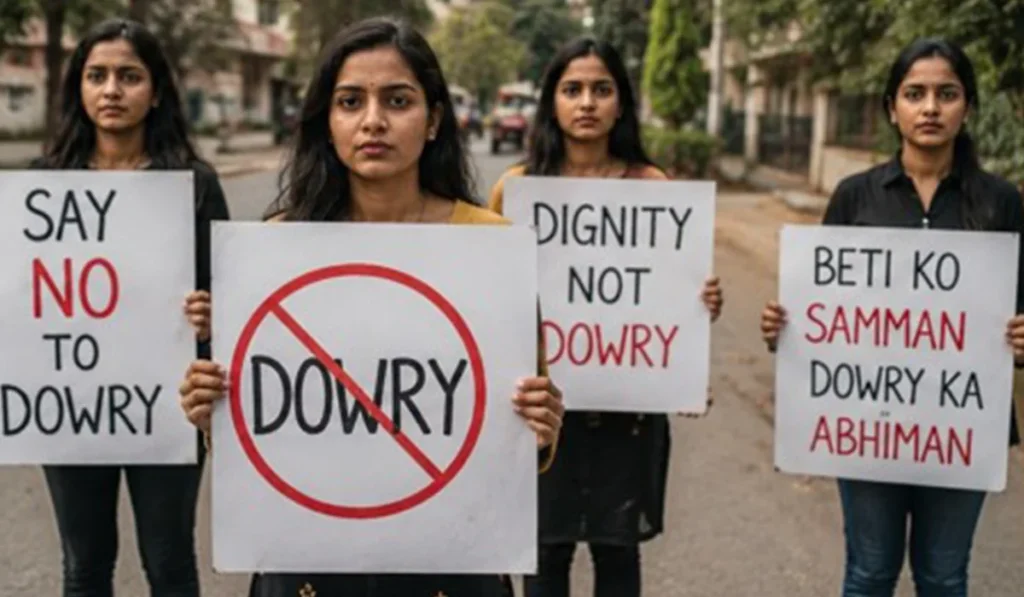
No legislation has ever changed a social habit by itself. Dowry survives partly because it disguises itself as generosity. Gifts given at a wedding are not, on their surface, distinguishable from demanded payments. The burden falls on the bride’s family to prove that what they gave was extracted under pressure, not offered freely.
More fundamentally, dowry persists because families that practice it face no real social consequences. They are not shunned. They are not refused alliance. In many communities, the man whose family received the most is regarded as the most desirable match.
Until social institutions, religious bodies, neighbourhood associations, and community leaders publicly refuse to accept or celebrate families that demand dowry, the legal apparatus will continue processing cases after damage is already done. In Punjab, where religious institutions carry considerable moral weight, the Sikh religious establishment in particular has a responsibility that it has not fully exercised.
The Question Punjab Must Answer
Haryana’s current initiative may not solve the problem entirely. Structural reform of this kind takes years to yield measurable results, and there is always a gap between the policy announced and the policy implemented. However, the direction is sound, and the administrative intent appears genuine.
Punjab has no equivalent initiative on the table. The question for the state government is whether it will develop one, and whether it will move before the next round of NCRB figures forces the conversation.
A healthy society does not send its daughters into marriage on terms negotiated at a price. That is not tradition. It is a transaction. The distinction matters, and it is long past time for both states to govern accordingly.
Leave a Comment