
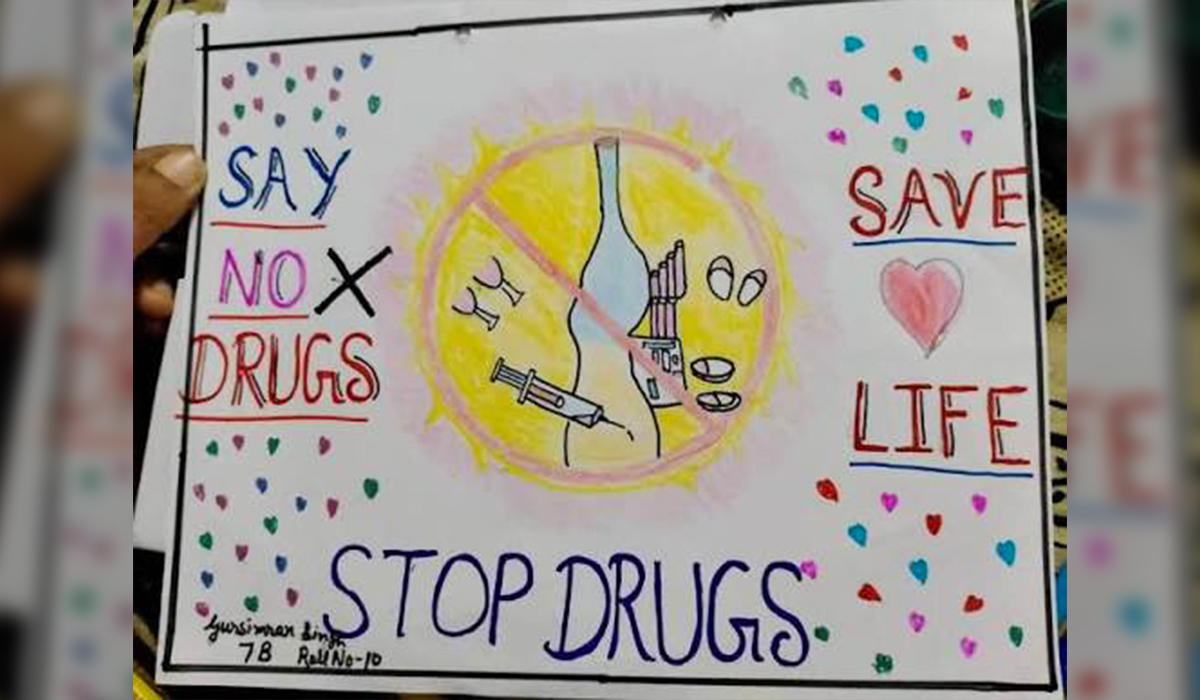

Punjab’s identity is not just as the land of agriculture, five rivers, and Gurus and Pirs, but also because of hard work, courage, sports, military service, business, and the Punjabi community living all over the world. Despite this, over the past one and a half to two decades, Punjab has often been discussed in connection with the drug problem. The drug problem exists in Punjab and has serious social, economic, and health-related impacts.
However, to understand this problem, it is necessary to avoid, on one hand, denying it completely, and on the other hand, portraying the entire Punjab or the entire Punjabi youth as ‘drug addicts’. The national survey released in 2019 by the National Drug Dependence Treatment Centre (NDDTC) of AIIMS described the use of opioids and related problems in Punjab as more severe compared to many other parts of the country.
According to the report, the estimated number of people with opioid dependence in Punjab was around 3.3 lakh, while the number of those needing help due to harmful or dependent use was reported to be even higher. Therefore, the real question is not whether “there are drugs in Punjab or not”, but rather what the actual picture of the problem is, what its causes are, and what a scientific and sustainable solution could be?
The complete picture of Punjab’s youth is not defined by drugs
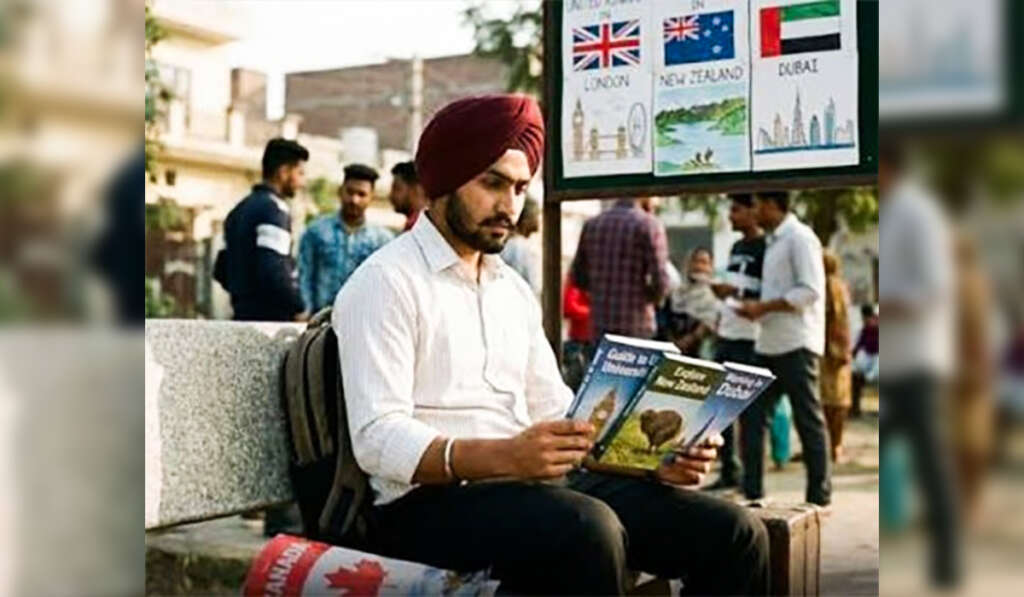
While talking about the youth of Punjab, it is important to remember that a problem existing in one part of any society cannot be made the identity of the entire society. Punjabi youth have achieved great milestones with their hard work in the country and abroad. In Canada, America, Britain, Australia, New Zealand, and many European countries, the Punjabi community is active in business, agriculture, transport, construction, education, healthcare, technology, and other fields. A large number of Punjabi youth settled abroad have built their lives through hard work and have also contributed to their families and the economy of Punjab.

Similarly, Punjabis have had a long and proud tradition in the army and security forces. However, using this fact to deny the drug problem would also not be correct. The truth is that the lives of a large section of Punjabi youth are tied to hard work, education, employment, sports, foreign migration, and various professions, while another section is battling the severe problem of drugs. In discussions about drugs, the biggest mistake is often the misinterpretation of statistics. “Drug users”, “drug addicts”, “harmful drug users”, and “people in need of treatment” are not all in the same category.
According to the 2019 national report by AIIMS-NDDTC, the current use of any opioid among the population aged 10 to 75 years in India was estimated at about 2.06 percent. The report also highlighted that the opioid problem in Punjab, Haryana, Delhi, and the Northeastern states was more severe than the national average. This does not mean that every street, every village, or every youth in Punjab is caught in the grip of drugs. But it certainly means that taking the drug problem in Punjab lightly would also contradict the facts. Therefore, “Punjab is completely drug-addicted” and “there is no major drug problem in Punjab” are both extreme conclusions. The fact-based path lies somewhere between these two.
Drugs are not just a law and order issue, but also a health issue

Looking at the drug problem solely through the lens of police and prisons cannot completely solve it. Drug addiction is a health and social issue, behind which there can be many factors like mental stress, unemployment, family problems, social pressure, easy availability, and drug smuggling networks. In Punjab, medication-based treatment and Opioid Substitution Therapy (OST) are also used for de-addiction. The National AIDS Control Organization (NACO) has issued clinical guidelines and standard operating procedures for Buprenorphine-based Opioid Substitution Therapy.
Therefore, simply calling Buprenorphine or similar medicines “replacing one drug with another” is not scientifically correct. Under medical supervision, the goal of such therapy is to manage opioid dependence, reduce the use of illegal drugs, and guide the patient toward treatment and rehabilitation. There are also established guidelines for this within the government health system.
Along with this, just giving medicine is not enough. Psychological support, counseling, family support, and social rehabilitation are also crucial parts of the treatment. For example, in the Drug De-addiction Centre at PGIMER Chandigarh, clinical psychology, psychiatric social work, and community services are provided alongside Opioid Substitution Therapy.
The international border with Pakistan and the question of drug smuggling
Punjab’s geographical location is also significant in the discussion of drug smuggling. Due to the international border with Pakistan, cross-border drug smuggling has remained a serious security challenge. Cases of illegal substances being sent via drones have also emerged. However, considering the border as the sole reason for the entire drug problem would be an incomplete analysis.
For the supply of any illegal drug, along with cross-border sources, an investigation into aspects like internal distribution networks, local smugglers, financial transactions, and corruption is also mandatory. Therefore, action should not be limited only to the person buying or using the drugs. Reaching the upper levels of the supply chain, investigating financial networks, and probing the properties and funding sources of large smuggling syndicates can be part of a more effective strategy.
It should be noted that drugs have also remained a major political issue in Punjab. During various elections, political parties have made promises to eradicate the drug problem. During the 2017 Punjab Assembly elections, the promise to wipe out drugs in four weeks became the center of a major political debate. During the 2022 elections as well, anti-drug action was an important electoral issue. But limiting a serious problem like drugs only to election slogans will not help in solving it. Regardless of which party forms the government, it must make public the metrics to measure outcomes, such as transparent data, treatment quality, action against smuggling, and the success of rehabilitation.
The long-term solution to the drug problem cannot just be police action. It is also essential to increase opportunities for employment, skill development, sports, and education for the youth. Maintaining playgrounds and gyms in villages, providing sports coaching, skill development centers, local industries, and employment opportunities for the youth can connect them with positive activities. Along with this, easy access to family and mental health services will also have to be expanded. Treating youth who have quit drugs with social respect is equally important. If a person wants to return to a normal life after treatment, they should get opportunities for jobs, education, and social acceptance. Otherwise, they might fall back into the same vicious cycle.
What can be the right path?
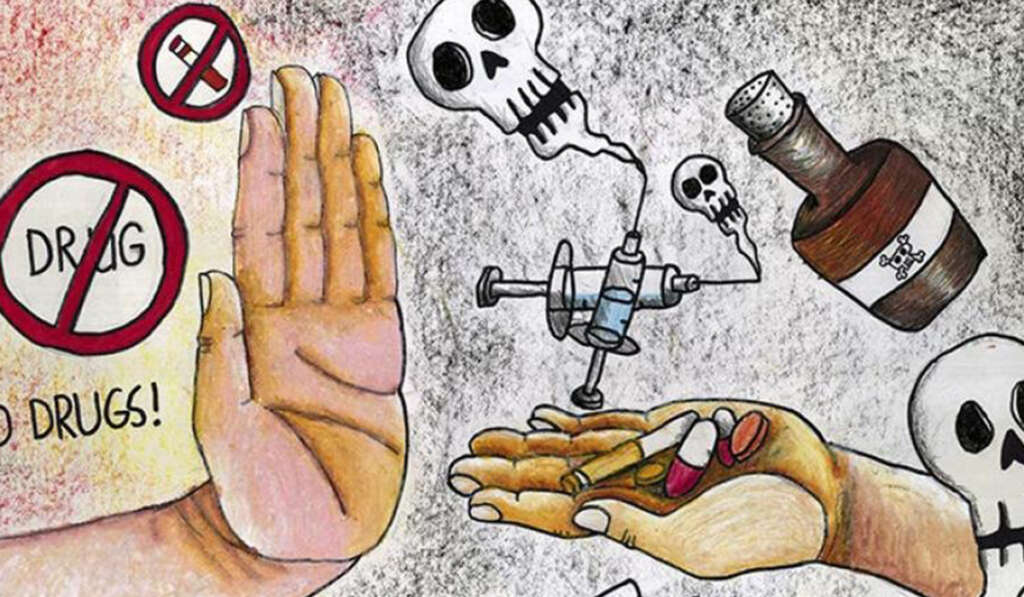
A multi-pronged policy is needed to tackle the drug problem in Punjab. It should have four main aspects; which include focused investigation on big smugglers, financial networks, and organized crime. Psychiatry, medication-based treatment, counseling, and long-term rehabilitation for drug addicts. Expansion of education, employment, sports, skill development, and industrial opportunities. And emphasizing the health and rehabilitation of a drug patient instead of merely considering them a criminal.
The drug problem in Punjab is a reality, and denying it would not be justice to Punjab’s own youth. But at the same time, calling the whole of Punjab ‘drug-addicted’ neither does justice to the facts nor helps in solving the problem. The AIIMS-NDDTC national report clearly points towards the severe problem of opioids in Punjab. Therefore, the right path is not to hide the problem, but rather to understand it with accurate data and in a scientific manner. The complete picture of Punjab is not made up of drugs. This is the same land from where the youth are making their mark in various fields across the world, from agriculture to the army, sports, business, and education.
Therefore, there is no need for Punjab’s youth to turn a blind eye to the problem in the name of false pride, nor is there a need to exaggerate the drug problem and stigmatize the entire society. What is needed is for governments to move beyond political statements and take action on the supply chain, strengthen treatment and rehabilitation, increase employment and sports opportunities for the youth, and make transparent data public at every level. Only then can Punjab be pulled out of the drug problem, while simultaneously presenting its true social picture to the world in a balanced manner.



Leave a Comment