

The Forgotten PEPSU Precedent of post-partition Punjab.
I. THE OCCASION
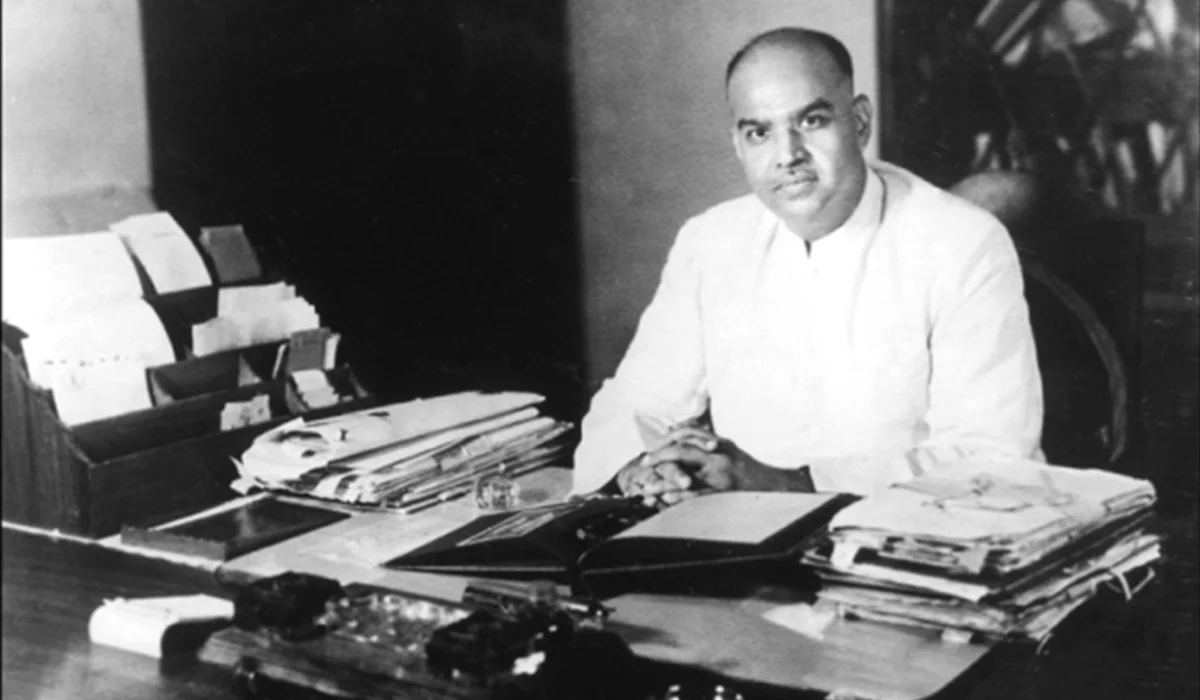
Today, 6 July, marks the 125th birth anniversary of Dr Shyama Prasad Mukherjee, founder of the Bharatiya Jana Sangh and political progenitor of the Bharatiya Janata Party. Tributes to Dr Mukherjee tend to dwell on the well-worn ground of Jammu and Kashmir and Article 370. Less remembered is a far more local, and far more consequential, episode: the Jana Sangh’s role, within months of its own founding, in installing independent India’s first non-Congress government — in a state created in 1948 by integrating the erstwhile princely states of East Punjab, the Patiala and East Punjab States Union (PEPSU).
The account that follows was recounted earlier today by Sardar Tarlochan Singh — former Member, Rajya Sabha, and former Chairman, National Commission for Minorities — a witness to, and crucial participant in, the events of 1952.
II. THE 1952 PEPSU VERDICT
The Patiala and East Punjab States Union went to the polls on 27 March 1952, in India’s first general election under universal adult franchise. Of the fifty constituencies at stake — ten of them two-member seats, which made for a sixty-member House overall — the Indian National Congress emerged as the single largest party, but fell short of a majority.
Into this vacuum stepped Sardar Gian Singh Rarewala, an Akali-aligned independent who had earlier served as PEPSU’s Premier and Chief Minister in a nominated capacity. Rarewala stitched together a United Democratic Front — the Akali Dal, the Communist Party of India, the Lal Communist Party (Hind Union), the Kisan Mazdoor Praja Party, and a clutch of independents — and was sworn in as Chief Minister on 22 April 1952 by the Rajpramukh, at Patiala, then PEPSU’s capital. He thereby became independent India’s first non-Congress Chief Minister of any state — a full quarter-century before the country as a whole would elect a non-Congress government at the Centre.
III. THE ARITHMETIC NOBODY REMEMBERS
What is missing from most accounts of this episode is how thin Rarewala’s margin actually was, and who supplied the last few votes. According to Sardar Tarlochan Singh’s recollection, the swing votes came from the Bharatiya Jana Sangh’s two PEPSU legislators — Rao Kahan Singh, elected from Mohindergarh, and Onkar Singh, elected from Kanina — both from the Hindi-speaking Mohindergarh district in the nascent state’s southern reaches.
Securing that support required a personal approach to the Jana Sangh’s national leadership, then barely six months old as a party. Sardar Tarlochan Singh — at the time a young man who had just cleared his FA examination and was a college student pursuing his BA — was specially dispatched from Patiala to Delhi on this mission, his first port of call being 2 Curzon Road, the matrimonial home of Bibi Nirlep Kaur, Gian Singh Rarewala’s daughter, and residence of her father-in-law, Sardar Bahadur Ranjit Singh, of the family that owned Delhi’s Imperial Hotel. Ranjit Singh, by then a Member of Parliament and earlier a member of the Constituent Assembly of India representing one of the princely states, sent for Sardar Suchet Singh, a fellow Member of Parliament who had likewise sat in the Constituent Assembly representing a princely state and carried roots in the erstwhile Kapurthala state. The three of them together then called on Dr Shyama Prasad Mukherjee at his official bungalow nearby, where he was residing as a Member of Parliament, having recently resigned from Jawaharlal Nehru’s cabinet and launched the Bharatiya Jana Sangh. Mukherjee, on being apprised of the situation, wrote out a letter of support to the two Jana Sangh MLAs without hesitation.
The price of that support, as these things go, was duly extracted: Rao Kahan Singh went on to become the first Speaker of the PEPSU Vidhan Sabha, and Onkar Singh was inducted as a Minister of State. Defections and Central pressure eventually caught up with Rarewala’s government — President’s Rule was imposed on 5 March 1953, less than a year later — but the precedent had been set, and set with Jana Sangh’s active and timely support.
IV. WHY THIS MATTERS NOW
It has become something of a settled narrative in contemporary Punjab that the Bharatiya Janata Party is politically avoidable — that no Akali faction, nor any other regional formation, can be seen engaging with it without paying an unacceptable cost among the Panthic electorate. The PEPSU precedent of 1952 suggests this framing is, at minimum, historically incomplete.
This was not a case of the BJP’s ideological ancestor forcing its way into Punjab’s politics from outside. It was Punjab’s own regional leadership — Akali-aligned, Sikh-majority, avowedly non-Congress — that went looking for Jana Sangh’s support, at the very first opportunity democracy offered, in order to keep the Congress out of power. The Jana Sangh, for its part, did not give that support for nothing: it extracted a Speakership and a ministerial berth, exactly the kind of transactional bargain that regional parties and national formations strike with each other everywhere, at every level, in every era.
V. A FORWARD PROJECTION
As Punjab heads toward Vidhan Sabha elections due in February 2027, the temptation is to assume that today’s arrangement of parties — with the BJP contesting largely on its own after the collapse of its long alliance with the Shiromani Akali Dal — is a fixed and durable feature of the landscape. History argues otherwise. Coalition arithmetic in a fragmented, four- or five-cornered contest has a way of producing negotiations that look unthinkable the week before they happen.
Should the 2027 election produce anything resembling the fractured verdict PEPSU delivered in 1952 — no single party with a clear majority, several formations each short of the number needed to govern alone — the pressure to explore new arrangements, including ones involving the BJP and one or more factions of the Akali Dal, is likely to reassert itself. It would not be the first time. It was not even close to the last time Congress found itself outmanoeuvred by exactly this kind of arithmetic in Punjab. On the 125th anniversary of the man who wrote that very first letter of support, the lesson bears repeating: in Punjab’s politics, being “politically avoidable” has historically been a temporary condition, not a permanent one.

Leave a Comment