
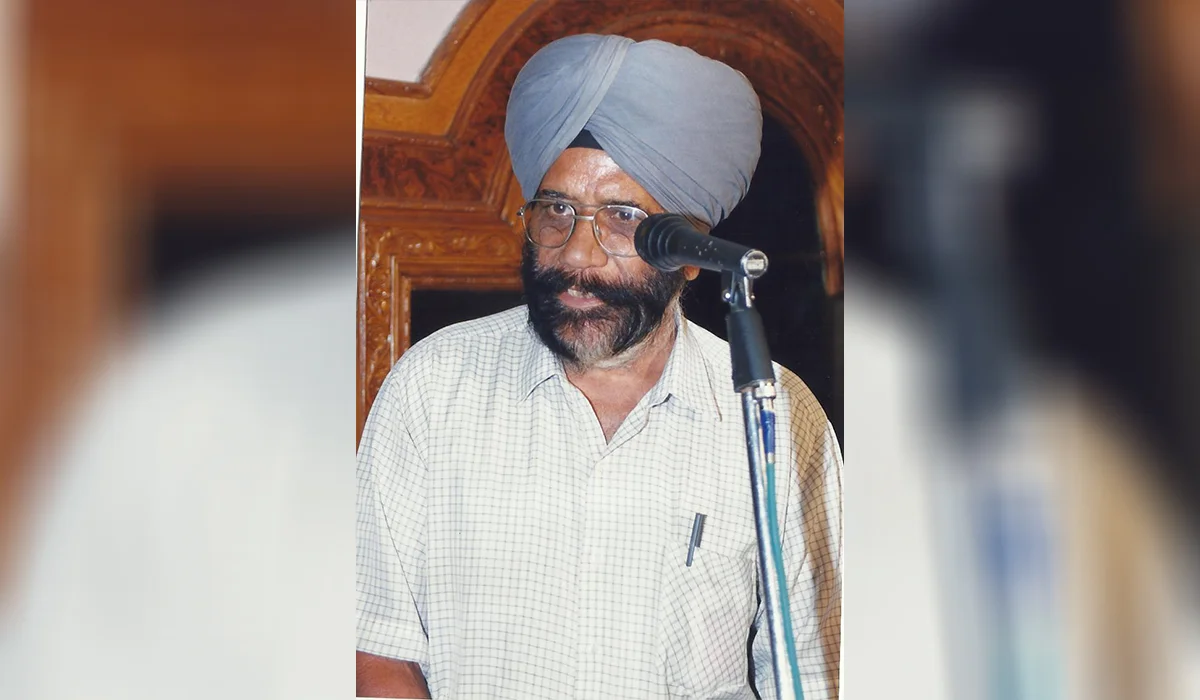

The story of Inderjit Hasanpuri is much larger than that of a lyricist. He refused to remain confined to writing songs alone. During the mid-nineteen-sixties, when Punjabi cinema was still searching for its own identity, Hasanpuri decided to enter film production. It was a bold move because he lacked financial security and influential connections. What he did possess was confidence in his writing and complete faith in the friendships he had built over the years.
Around 1966 and 1967, he travelled to Mumbai carrying little more than dreams. Money was scarce, but determination was abundant. He stayed with actors Dharmendra and Ajit Deol, relying on their warmth and encouragement as he tried to establish himself in the demanding world of films. Those early days were full of uncertainty. Every meeting, every script discussion, and every recording session demanded patience. Hasanpuri understood that success in cinema could never be achieved overnight. Instead of giving up, he kept moving forward with remarkable persistence.
His decision eventually resulted in the production of Teri Meri Ik Jindri, a film that would become an important milestone in Punjabi cinema. The project proved that talented writers could also become successful producers if they were willing to accept risks. Hasanpuri transformed his literary vision into moving images, proving that storytelling could flourish equally on paper and on the silver screen.
A Film That Changed Punjabi Cinema
Teri Meri Ik Jindri occupies a special place in the history of Punjabi films. The movie did much more than entertain audiences. It introduced several artists who later became celebrated names across Punjab and beyond. Actor Varinder made his debut in this film, beginning a career that would leave a deep mark on Punjabi cinema. The film also provided opportunities to talented performers such as Daljit Kaur, Mehar Mittal, Vijay Tandon and the legendary ghazal singer Jagjit Singh.
Its music remains equally memorable. Narendra Biba’s emotional rendition of Teriyan Mohabbatan Ne Maar Suttiya, Dass Ki Karaan, touched listeners with its heartfelt lyrics and expressive singing. Another beautiful title song was performed jointly by Narendra Biba and Sheetal Singh. These songs captured love, longing, and emotional struggle in language that ordinary Punjabis instantly understood.
The film also became significant because Dharmendra appeared in a Punjabi film role while it was being made. This strengthened the connection between Punjabi cinema and mainstream Indian audiences. Hasanpuri had an eye for talent. Instead of depending only on established stars, he trusted fresh faces and genuine performers. That decision helped shape the future of Punjabi filmmaking.
A Remarkable Film Career
Following the success of Teri Meri Ik Jindri, Hasanpuri continued producing and writing for cinema. His productions included Daaj, Sukhi Parivar, and the Hindi film Dahej. Each project reflected social concerns rather than mere entertainment. Family relationships, marriage traditions, and everyday struggles formed the heart of his storytelling.
His contribution as a lyricist was even greater. He wrote songs for numerous Punjabi films including Man Jeete Jagjeet, Dukh Bhanjan Tera Naam, Papi Tare Anek, Dharamjeet, Fauji Chacha, Yamla Jatt, Jai Mata Di, Gori Dian Jhanjran, Maa Da Laadla, Choran Nu Mor, Long Da Lishkara, Motor Mittran Di and Nahin Reesan Punjab Dian.
What made Hasanpuri exceptional was his ability to connect poetry with cinema naturally. His lyrics never sounded forced. They carried the rhythm of everyday Punjabi speech while preserving literary elegance. Whether the subject was romance, faith, humour, or rural life, his words felt sincere and emotionally truthful.
Returning Home After 1984
The tragic events of 1984 changed the lives of countless Punjabis, including Hasanpuri. After the riots, he gradually distanced himself from Mumbai and returned to his native village. The city that had once represented ambition no longer felt like home. Rather than chasing commercial success, he chose a quieter life rooted in Punjab’s cultural traditions.
Back in Punjab, Hasanpuri remained creatively active. He produced documentary films for Doordarshan Jalandhar and also worked with Punjab Agricultural University. His documentaries highlighted agriculture, rural development, and Punjabi heritage. These projects reached audiences that commercial films often ignored.
One of his most loved songs celebrated the famous rural sports festival at Kila Raipur. Chal Vekhan Chaliye Ni Balliye Ni Kila Raipur Dian Khedan became closely associated with the event and continues to remind listeners of Punjab’s vibrant sporting culture. Even after stepping away from mainstream cinema, Hasanpuri remained deeply connected with the people whose stories had inspired his writing.

Leave a Comment