



How Clearly Do Canada’s Statistics Show the Change?
Canadian statistics present a clear picture of this shift. In August 2023, approximately 20,900 study permit applications were submitted by Indian students for Canada. By August 2025, this number plummeted to 4,515—a decline of about 78%.
Simultaneously, the rejection rate has surged. In August 2023, around 32% of applications from Indian students were rejected, but by August 2025, that rate had reached 74%. Therefore, the declining trend in Punjab cannot be understood merely as a shift in the mindset of the youth. The tightening policies of destination countries, strict financial conditions, high visa rejection rates, and the rising costs of education and living are major contributing factors.
Impact on IELTS Centers

The decline in migration hasn’t solely affected students and their families; the entire ecosystem built around students going abroad has taken a hit.
Satbir Singh explains that when the number of students applying abroad began to drop, it became financially difficult for IELTS academies to survive. Running an academy requires continuous expenditure on teachers, infrastructure, and operations, but with a dwindling student base, covering these costs became nearly impossible. This ultimately forced him to close his academy. It serves as a stark example of how shifting migration trends directly disrupt local businesses and educational systems.
When Legal Routes Got Harder, Why Did Some Turn to the ‘Dunki’ Route?

Study visas and other legal pathways are not equally accessible to everyone. Some fall short on their IELTS scores, some face visa rejections, and others lack the necessary funds.
From his experience running an IELTS center, Satbir Singh observed that while some students secured visas on their first attempt, others failed despite multiple tries. In such frustration, some individuals attempt to take illegal routes (often referred to as ‘Dunki’ or donkey flights).
There is no single reason for taking the ‘Dunki’ route. A desperate desire to reach foreign soil, influenced by stories from those already there, combined with the hurdles of legal migration and the hope that reaching the destination will somehow change their lives—all these elements are crucial to understanding this psychology.
The Financial Burden on Families

For many families, this journey is not just about fulfilling a dream; it carries an enormous financial burden.
According to the PAU study, 56% of migrant families took out loans to send a family member abroad. The study estimated the total debt accrued by families in Punjab for migration purposes to be around ₹14,342 crore.
As a result, the decision to go abroad becomes a massive financial gamble for many households. People invest with the expectation of earning in dollars and recovering the invested capital within a few years. Satbir Singh noted that some students viewed going abroad purely as a financial investment. However, if jobs, visas, or PR status do not materialize as expected, this investment can quickly turn into a crushing debt for the family.
The Cost of Migration is Not Just Money

While the economic aspect of going abroad is frequently discussed, there is a profound social and familial cost as well. In his conversation with Sadda Punjab, senior journalist Brish Bhan Bujarak emphasized that when a family member moves abroad for a long period, it doesn’t just affect that individual. Issues such as the loneliness of parents, absence from family events, and the lack of care for the elderly come to the forefront. On one hand, the youth gets a chance to start a new life; on the other, living with long-distance separation becomes a harsh new reality for the family left behind. Therefore, defining migration simply as “going abroad” or “earning money” fails to capture the full picture.
What if They Are Deported?
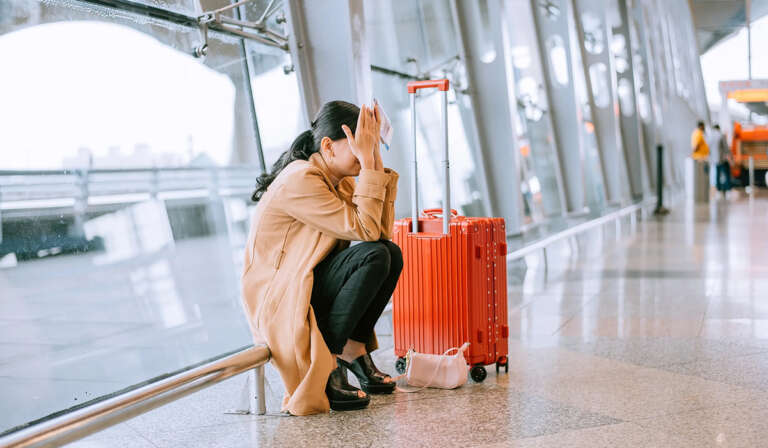
A new, critical question has emerged in the migration discourse: what happens if a person fails to achieve their goals abroad, or is deported due to an illegal stay?
The return doesn’t just end at the airport arrival gate. If a family took on debt to send them, if years were spent abroad, or if the family planned its future around their anticipated earnings, a forced return raises severe financial and psychological crises.
According to Dr. Kuldeep Singh, simply dismissing returning youth with a “they came back” attitude is not a solution. The challenge for Punjab is figuring out how to integrate the education, skills, and experiences of these returning youths with local opportunities.
Does Punjab Need to Stop Migration?

Perhaps the question is not whether Punjabis should go abroad or not. Moving abroad is not inherently a problem; legal migration for education, employment, and better opportunities happens all over the world.
The real question is: Is going abroad a choice for Punjabi youth, or their only option?
If the youth could see prospects for quality education, skill-based employment, opportunities to start their own businesses, and a life of dignity locally, the decision to leave might be made differently. This is why Punjab needs to actively create avenues for skills, education, employment, and entrepreneurship—especially for the youth who are returning.
The story of migration from Punjab continues today, but its shape is transforming. What was once a search for employment evolved into a pursuit of education and better opportunities, eventually becoming deeply tied to social success. Now, increasingly stringent immigration policies are forcing a total rethink of this model.
To truly understand migration in Punjab, asking “Why are the youth going abroad?” is no longer sufficient. We must also ask: “What opportunities do they have to stay here, what price are they paying to leave, and what preparations does Punjab have if they return?” The answers to these questions reveal the real picture behind Punjab’s shifting migration trends.


Leave a Comment