

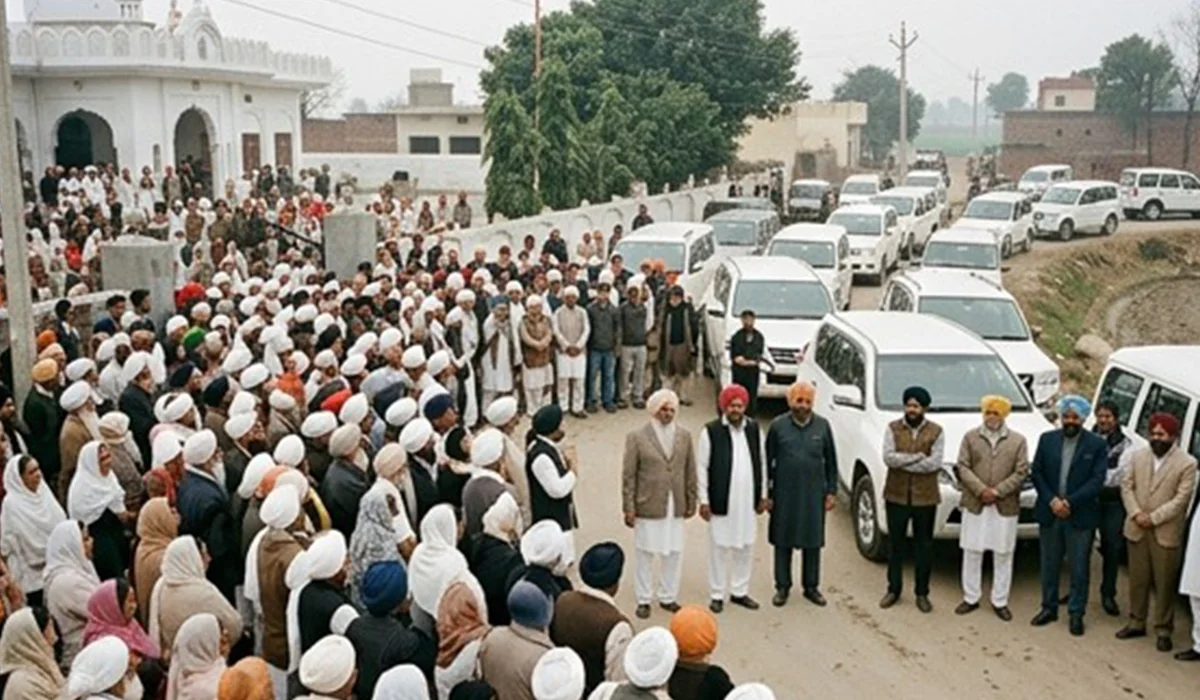

When the sound of mourning rises from the outskirts of a Punjabi village, it does not just break the silence of one home. It pulls the entire extended family and village gathering into an unspoken test.
In today’s changing Punjab, death is no longer only a private separation or the soul’s journey onward. It has become a public stage where relationships, social status and the deep pain of migration are all laid out on the same white sheet. Before the flowers on framed photographs have even dried, people sitting on chairs in the courtyard begin quietly calculating: “Who came?” and “Who stayed away?”
Death brings unbearable silence inside the home. But outside the door, a social gathering begins. Chairs are arranged, neighbours start making tea without being asked, and soon the house turns into a “marketplace of grief” or a “social assembly.”
In Punjabi culture, perhaps society does not allow grief to remain private. Here, grief needs witnesses. The larger the gathering, the greater the person’s perceived status.
The Ledger of Relationships
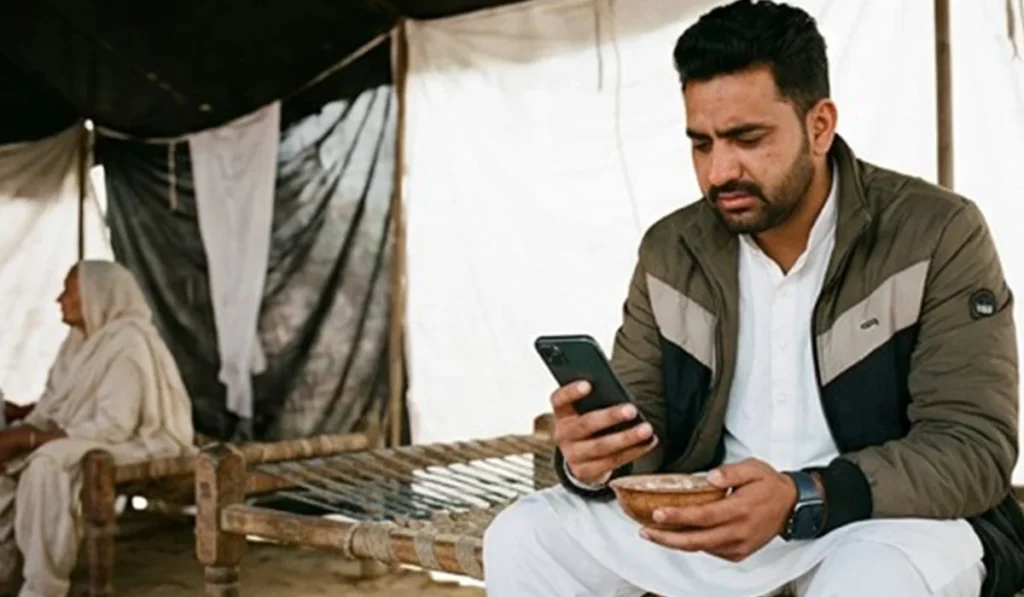
In Punjabi tradition, mourning was never meant to be faced alone. Gurbani, ardaas and collective kirtan have always taught that sharing grief is the only way to bear it. But what has changed is the social scrutiny built around mourning.
Now, attendance has replaced empathy. On the day of the bhog, people arrive almost strategically. Some come early to mark their presence before getting busy. Some arrive during the crowd so their face is seen. Others come only to check which influential people or political leaders have attended.
Punjabi society runs an unwritten ledger of relationships. Your presence today shapes your future social ties. There is a deep fear: “If I do not stand with someone in their grief today, tomorrow no one may stand in my courtyard.”
Under this pressure, mourning becomes less an expression of heartfelt sympathy and more a kind of social insurance policy.
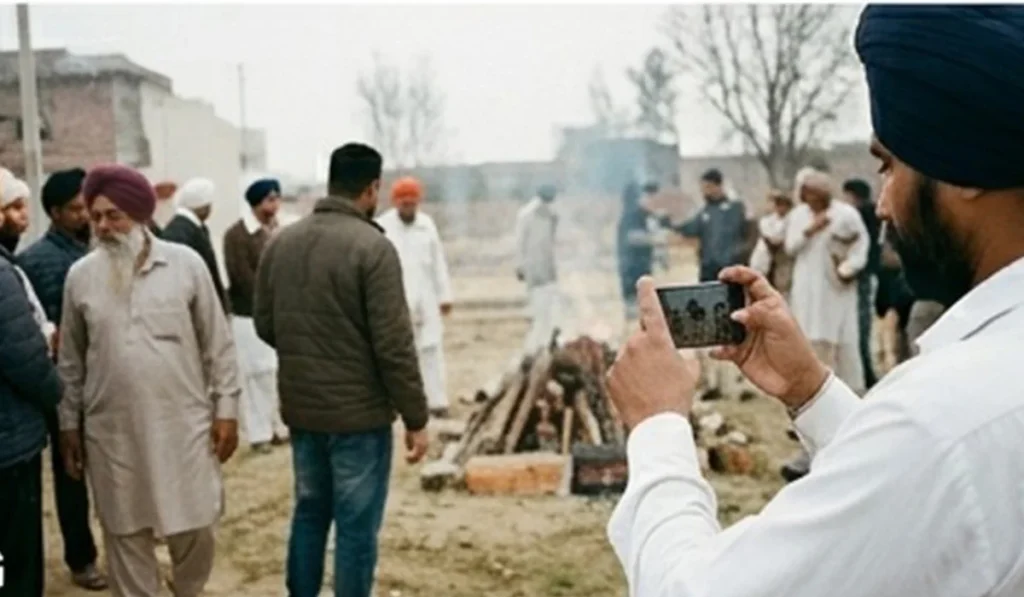
When a political leader or influential person arrives, the seriousness of the moment briefly turns into a display of power. Conversations become softer, but eyes become sharper. Cameras move, photos are taken, and the next day’s newspapers decide how “important” the deceased was. In that moment, the family’s private pain moves into the background, and the gathering’s political value rises.
Grief Across Seven Seas and Digital Mourning
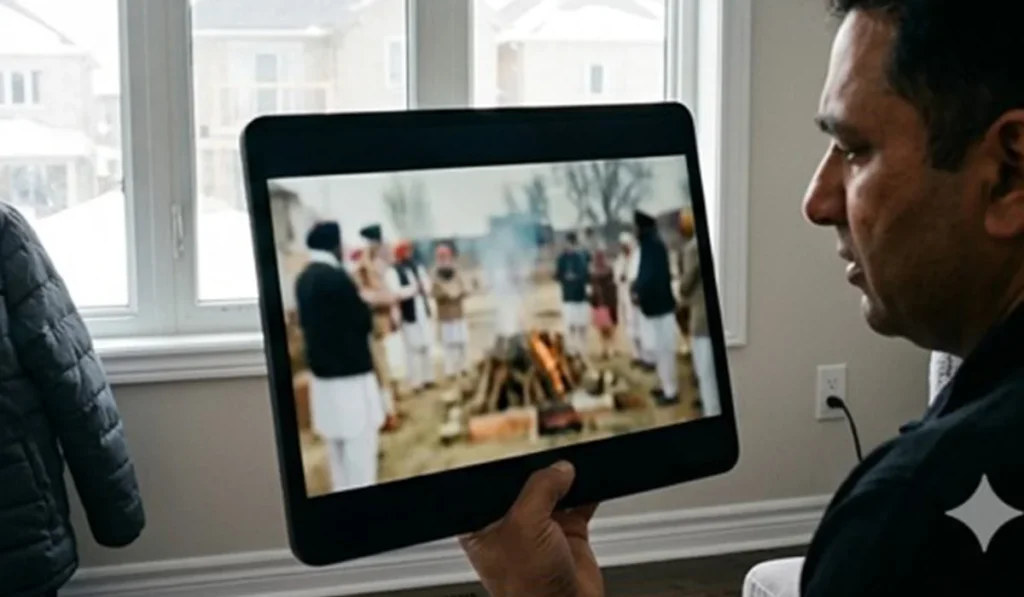
Another layer of Punjab’s grief is migration. Today, half of Punjab’s mourning happens on video calls. When a son sitting in Canada, Australia or England sees his father’s body through a small mobile screen, the scene is soul-shaking.
But the tragedy is that even this “live grief” no longer remains private. It becomes a screenshot and circulates through WhatsApp groups and social media.
Social media has turned mourning into an archive, almost an exhibition. A photograph or tribute status after someone’s death is no longer just remembrance. It becomes a measure of the family’s social activity. The more comments and shares, the greater the perceived respect for the deceased.
In this way, grief no longer remains within the threshold of the home. It travels through the internet and becomes a public document.
But is all this only show? The answer is not that simple. Beneath all these social layers and digital displays, there are still the eyes of a mother turned to stone after losing her son. There is still the pain of a sister who feels alone even in a crowd.
Punjab’s mourning now stands at a crossroads where it has become almost impossible to separate private innocent pain from public ritual.
Even Grief Is Expected to Look Proper
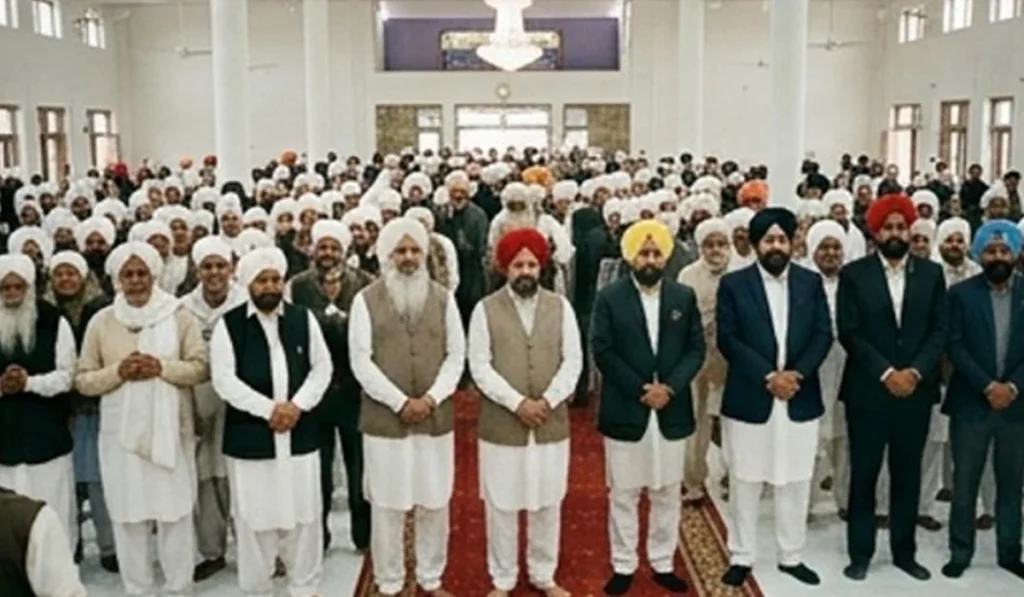
We are living in a time where even mourning is expected to have “style” and “discipline.” From the pressed white clothes to the langar menu, everything is watched through the lens of appearance.
But somewhere in all this, the silence needed to truly feel the gravity of death has been lost.
In the end, mourning in modern Punjab is not just a final farewell. It is also a social announcement. It announces that we still want to remain alive in each other’s eyes.
It is a language that says a lot even in silence: sometimes the compulsion of relationships, sometimes the hunger for status, and sometimes genuine separation.
This cycle continues until a phone rings in another house, and a new grief begins to blur the old one.
Perhaps we need to return to that silence where grief did not need photographs to be shared. It only needed a warm shoulder and a real tear. Until we free ourselves from the pressure of appearance, the mourning spread across our courtyards will remain limited to white sheets. It will not reach the soul.

Leave a Comment