
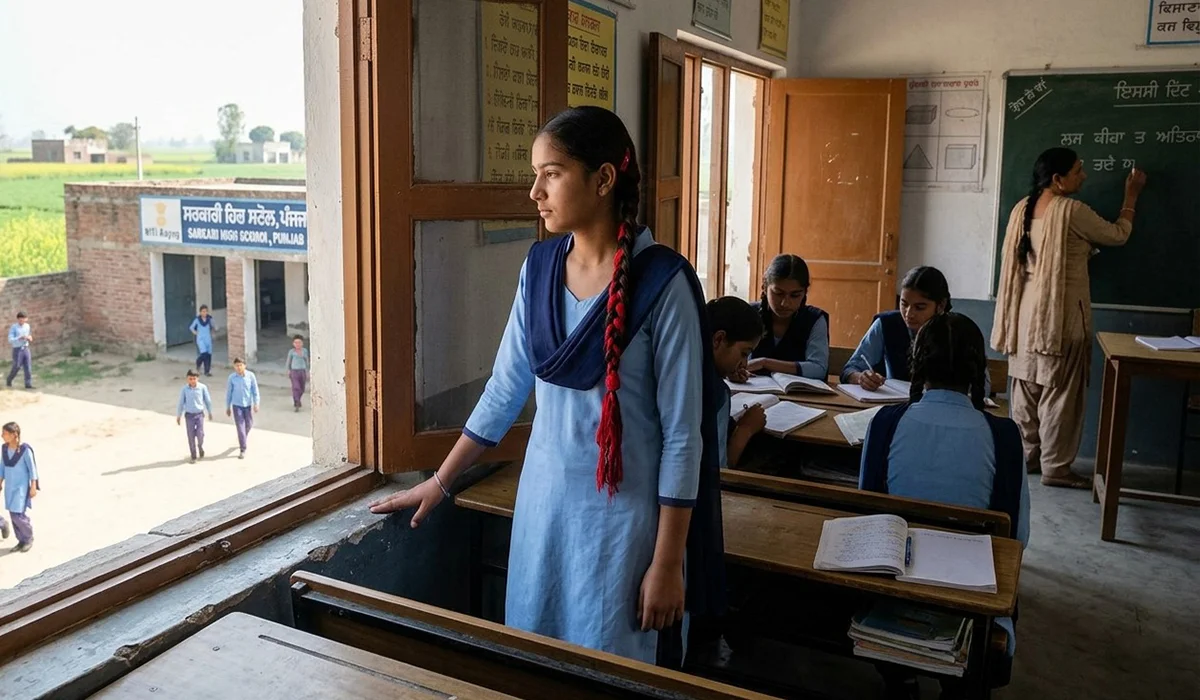

Punjab’s government schools have undergone significant changes over the past few years. Classrooms that once relied only on blackboards now feature smart boards, computer laboratories, and reliable internet connections. Even schools in remote villages have begun using digital learning tools that were once found only in urban institutions. These improvements have placed Punjab among the stronger-performing states in northern India in terms of school infrastructure and student learning outcomes.
However, beneath these encouraging developments lies a challenge that cannot be ignored. A recent NITI Aayog report presents a balanced picture of Punjab’s education system. While the state has made remarkable progress in building modern schools and improving learning standards, keeping children, especially girls, in school until they complete their education remains a serious concern. School dropout remains one of the biggest obstacles to achieving lasting educational progress.
Digital Progress Meets a Difficult Reality
The NITI Aayog report highlights two very different sides of Punjab’s education story. On one side stands a state that has invested heavily in digital education and school infrastructure. On the other hand, there is the continuing problem of students leaving school before completing their primary education.
According to the report, Punjab recorded a primary school dropout rate of 2.5 percent. At first glance, the figure may appear modest. However, when viewed against the state’s large student population, it represents thousands of children who leave school during the earliest and most important years of their education. These are the years that build reading, writing, and mathematical skills that shape every stage of future learning.
The report makes it clear that strong infrastructure alone cannot guarantee that every child remains in school. Student retention requires equal attention alongside technological advancement.
Punjab Leads in Digital School Infrastructure
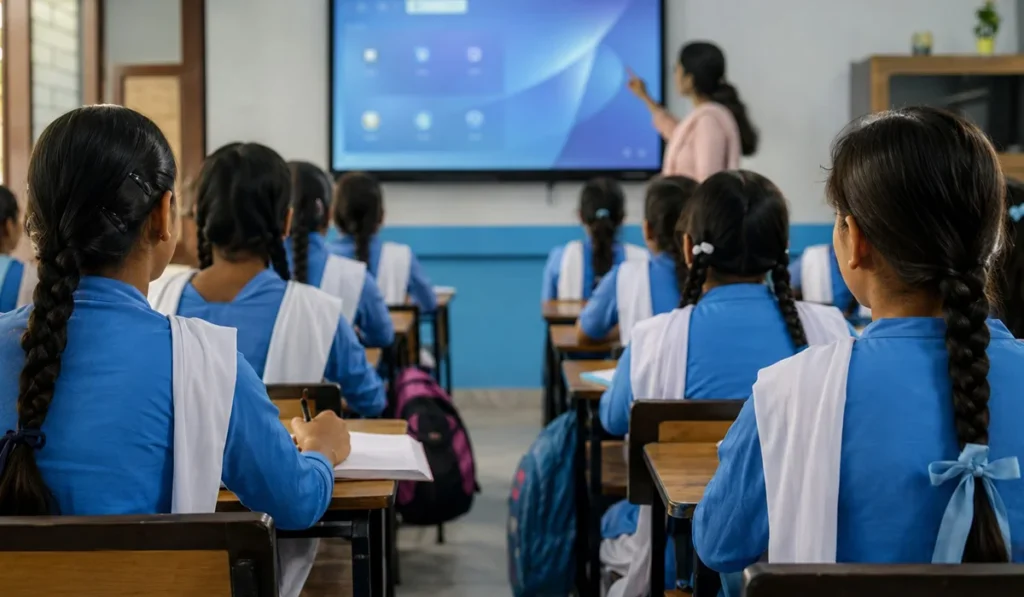
Punjab has emerged as one of India’s strongest performers in digital education infrastructure. Over the past several years, the state has steadily expanded access to technology across government schools.
According to the report, nearly 99 percent of Punjab’s schools now have computers. About 88.9 percent have access to high-speed internet services. Smart classrooms are available in 80.1 percent of schools, allowing teachers to use digital content and interactive lessons during classroom instruction. Almost every government school in the state has a regular electricity supply, ensuring that these facilities remain functional throughout the school day.
These figures reflect a sustained effort to modernize government education. Digital classrooms have become increasingly common even in rural areas, helping reduce the gap between urban and village schools.
How Punjab Compares With Other States
Punjab’s position becomes even more striking when compared with several other Indian states. The report states that 80.1 percent of schools in Punjab have smart classrooms. In comparison, Uttar Pradesh records 19.8 percent, Jammu and Kashmir 16.5 percent, Bihar 14.9 percent, and Meghalaya 4.3 percent.
These comparisons show that Punjab has moved well ahead in building digital learning facilities. Many larger states are still working to establish basic technological infrastructure in their government schools, whereas Punjab has already reached a much broader level of digital access.
However, the report also reminds readers that technology is only one measure of educational success. The real purpose of improved infrastructure is to strengthen learning and keep students engaged throughout their school journey.
Strong Learning Outcomes Strengthen Punjab’s Position
The report also evaluates how well children are learning rather than focusing only on physical facilities. Under the PARAKH 2024 assessment, Punjab’s students performed strongly in foundational learning. Third-grade students achieved an average score of 82 percent in language and 78 percent in mathematics.
Neighbouring states recorded lower scores. Haryana reported 62 percent in language and 58 percent in mathematics. Uttarakhand scored 59 percent in language and 55 percent in mathematics. Jammu and Kashmir recorded 57 percent in language and 54 percent in mathematics.
These results place Punjab among the better-performing states in foundational literacy and numeracy. The report also identifies Himachal Pradesh and Kerala as states with similarly strong early learning outcomes.
Education experts have long argued that strong reading and mathematical skills developed during the early years determine future academic success. Children who struggle in primary classes often face increasing difficulty in higher grades, increasing the likelihood that they will leave school before completing their education.
Girls’ Education Reflects Changing Social Attitudes
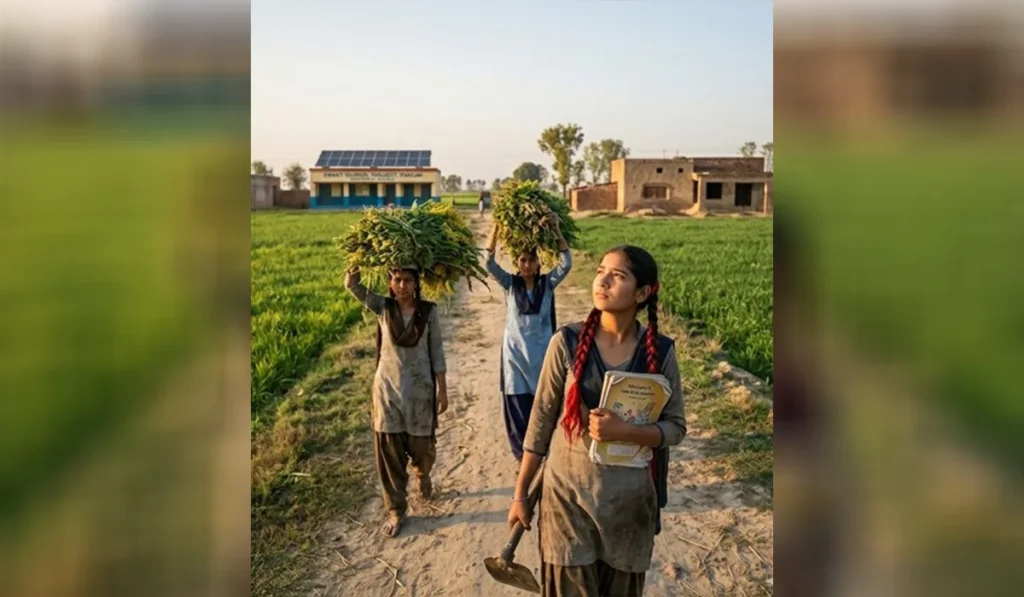
Punjab has also witnessed a gradual shift in public attitudes towards girls’ education. Improved government schools, better classroom facilities, cleaner campuses, and digital learning environments have encouraged many families to send their daughters to school with greater confidence. Parents who once questioned the quality of government schools are beginning to view them as dependable institutions capable of providing meaningful education.
This changing outlook represents an important social achievement. Better school environments help build trust within communities and encourage families to invest in their daughters’ education. However, changing attitudes alone cannot remove every barrier that girls continue to face.
Why Girls Continue to Leave School
The report identifies several reasons that continue to affect girls’ school attendance, particularly during adolescence. One important concern is the availability of separate, clean, and safe toilets for girls. Where proper sanitation facilities are lacking, attendance often falls, especially during menstruation. Many girls begin missing classes regularly, and prolonged absence eventually increases the risk of dropping out altogether.
Household responsibilities also remain a significant factor in many rural communities. Girls are often expected to care for younger siblings, assist with household chores, or take on family responsibilities at home. During periods of financial hardship, some families still choose to prioritize boys’ education over girls’.
Distance also presents a practical challenge. Many villages lack nearby higher secondary schools. Limited transport facilities and safety concerns discourage parents from allowing girls to travel long distances each day. As students move into higher classes, these difficulties often become more pronounced. These issues demonstrate that educational progress depends upon much more than classroom technology.
Understanding Punjab’s Dropout Figures
One of the report’s more interesting observations concerns variation in dropout rates across states.
Several states with weaker educational infrastructure, including Uttar Pradesh, Madhya Pradesh, and Jharkhand, report extremely low or almost negligible primary school dropout rates in official records. Education specialists caution that official figures do not always capture the complete picture. Irregular attendance, seasonal family migration, or students who quietly stop attending school may remain listed in school records for extended periods. As a result, reported dropout rates may not always reflect actual classroom participation.
Punjab’s reported dropout rate of 2.5 percent may partly reflect stronger student-tracking systems and greater transparency in maintaining educational records. Reliable data allows policymakers to identify problems more accurately and design effective interventions.
Regional Gaps Continue Across India
The NITI Aayog report also highlights the growing differences in educational development among Indian states. Punjab, Kerala, and Himachal Pradesh have established relatively strong foundations in school infrastructure and learning outcomes. Meanwhile, states such as Bihar and Meghalaya continue to face considerable challenges in expanding educational facilities and improving learning standards.
Such regional differences may influence future employment opportunities and access to higher education. Students growing up in stronger educational systems are likely to benefit from better academic preparation and wider career choices. Reducing these disparities remains an important national objective.
The Role of National Education Policy 2020
The report comes at a time when the National Education Policy 2020 is being implemented across the country. The policy places significant emphasis on foundational literacy, effective use of technology, and equal educational opportunities for every child. Punjab’s investments in digital infrastructure align well with these objectives.
However, achieving the policy’s broader goals will depend on ensuring that children remain in school throughout their education. Improving enrolment is only the first step. Retaining students until they complete their schooling is equally important.
Smart Schools Need Smarter Student Retention
The NITI Aayog report offers Punjab both recognition and a clear warning. The state’s investment in modern classrooms, internet connectivity, computers, and improved learning outcomes deserves acknowledgement. These achievements demonstrate that consistent planning and public investment can strengthen government education.
At the same time, the report reminds policymakers that educational success cannot be measured solely by technology. Every child who leaves school before completing primary education represents a missed opportunity for both the individual and society.
Future policies must focus more closely on student retention, especially for girls. Better sanitation, safer transport, continued community engagement, stronger counselling services, and timely support for economically vulnerable families can all help reduce dropout rates.
Punjab has already built much of the physical foundation for a modern education system. The next stage requires equal attention to the social and practical challenges that prevent children from completing their education. Lasting success will be measured not only by the number of smart classrooms, but by the number of students who remain in those classrooms until their education is complete.


Leave a Comment