

Friends Have Departed from the Neighbourhood…
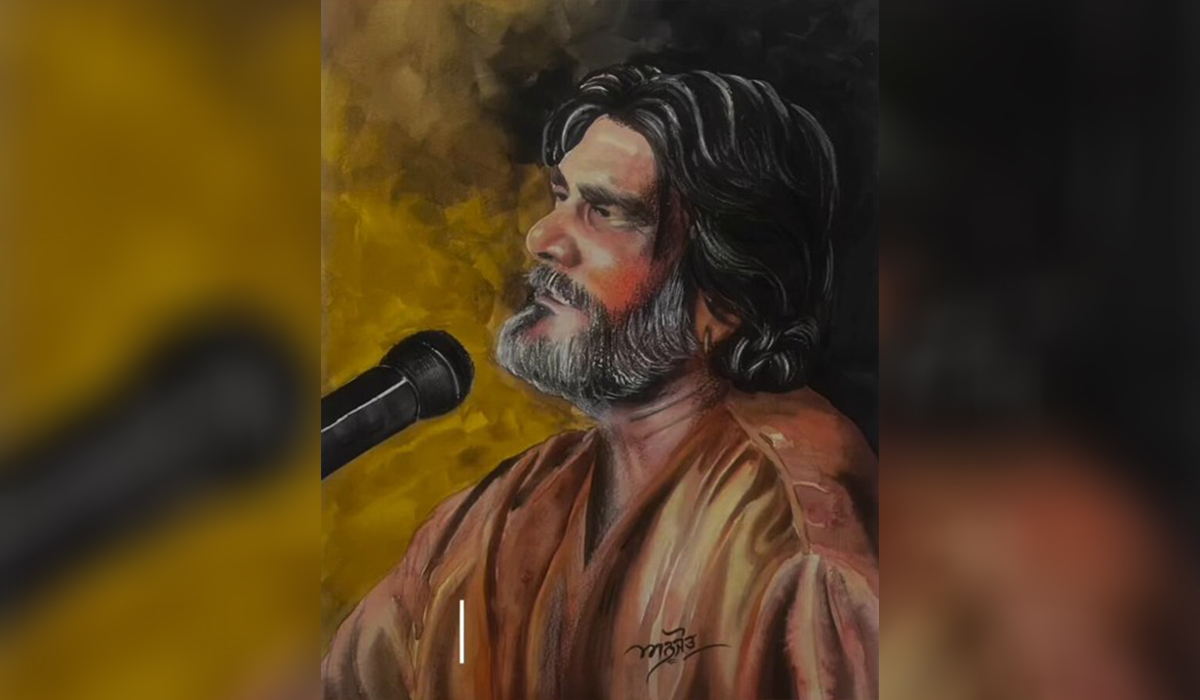
The news of Ustad Ji’s passing has hollowed something out inside me. One regret will keep gnawing at me again and again: I kept thinking, “I must go meet Ustad Ji,” and yet, in the end, I never managed to meet him. Like many others, I too called him simply “Ustad Ji.” The sad news of his departure has brought back many tender memories of the time spent with him and those unforgettable meetings. After living close to Ustad Ji, his family and his entire circle of disciples, I wrote a book about his singing and life titled Kulli Wala Fakir. The year was 1998.
It was winter. Mattresses had been spread on the rooftop and a sitting arrangement had been made there. I was meeting Ustad Puran Shahkoti for only the second time. That day, he seemed to be possessed by a strange musical ecstasy. He placed his cigarette in a small bowl lying nearby, opened the bellows of the harmonium and began to sing:
“Uchchian lammian tahalian ni,
Heth vagge darya ve mahiya…”
His younger son Parvez came running and began keeping rhythm on the mridang lying nearby. Salim too came down from upstairs, sat beside his father and matched his voice with his:
“…Te uchchian lammian tahalian,
Vich Gujri di peengh ve mahiya…
Te uchchra burj Lahore da,
Heth vagge darya ve mahiya…”
What a scene it was! It felt as though time itself had stopped and was saying, “Ah! Keep singing… keep singing. Where will one hear music like this again and again? Let me stand here and listen for a while.” That river of music flowed continuously for more than an hour. It seemed as though the entire surroundings had become drenched in droplets of melody, and a musical breeze had begun rushing through the air. Many years earlier, during the month of Sawan, when the sky was heavy with dark clouds, Puran Shahkoti had sat on the rooftop of his house and begun playing with notes:
“Dil di pyaas bujhai,
Aaiyan kaniyan ne…
Kin-min kin-min kin-min,
Lai kaniyan ne…
Dil di pyaas…”
And then, truly, it began to rain. He kept getting drenched and kept singing. After meeting Puran Shahkoti, one could not help thinking: this man is the real Sufi singer. A genuine Sufi. A saintly singer. A dervish of music. He did not merely sing Sufi poetry; his entire personality seemed soaked in the colours of Sufism.
Puran lived in his own state of joy and abandon. Sometimes, when he became irritated, exhausted or fed up with something, he would simply leave the house. At such times, he would neither listen to anyone’s requests nor accept anyone’s persuasion. I saw closely that he became particularly frustrated when people from his own community, the Mirzadas, surrounded him with domestic or neighbourhood disputes, accusing one another, gossiping, abusing each other and unnecessarily burdening his mind. Then he would become desperate to escape them and invent some outrageous excuse:
“Listen to me, brothers, I am terribly busy today. I have to attend a gathering at the President’s house. I have to sing there. I am already very late. You people talk to Mathro… eat and drink… have some chicken. O Parvez! Go bring five or six chickens and ten bottles. Eat, drink. Till the chicken gets cooked, eat eggs. O Mathro, I’m getting late… girl, I’m leaving… the President must be waiting for me!” And saying this, he would get into the car and disappear.
Once, after getting down at Jalandhar bus stand, I told a rickshaw driver, “Take me to Abadpura, to Ustad Shahkoti’s dera.” Who in that area could possibly forget a man like Shahkoti? The rickshaw driver himself belonged to that neighbourhood. On the way he asked me, “What brings you here, Bha Ji? Have you come to meet Puran or Salim?”
“I’ve come to meet everyone, my friend.”
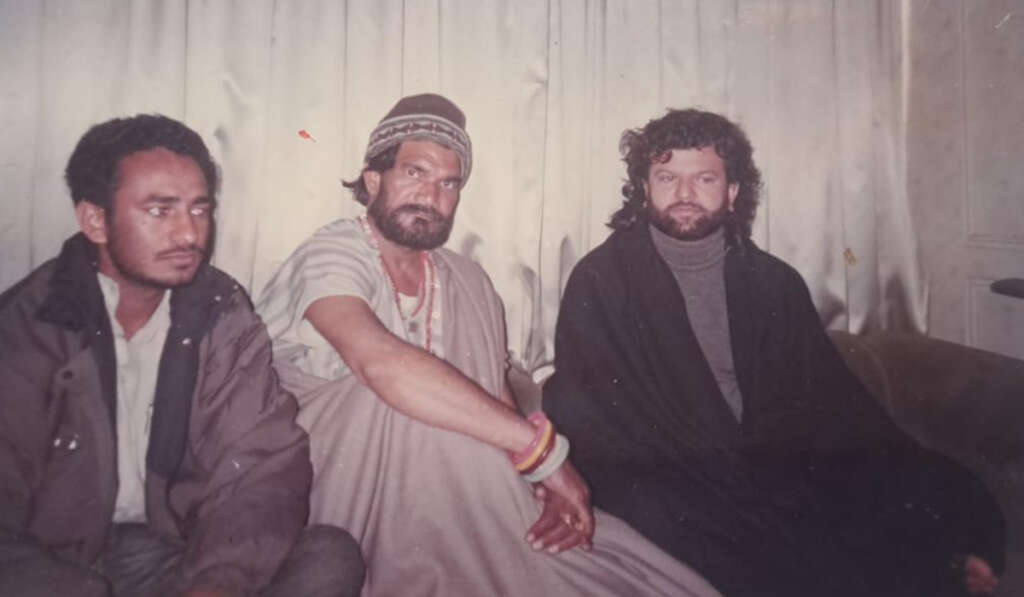
“Puran is a fakir, Bha Ji. He made Hans soar. Look at Hans today, see how high he has risen. Big people come every day to meet Puran.” The rickshaw driver was adding to my knowledge.
Hearing that “big people” came there regularly, I began thinking that if some of those “big people” happened to be sitting there today, I might not get any time to talk to him. The rickshaw stopped outside the house. The black iron doors were shut. I rang the bell. The person who opened the door immediately said, “Go upstairs. Guru Ji is sitting there.”
“Come, son, come… piece of the moon! Come here. I have been terribly sad today. I was waiting for some auspicious soul like you to arrive. Welcome, son! O Mathro, listen! The boy from Patiala has come. Girls, bring some tea. Make it melodious tea for my son… wah, wah!” Shahkoti genuinely seemed delighted.
Warm winter sunlight fell across the rooftop, where mattresses had been spread. He sat leaning against the wall. His harmonium lay nearby, along with a packet of cigarettes.
Bibi Mathro sat close by chopping mustard greens. Small children were playing around. The whole family welcomed me warmly. We talked, sometimes at length, sometimes briefly.
By evening, Salim and I went to a nearby shop and bought paper, pens and other stationery. Shahkoti talked and I kept taking notes. If the conversation became lengthy, I recorded it on tape. Wherever he went, I followed him. I accompanied him to many places, sometimes to celebrations, sometimes to occasions of grief. In this way, I gradually came to know many people around him as well.
I kept trying to understand the intimate and significant aspects of Shahkoti’s life by speaking to those closest to him and listening to his conversations with visitors. Most visitors were music students, enthusiasts or admirers of Shahkoti. Whenever Shahkoti opened the harmonium and began singing, I would stop writing and simply listen. At times he would tell such a hilarious story that everyone listening would collapse with laughter. Slowly, Shahkoti’s dera began to feel like my own home. Whenever I felt like it, I would simply go there.
One day, the saag had far too many chillies in it. Shahkoti and I were eating together. The chillies burned my mouth so badly that I could not resist saying, “Look, Guru Ji, there are so many chillies in this saag… oh ho!” Shahkoti replied, “No, no, son. They haven’t put too many chillies in the saag. I think Mathro has put a little saag into the chillies!” Ustad Ji burst out laughing. Then he scolded a child wandering nearby:
“Oye, what are you doing here? You keep putting your fingers into your nose. Take your finger out and bring another roti for the boy. But wash your hands first, you rascal!”
After hearing that, I was in no condition to laugh, stop the tears and water running from my eyes and nose, or continue eating the fiery saag. Whenever I sat writing, Ustad Puran would look at me in amazement and say to Bibi Mathro:
“O Mathro, listen to me. What kind of soil is this boy made of? I don’t understand. He neither eats and drinks properly, nor sleeps properly, nor talks much. He just keeps writing… keeps writing. A confectioner has sweets and provisions scattered all around him, a carpenter has tools lying around him, and this writer has papers and books everywhere. Look, Mathro!”
Then suddenly he would cross all limits of emotion and say:
“O son, just ask me for something. What do you want? Speak, son! For you I’ll bring even bird’s milk. I’ll pluck stars from the sky for you. Ask me. What shall I place before you? I am Puran… Puran!”
Puran Shahkoti’s life was like an open book. There was no concealment. Sometimes he would speak harshly and then regret it:
“Main kaura kahnu bolia, Vagdi ae Ravi vich surma kihne dolia…”
He could not tolerate singers who sang out of tune. He would rebuke them openly, right to their faces:
“Why are you forcing it, son? Singing is not in your destiny. Do some other work.”
He had such a sharp ear for pitch and rhythm that it took him barely half a second to recognise a note. If a particular note pleased him, he would become completely intoxicated by it. He would grow ecstatic and begin making all kinds of gestures:
“O ho-ho-ho! Hai-hai-hai! I’ll die! Such a dangerous note? Hai ni jinde meriye… ni mitti diye dheriye! What a cruel note! Dangerous! This is devastation!”
Then he would close his eyes, place a hand on his chest and savour the note. There was nothing “special” about his room in the way millionaire singers today construct elaborate special rooms in their mansions for riyaaz. This fakir had simply kept one large room in his modest house for himself.
His instruments lay there, along with awards and mementoes, a few books and some cassettes. On his table, besides a tape deck, there might be a diary or two and a glass left behind after tea. A bowl used for vegetables would be lying on one side, probably tossed aside by a child. An empty cigarette packet, a small support used beneath the tabla, and scattered matchsticks could also be seen. A cap might be hanging out from beneath his pillow. Nothing elaborate. Nothing meant for display.
Simplicity and carelessness could be seen in every object in the house. He would even extinguish his cigarette by rubbing it against the wall beside his pillow. He gave more importance to sleeping and singing than to almost anything else. Instead of gossiping behind someone’s back, he preferred abusing them directly to their face.
Why? Because Puran was a fakir. A king of melody: Puran.
I once began noticing which words he repeated most frequently throughout the day:
“the whole world”, “President”, “dangerous”, “cruel”, “devastation”, “oppression”, “Murshid”, “Allah”, “cigarette”, “meat”, “liquor”, “harmonium”, “tabla”, “mridang”, “taal”, “sur”, “talent”, “Hans”, “words” and “Mathro”.
He would say these words countless times a day. Saying “Hai!” and “Main mar jaan!” had also become permanent habits. I once asked him, “Ustad Ji, why do you put ‘perhaps’ into everything you say?”
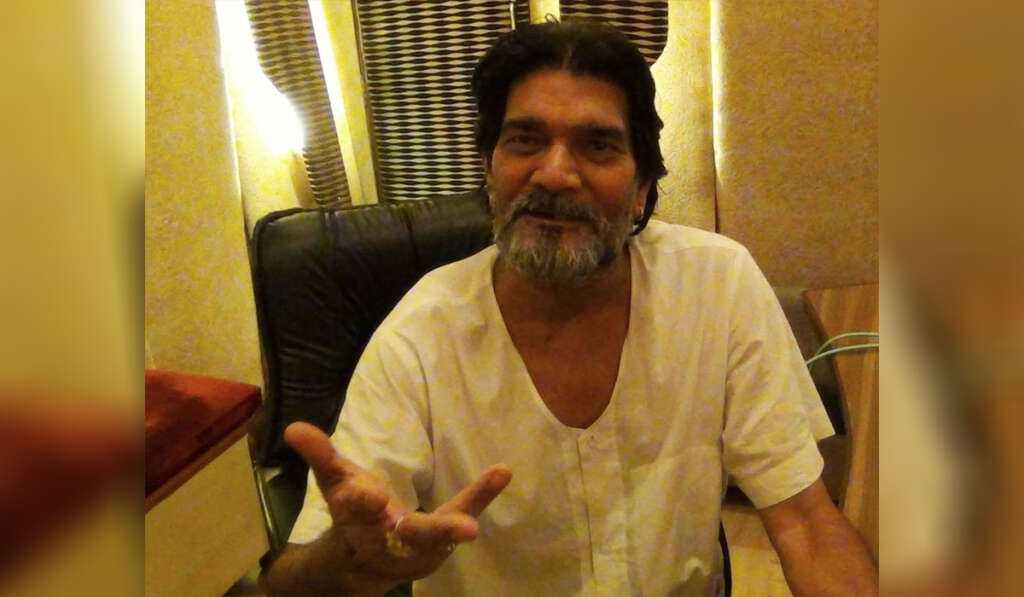
He replied: “Son, life cannot be trusted. Maybe it is one moment, five weeks, five days, five years or fifty years. Nobody knows for certain… perhaps.” His cigarette would go out only when he slept. He would not drink liquor only when he had no money. Whenever he needed anything, he first called out to Mathro, who would either send someone or arrange it herself. When he was sad or hurt, he cried.
You could plead with him a thousand times, but once he became stubborn, he would refuse to speak and keep simmering inside. When his mood was exceptionally good, conversations would become tangled skeins of melody. Different ragas would begin appearing one after another.
Then whether someone lived or died mattered little. There remained only Puran, the sur, and Puran again. While studying in Class VIII, he began to feel that he was gradually becoming a young man. His voice was breaking. The child’s voice was disappearing and a male voice was taking shape. His throat seemed to melt even further. He became completely drawn towards singing. All day long he would sing ragas, practise notes: “Sa Re Ga Ma Pa…”
He appeared for his Class X examinations but received a compartment. His handwriting had become exceptionally beautiful. When teachers asked him to write essays, he filled page after page. Puran was weak in mathematics. Eventually, with considerable difficulty, he managed to pass Class X.

Leave a Comment