

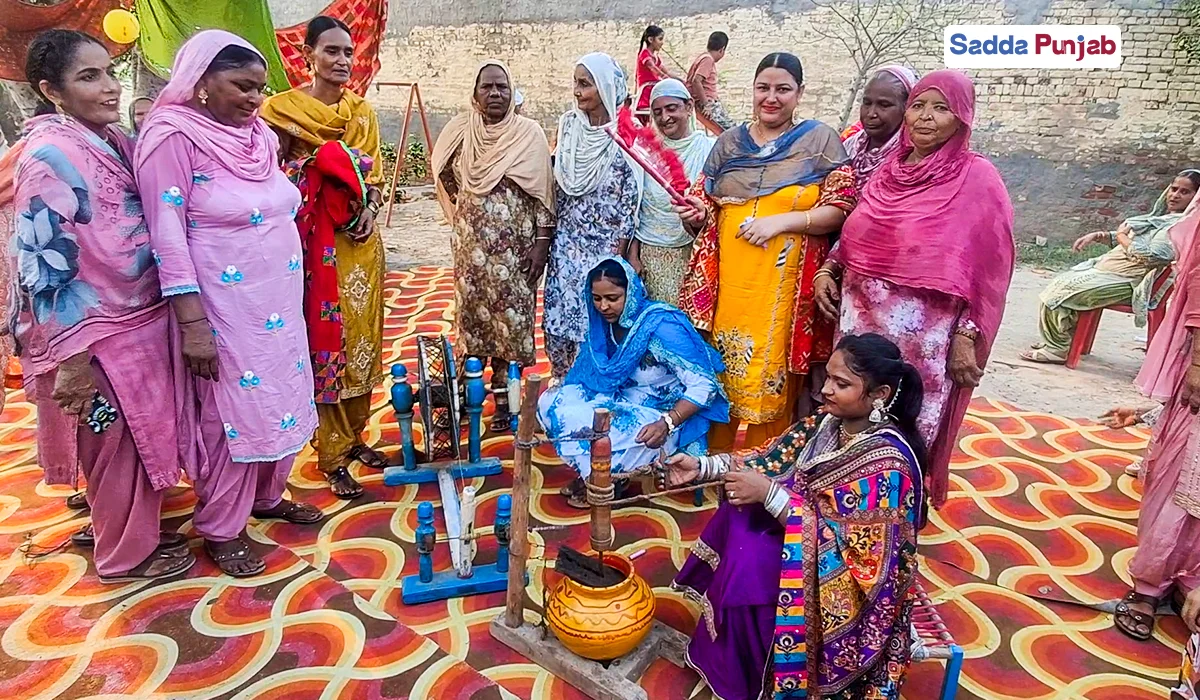

Punjabi culture has a long and rich tradition of festivals. These festivals are not merely symbols of religious observance or seasonal change; they also help preserve our social bonds, collective joy, and folk arts.
In Punjabi culture, Teeyan, or Teej, is regarded as one of the strongest symbols of the love, freedom, and happiness associated with daughters and sisters. Celebrated during the month of Sawan, Teeyan has traditionally been a dreamlike and joyous period for the daughters of Punjab.
However, with changing times and lifestyles, the way Teeyan is celebrated has also changed considerably.
The History and Cultural Significance of Teeyan
According to ancient traditions and beliefs, the festival of Teej is associated with the reunion of Goddess Parvati and Lord Shiva. It is believed that after performing intense penance, Goddess Parvati attained Lord Shiva as her husband on the third day of the Shukla Paksha during the month of Sawan.
In Punjabi folk life, however, the festival is viewed more strongly through seasonal and social traditions. The month of Sawan brings rain after the scorching summer heat, and greenery spreads across the landscape.
In earlier times, married daughters would return to their parental homes during this season. Meeting childhood friends again, spending time together, and sharing joys and sorrows formed the true spirit of Teeyan.
Special Traditions Associated with Teeyan in Punjab
Several traditional customs and symbols are inseparably associated with the festival of Teeyan.
Sandhara is a special gift sent to a married daughter by her parental family. It traditionally includes sweets, especially ghevar and mathis, along with suits, bangles, mehndi, and items of personal adornment.
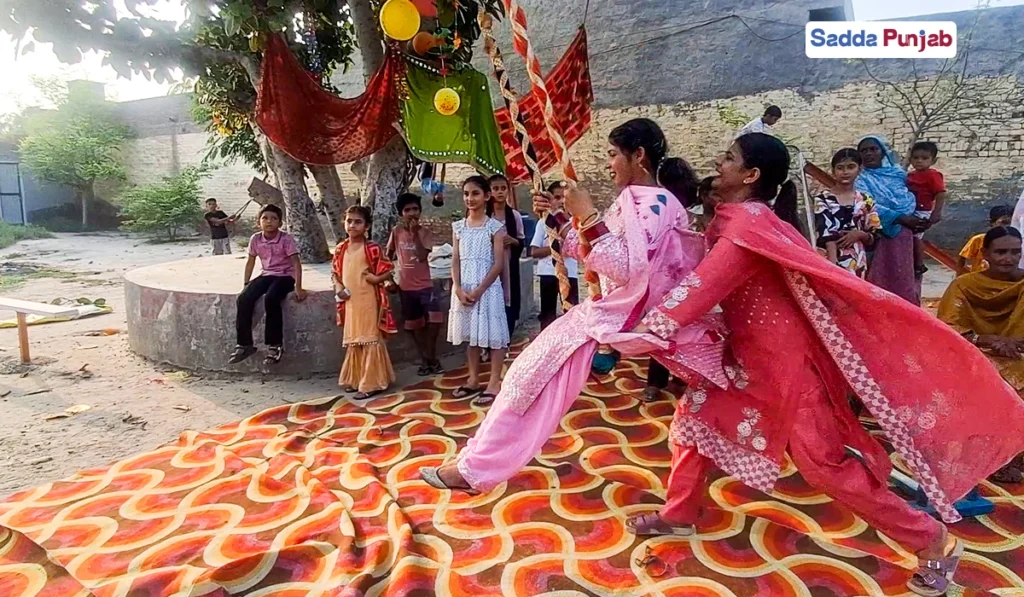
Swings In villages, thick ropes were tied to peepal, banyan, and neem trees at common gathering places, creating swings on which girls would joyfully try to soar towards the sky.
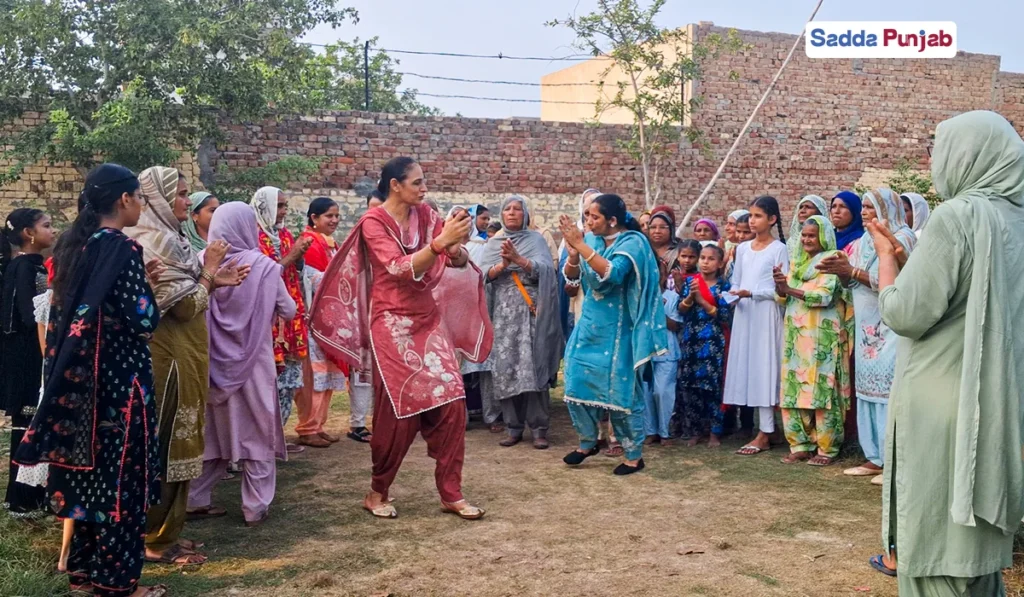
Giddha and Boliyan The Giddha of Teeyan is one of the most authentic expressions of Punjabi folk dance.
Through boliyan, women expressed their inner emotions, the sweet and bitter dimensions of relationships with mothers-in-law and sisters-in-law, affection for brothers, and various social concerns.
Kheer and Poodas During the continuous rains of Sawan, households traditionally prepared kheer and poodas, which became closely associated with the festival.
Teeyan in Old Villages: A Blend of Nature and Community
In earlier times, villages did not have marriage palaces or event halls like those seen today. Girls would gather outside the village beneath the shade of large banyan and peepal trees or near ponds.
A Natural Setting
There was no stage and no loudspeaker. Swings hung beneath the spreading branches of banyan trees. During the monsoon, cool breezes blowing near ponds and other water bodies made such places ideal for celebrating Teeyan.
Genuine Bonds of Affection
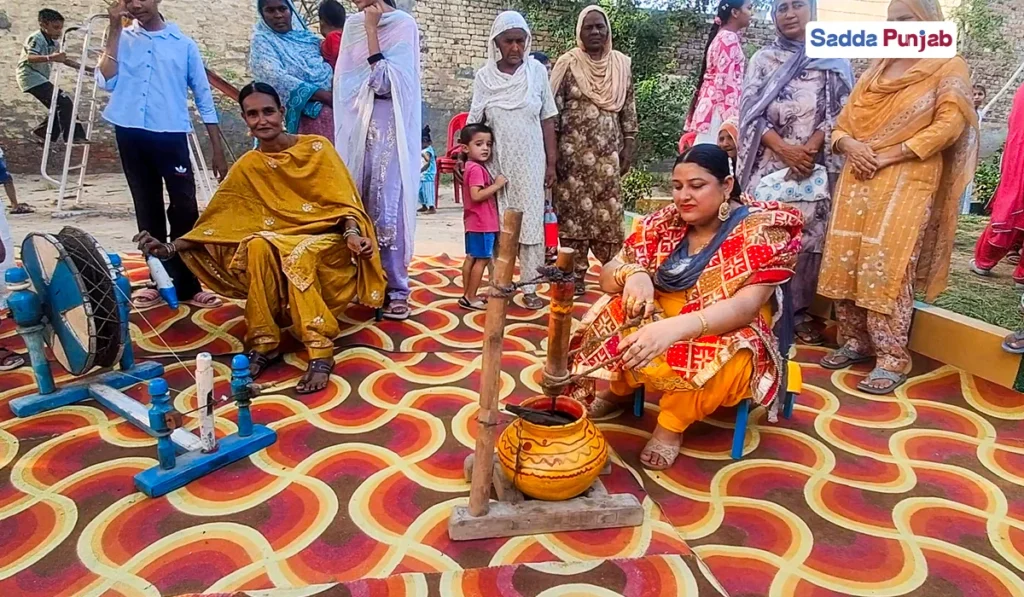
All the daughters of the village gathered together, regardless of caste or religion. Older women would sit in the shade, happily watching the younger women perform Giddha.
A Way to Lighten the Heart
In those times, women had far fewer opportunities to openly express their feelings. The Teeyan gathering therefore became an important emotional and psychological outlet, allowing women to express their pain, frustrations, and personal experiences through boliyan.
Teeyan Today: Limited to Stages and Clubs
In the modern era, the appearance and character of Teeyan have changed significantly. The old peepal and banyan trees outside villages have largely disappeared, and the spacious traditional courtyards are also becoming rare.
From a Tradition to an Organised Cultural Programme
Teeyan has moved from village commons into schools, colleges, marriage palaces, hotels, and organised venues. Instead of being a spontaneous community gathering, it has increasingly become a planned cultural show.
DJs and Artificial Performances
The traditional beat of the dholki and spontaneously sung boliyan have largely been replaced by DJs and large sound systems.
Teeyan Abroad
At the same time, one positive and appreciable development is the celebration of Teeyan by Punjabi women living in countries such as Canada, the United States, and Australia. They gather in community halls and celebrate the festival with great enthusiasm.
For Punjabis living thousands of miles away, these celebrations help maintain a connection with their cultural heritage and homeland.
Major Differences Between Traditional and Modern Teeyan
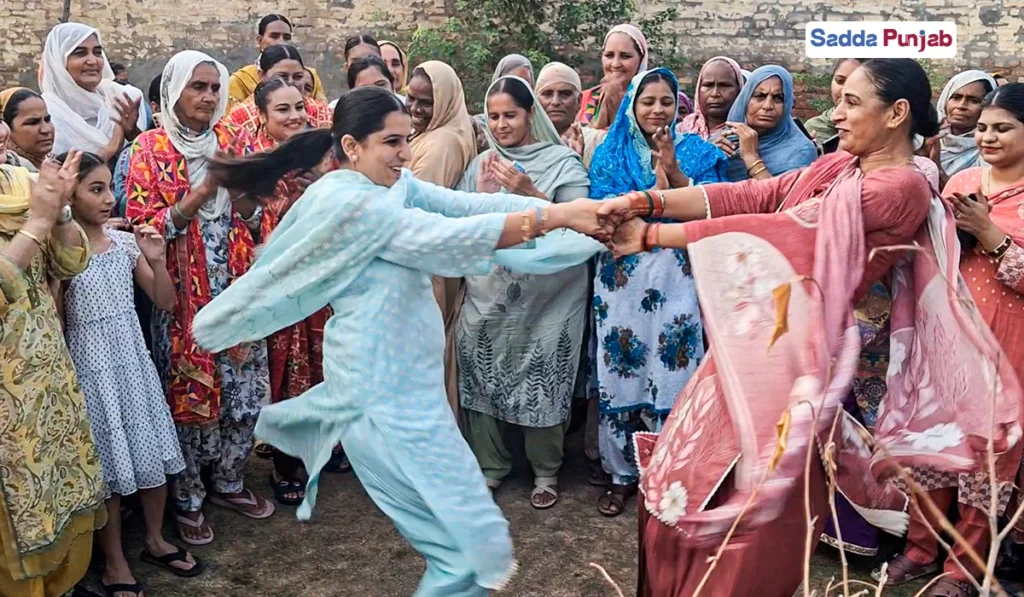
There is a vast difference between the Teeyan of earlier times and those celebrated today. Traditionally, Teeyan was celebrated in village commons, beneath peepal trees, and in open fields. Today, it is largely organised in colleges, marriage palaces, clubs, hotels, and DJ halls.
Earlier, girls enjoyed natural swings made from thick ropes tied to trees. Today, these have often been replaced by artificial metal swings or decorative swings placed merely as part of a stage setting.
In the past, the festive atmosphere was created through the dholki, clapping, and boliyan without any loudspeaker. Today, recorded songs and loud DJs dominate many celebrations.
Earlier, the real purpose of Teeyan was to meet childhood friends and share the joys and sorrows of life. Today, in many places, it has become a one-day entertainment event centred around photography and social media posts.
Similarly, women once attended Teeyan dressed in simple traditional Punjabi suits with modest adornment. Today, heavy and specially designed traditional costumes are often worn for stage performances and display.
The Need of the Present: Preserving the Heritage
Change is a natural part of life. Today, women are increasingly educated, independent, and socially empowered, and their social world has naturally changed as well. Yet it remains important to preserve the deeper spirit of traditional festivals such as Teeyan.
The younger generation should not be introduced to Teeyan merely as an occasion to dance on a stage. They should also understand the values of community bonding, love for nature, emotional connection, and respect for relationships that lie behind the festival.
Villages should also consider creating common spaces once again where daughters and women can reconnect with their heritage without unnecessary display or commercialisation.
Preserving Teeyan does not mean resisting change. It means ensuring that even as its form evolves, its original spirit of affection, togetherness, freedom, and cultural belonging continues to live.
Leave a Comment