

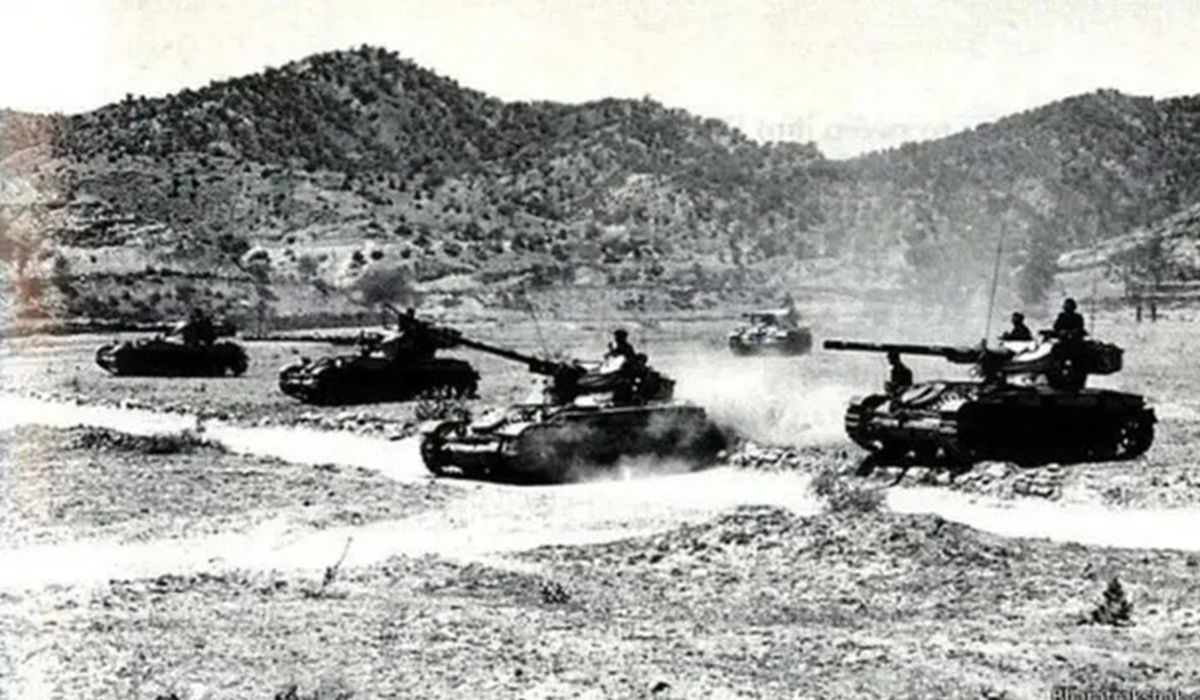

Even if a victor is declared in a war…, humanity often loses!
Although India, partitioned on the basis of religion in 1947, will never be united again, the tensions and wars born with Pakistan after the partition of India have changed the entire fabric. The wars that occurred between the two countries from time to time not only tested the armies deployed on the borders, but the common people living in the border areas also had to pay a heavy price for it. Among these wars, the 1965 Indo-Pak war holds special significance. This war lasted for about three weeks, but its wounds are still fresh in the memories of the border people even decades later.
During the 1965 war, the Indian Army foiled many designs of the Pakistani Army and inflicted heavy damage on the Patton tanks in the Battle of Asal Uttar. But along with this military history of the war, there is another painful chapter. The bombing in the Chheharta area of Amritsar, in which a large number of innocent civilians were killed. This incident still lives on as a terrifying scene in the memories of the elders of the area.
Background of the ’65 War
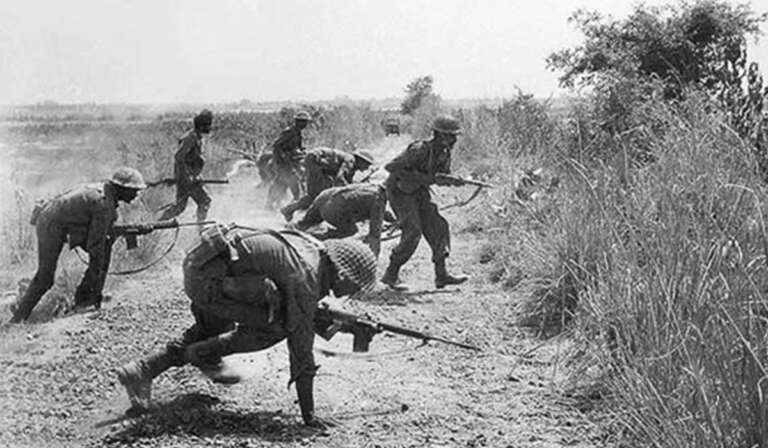
The background of the 1965 war had started to form with the Indo-Pakistani skirmishes in the Rann of Kutch in April of that year. After this, Pakistan prepared a major plan to create conditions against India in Jammu and Kashmir. In August 1965, Pakistan launched ‘Operation Gibraltar’. Under this, a large number of armed infiltrators were sent into Jammu and Kashmir. The objective of the Pakistani plan was to incite the local people against the Indian administration and raise a large-scale rebellion. However, this plan could not succeed as expected, and the Indian Army, responding to the infiltration, strengthened its hold in many areas.
After this, on September 1, 1965, Pakistan attacked the Akhnoor sector under ‘Operation Grand Slam’. With the help of tanks and heavy artillery, the Pakistani army attacked and tried to cut off India’s communication lines with Jammu and Kashmir. In response to the Pakistani attack, India crossed the international border on September 6 and opened fronts from the Lahore and Sialkot sectors. With this, the conflict completely turned into an Indo-Pak war.
The Battle of Asal Uttar and the Graveyard of Patton Tanks
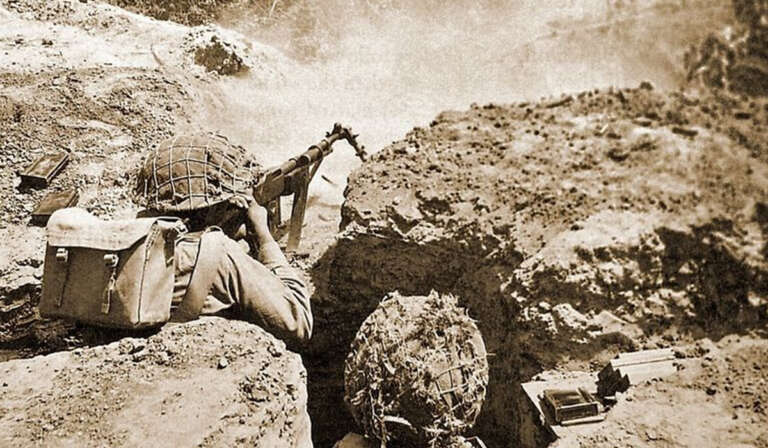
One of the most important battles of the 1965 war was fought near the village of Asal Uttar in the Khemkaran sector. The Pakistani army had modern Patton tanks provided by America. At that time, these tanks were considered very powerful and modern. The Pakistani army was confident that with the help of these tanks, it could advance rapidly into Indian territory. But the Indian army stopped this attack with strategy and bravery.
In this battle, Company Quarter Master Havildar Abdul Hamid of 4 Grenadiers showed exemplary bravery. He confronted the Pakistani tanks with his recoilless rifle. Taking advantage of the sugarcane fields and difficult geographical conditions, he targeted the enemy tanks.
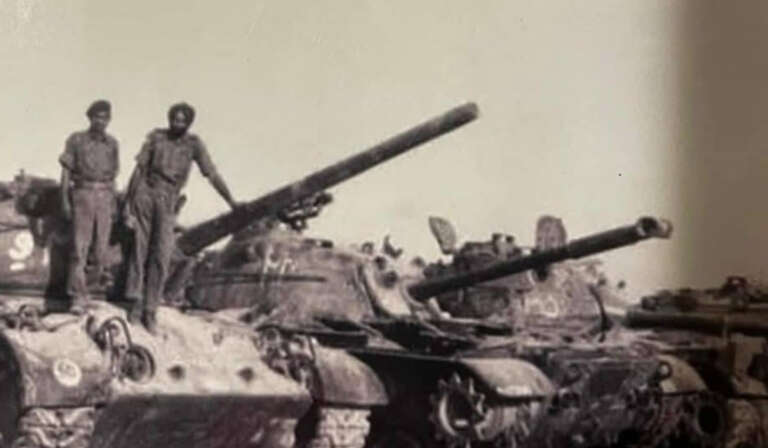
Abdul Hamid destroyed several Patton tanks but was martyred while fighting the enemy. For his indomitable bravery and sacrifice, he was posthumously awarded the country’s highest military honor, the ‘Param Vir Chakra’. Due to the destruction of a large number of Pakistani army tanks in the Battle of Asal Uttar, this area later came to be known as the ‘Graveyard of Patton Tanks’.
The Most Painful Face of the War; Bombing Took Place in the Chheharta Area of Amritsar
Another tragic aspect of the 1965 war was the bombing in the Chheharta area of Amritsar. Despite the atmosphere of a ceasefire, the tension in the border areas had not completely ended. On September 22, 1965, a Pakistani air strike caused terrible devastation in the industrial area of Chheharta and surrounding areas. At that time, Chheharta was an important industrial hub of Amritsar. There were many mills, shops, a railway station, and residential areas here. People were busy with their daily chores as usual.
It is said that Pakistani planes flew very low from the Attari side towards Chheharta. An attempt was made to target various industrial and other vital locations. A bomb dropped targeting the Khasa Distillery missed its mark and fell on the platform of the Khasa railway station. Luggage porter Sundar Lal, who was on duty there, died in this attack.
Attempts were also made to target the Punjab Mill and the OCM Mill. Some bombs missed their targets and fell into residential areas and fields. A bomb targeting the historic Khalsa College also missed its mark and fell in the fields, averting a major disaster.
The Bloody Scene of Pratap Bazaar
The bombing in Pratap Bazaar of Chheharta became the most painful part of this attack. A bomb dropped targeting the Japanese Mill strayed from its target and fell on a shop in Pratap Bazaar. The explosion was so powerful that the whole area shook. The blast created a deep crater in the ground, and a stampede broke out among the people present around. Many shopkeepers, customers present in the market, and people returning home after finishing work from the mills became victims of this attack. According to local memories and available details, 52 civilians lost their lives in this incident.
The intensity of the explosion can be gauged from the fact that the body parts of the dead people were scattered far and wide. Pieces of human limbs were found on electricity wires, roofs, and surrounding buildings. There was smoke, dust, screams, and a scene of mourning everywhere. Eyewitnesses of this incident later recounted that after the blast, people ran towards the market to look for their family members and relatives. Many families lost more than one member of their household at the same time. This tragedy left such an impact on the collective psyche of the border people that even time could not erase it.
Ceasefire Between the Two Countries Occurred Due to the Efforts of the United Nations
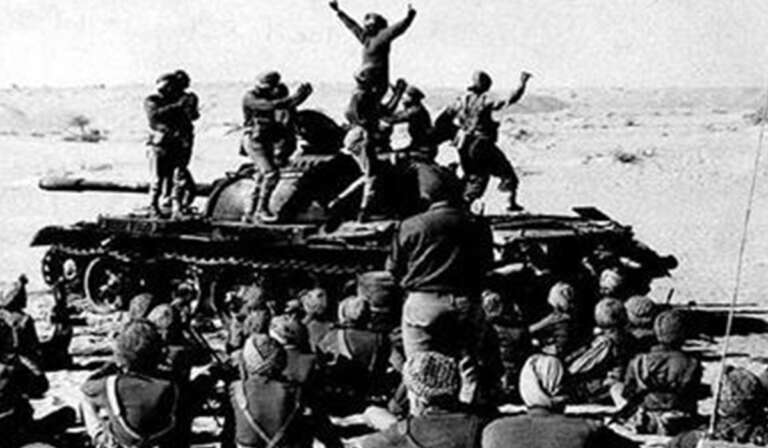
After the 1965 war, a ceasefire between the two countries took place due to the efforts of the United Nations. The ceasefire formally came into effect on September 23, 1965. Following this, talks began between the two countries to resolve the occupied territories and other issues. With the mediation of the Soviet Union, Indian Prime Minister Lal Bahadur Shastri and Pakistani President Ayub Khan signed the Tashkent Agreement on January 10, 1966, in Tashkent.
Under the agreement, both countries agreed to withdraw their armies from the territories captured during the war and to return to the pre-August 5, 1965 positions. Apart from this, it was also agreed to return prisoners of war and to try to normalize relations between the two countries. But just a few hours after the Tashkent Agreement, Prime Minister Lal Bahadur Shastri died in Tashkent on January 11, 1966. His sudden death plunged the country into deep mourning.
Tension Continued Even After 1965 and the Dilapidated State of the Chheharta Martyrs’ Memorial
Relations between India and Pakistan could not become completely normal after the 1965 war. The two countries went to war again in 1971, resulting in Bangladesh coming into existence as an independent nation. The 1999 Kargil War reignited hostilities between the two countries. Even after this, cross-border terrorism, infiltration, and security-related issues continued to be a cause of tension in the relations between the two countries.
After the 2019 Pulwama attack, the Balakot airstrike and India’s ‘Operation Sindhoor’ following the Pahalgam attack in 2025 once again brought tensions between the two countries to a peak. A memorial was built at the local level in memory of the innocent civilians killed in the Chheharta bombing. But with the passage of time, the condition of this memorial has become a cause for concern.
The marble slab on which the names of the deceased were inscribed has also fallen victim to erosion. Many names are no longer clearly legible. The people of the border area and the families of the martyrs demand that this memorial be preserved and developed into an important historical site to pass on the tragedy of 1965 to future generations.
Peace, Not War, is the Real Victory
The history of the 1965 Indo-Pak war is not just a history of military victories and defeats. It is also the story of those common people who, without any fault of their own, lost their family members in the fire of war. The bravery of Abdul Hamid, who was martyred on the battlefield of Asal Uttar, is an example of the Indian Army’s valor, but the death of 52 innocent civilians in Chheharta brings to the fore the other, deeply painful face of war.
Borders may change in wars, armies may win or lose, but the void created in the homes of common people is never filled. Therefore, the history of 1965 teaches us the lesson that military strength is necessary for the country’s security, but protecting humanity and peace is equally important. The memorial to the martyrs of Chheharta is not just a structure of bricks and stones, but a symbol of the sorrow and sacrifice of that generation.
Preserving it is our historical and moral responsibility. The purpose of remembering history is not to keep hatred alive, but to make future generations understand that the real price of war is paid by the common citizen living near the border along with the soldier standing on the border. That is why it is said, even if one side is declared the victor in a war, humanity often loses.


Leave a Comment