

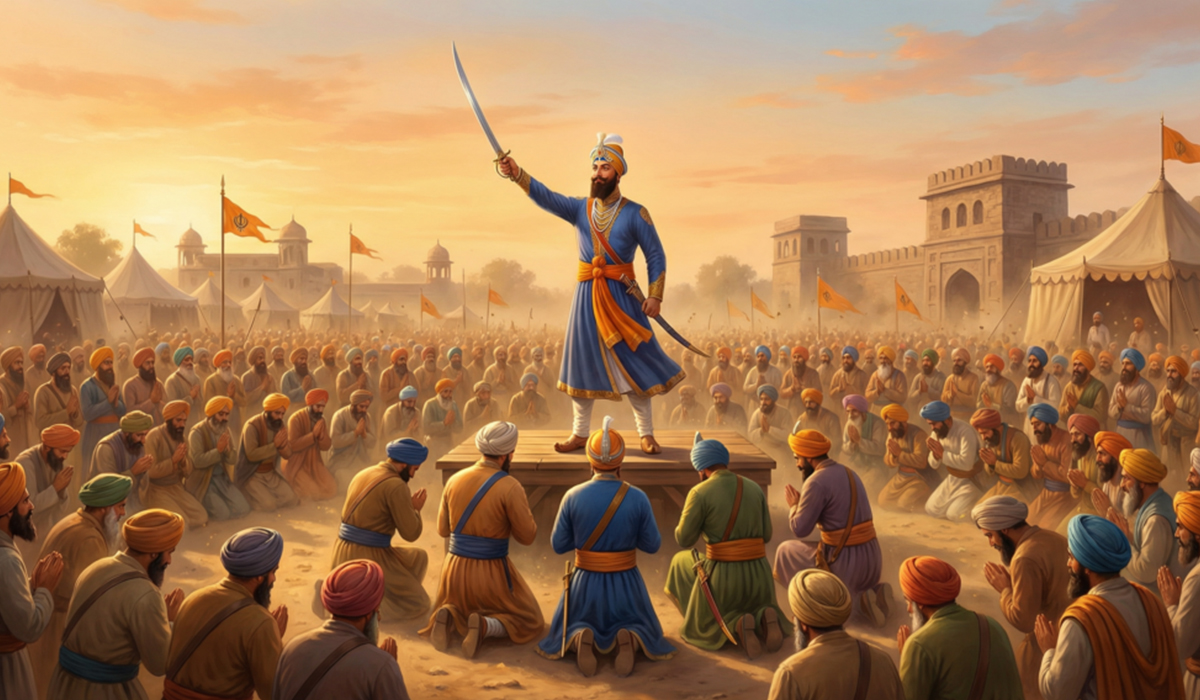

The words spoken by the young Gobind Rai in 1675 were fulfilled on the day of Vaisakhi in 1699. When Guru Gobind Singh Ji created the Khalsa Panth on Vaisakhi day in April 1699, he gave the Sikh community a distinct identity and created saint-soldiers within the Sikh world. It was through granting this separate identity that the words spoken in 1675 were fulfilled. Now the Guru’s Khalsa would be recognized as distinct among lakhs. The Khalsa of the Guru would have its own unique identity.
The word Khalsa comes from Arabic and means “pure,” free from any adulteration. The day of Vaisakhi in 1699 has been recorded in Sikh religious history as a revolutionary event. By creating the Khalsa Panth, Guru Gobind Singh Ji granted society the right to democracy and equality.
If we look into history, divisions based on high and low status have existed in society since ancient times. The practice of slavery is discussed even in early religious texts. If we speak of the time when Sikhism emerged, society was then divided into four classes based on occupation, and the section that worked with its hands and laboured was assigned a lower status in society. The wealthy or upper-caste people kept away even from the shadow of those considered lower caste.
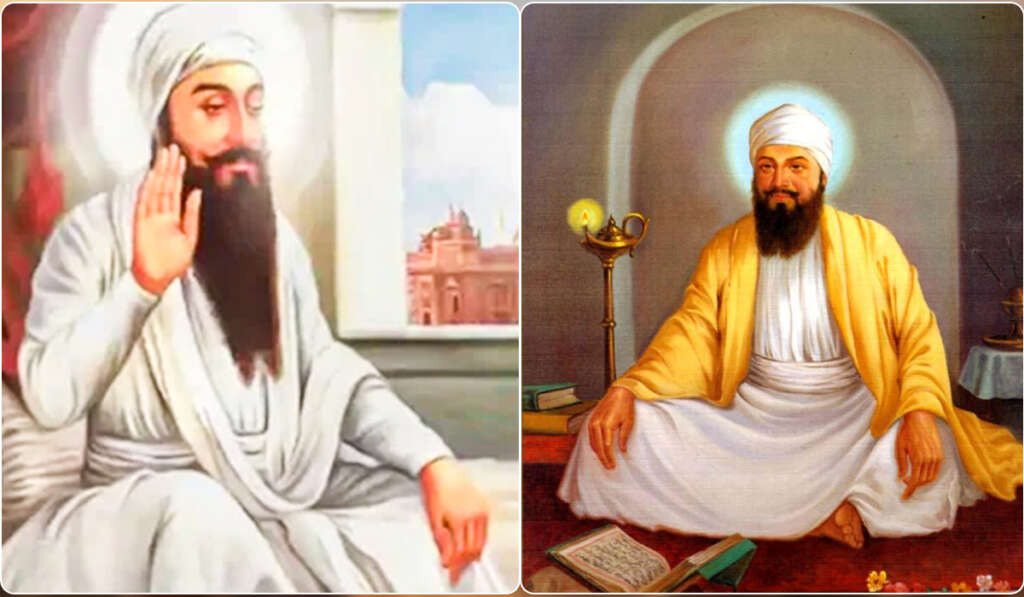
In the time of the Gurus, religious oppression and tyranny were at their peak. It was this oppression that led to the martyrdom of two Sikh Gurus: first, Guru Arjan Dev Ji, the fifth light of Guru Nanak, and then Guru Tegh Bahadur Ji, the ninth light of Guru Nanak.
Although Guru Nanak Dev Ji had prepared the downtrodden and oppressed people to fight for their rights against this tyranny and injustice, by the time of the Tenth Master, oppression and cruelty had reached their height, and no one listened to the crushed and suffering people. Foreign invaders, along with religious and political pressure, had destroyed the self-confidence of the Sikhs. In the time of Guru Gobind Singh Ji, many Sikhs too were forced to live lives of slavery.
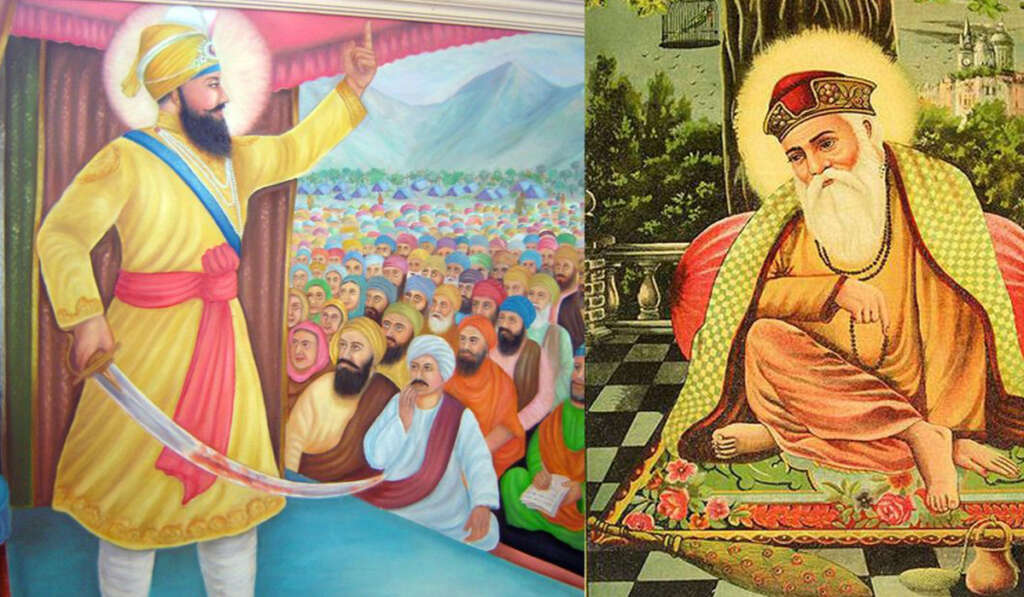
The martyrdom of the Ninth Master broke the barriers of patience. Guru Gobind Singh Ji gave practical shape to the mission started by Guru Nanak Dev Ji against oppression and tyranny by creating the Khalsa. He granted every human being in society the right to equality and awakened them to their rights. Guru Gobind Singh Ji gave practical expression to his own saying:
Maanas ki jaat sabhe eko pehchaanbo
By creating the Khalsa Panth, Guru Gobind Singh Ji ended, in a single stroke, all the human divisions that had arisen in society due to wealth, religion, caste, colour, race, and other such distinctions. He bestowed upon every Sikh the same name and the same form. Through the creation of the Khalsa, Guru Gobind Singh Ji not only established equality in society, but by administering Amrit to the Sikhs, he gave honour to the dishonoured, strength to the weak, and shelter to the shelterless. When the labouring people, crushed by society, received the gift of Amrit and assumed the form of saint-soldiers, they overturned the throne of tyrannical rule.
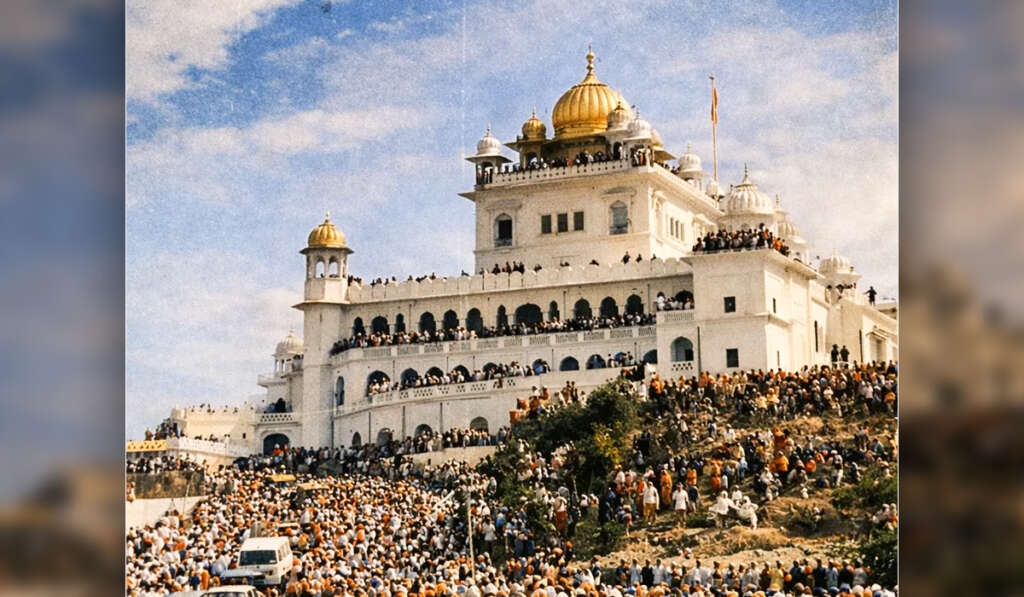
On 13 April 1699, the day of Vaisakhi, sangat had come at the call of Guru Gobind Singh Ji not only from North India but also from Central and South India. Guru Gobind Singh Ji had called a great gathering in the ground of Sri Kesgarh Sahib. The sangat had assembled. The pandal was set. Around 80,000 devotees from across India had arrived from distant places. What happened that day on the soil of Anandpur Sahib was unparalleled. No description of such an event is found in any other corner of the world.
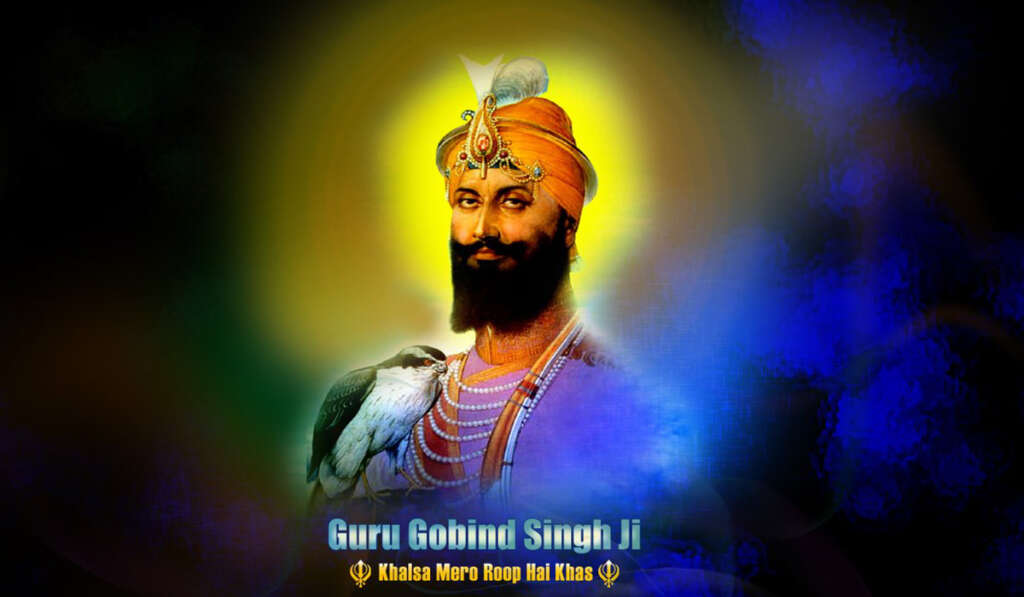
Guru Gobind Singh Ji, holding an unsheathed sword in his hand, stood in the full gathering and thundered: Is there any Sikh of the Guru who can offer his head for the Guru? Silence fell upon the assembly. Guru Ji repeated the call three times in a powerful voice. When Guru Ji demanded a head for the third time, Bhai Daya Ram, a resident of Lahore, a Khatri by caste, and a shopkeeper by profession, stood up and presented himself before the Guru, saying: I am ready.
Guru Sahib took him into a tent set up in the pandal, and a loud sound was heard. Then Guru Ji emerged from the tent with a blood-stained sword and once again asked for another head. Now Bhai Dharam Das Ji, a Jatt by caste from Hastinapur near Delhi, offered his head. The third time, Bhai Himmat Rai, of the Jhivar caste, who had come from Jagannath Puri in Odisha, offered his head. The fourth time, Bhai Mohkam Chand, a Chhimba by caste, who had come from Dwarka in Gujarat, offered his head. The fifth time, Bhai Sahib Chand, a Nai by caste, who had come from Bidar in Karnataka, offered his head.
These five devoted Sikhs offered themselves to the Guru in the spirit of the sacred line:
Tanu manu dhanu sabh soupi Gur kau hukam manniai paai ai
Guru Gobind Singh Ji prepared these five Singhs inside the tent and administered Khande-di-Pahul to them. These five Sikhs, being the first to receive the Khande-da-Pahul and enter the pure Khalsa Panth, came to be known as the Panj Piare. It was a wonder of divine design that all five were from different castes and different places.
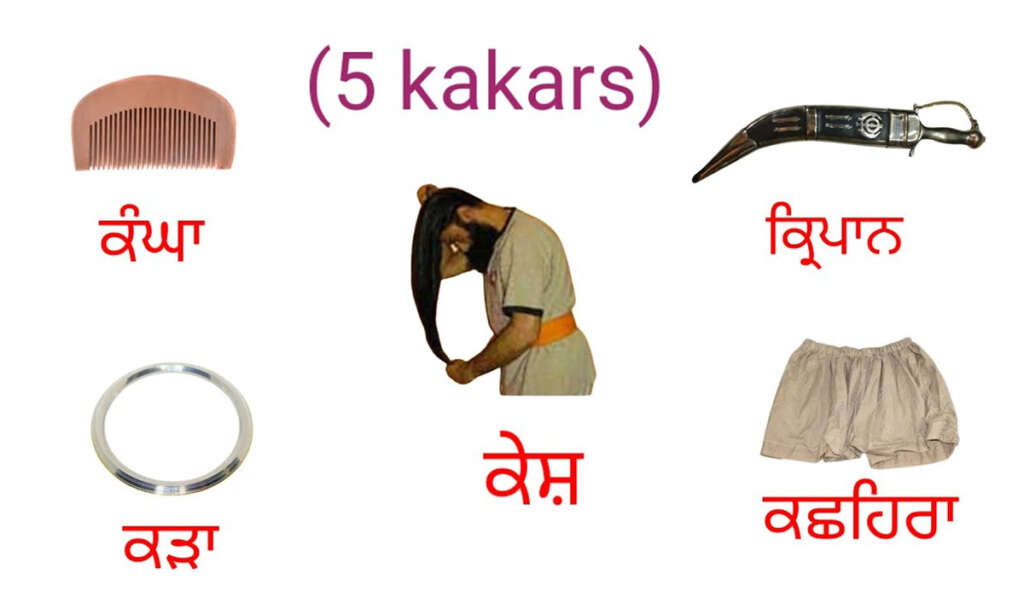
Guru Gobind Singh Ji himself then received Amrit from these Panj Piare and changed his name from Gobind Rai to Gobind Singh. Guru Gobind Singh Ji brought the Panj Piare before the pandal and gave the Khalsa a distinct form. He commanded all Sikhs to receive Amrit. He instructed them to adopt the Five Ks: Kara, Kangha, Kachhera, Kes, and Kirpan. He told them to use Singh and Kaur after their names. He encouraged them to read Gurbani.
Guru Gobind Singh Ji used the word Khalsa for those Singhs who had become pure after receiving the Khande-da-Pahul. Guru Ji said that the Khalsa is a shield for the oppressed and a sword against the enemy. The Khalsa is beyond the influence of lust, anger, greed, attachment, and ego, and is the complete human being whose words and actions are one, shaped by Guru Gobind Singh Ji through the edge of the double-edged sword.
The creation of the Khalsa was not a sudden decision taken by Guru Sahib. Behind it was his deep understanding of the centuries-old pain of the people. That is why Guru Ji created the Khalsa.
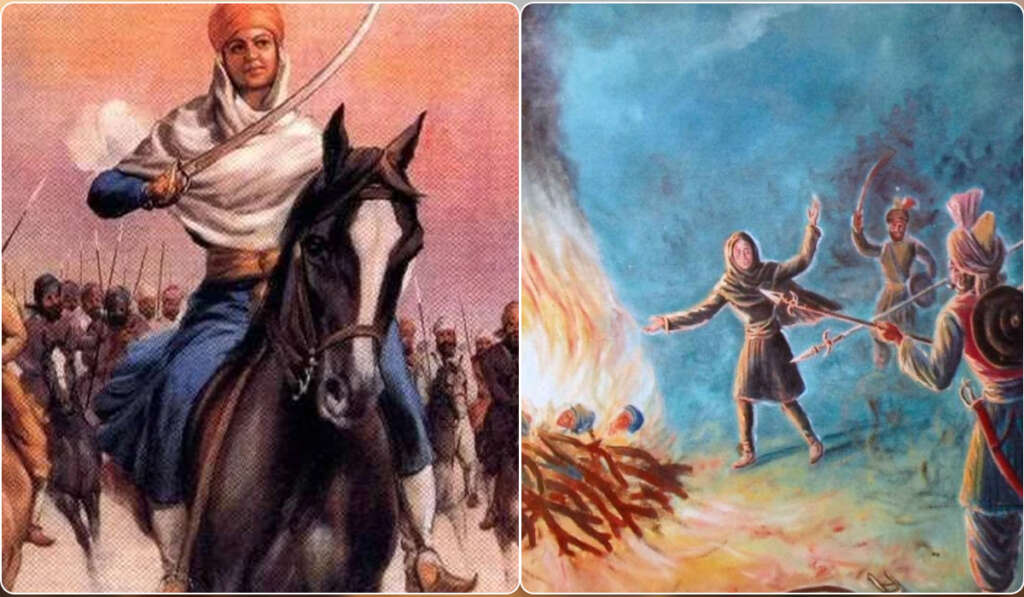
In Guru Sahib’s time too, women did not enjoy equality in society. Guru Ji issued commands that whoever killed a daughter would have no relation with him, nor should his Sikhs have any relation with such a person. It was because of the equality and freedom bestowed upon women in society that Bibi Sharan Kaur courageously broke through the Mughal cordon and performed the cremation of the Singhs and the elder Sahibzadas martyred in the battle of Chamkaur. On the field of Muktsar, Mai Bhago displayed incomparable bravery and drank the cup of martyrdom.
Guru Gobind Singh Ji called himself the servant of the Divine and called his Khalsa his strength. After creating the Khalsa Panth, Guru Gobind Singh Ji produced many saint-soldiers. Whenever needed, they never allowed Guru Gobind Singh Ji to lose any battle. The five Singhs who were installed as the Panj Piare also remained with Guru Gobind Singh Ji.
Guru Ji bestowed the Guruship upon Sri Guru Granth Sahib Ji and made it the eternal Guru. By enthroning the Shabad Guru, Guru Ji established a unique and incomparable tradition in the world.
Keeping in view the day of Vaisakhi and the creation of the Khalsa Panth, we should celebrate this day as a day of universal human equality and democracy.
Leave a Comment