


‘Plant once and earn for decades’!
After the Green Revolution, Punjab’s agriculture made an extremely important contribution to India’s food security. The paddy and wheat crop cycle not only played a major role in meeting the country’s grain requirements but also provided a reliable source of income to the farmers of Punjab for a long time. However, over the past several decades, the pressure this crop cycle has exerted on the environment and agriculture has assumed a serious form.
The continuously falling groundwater level, decline in soil health, increase in agricultural input costs, increasing use of chemical fertilizers and pesticides, and the pollution caused by paddy stubble burning have become major challenges for Punjab’s farming. In such circumstances, promoting crop diversification has become the need of the hour.
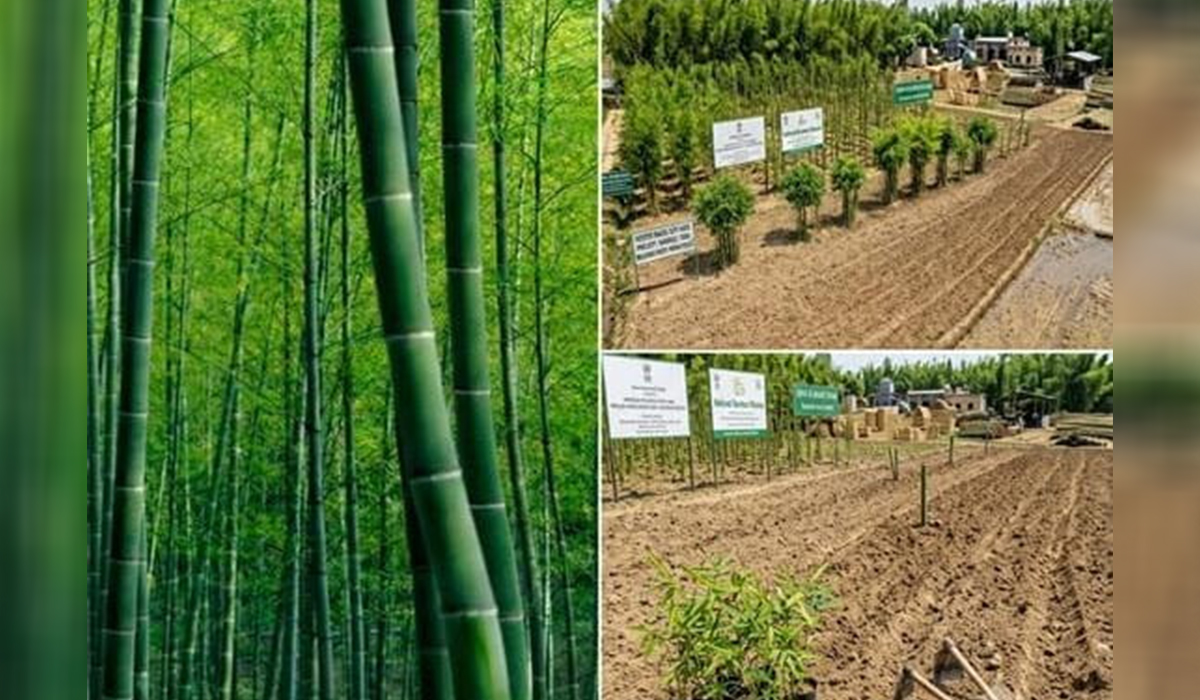
In this direction, an amount of Rs 2.49 crore has been approved by the Central Government under the ‘National Bamboo Mission’ to promote bamboo farming in Punjab. Under this initiative, government demonstration projects are to be established on more than 857 acres in the state. This effort can be considered a significant step toward developing new and sustainable agricultural alternatives alongside the traditional crop cycle in Punjab.
Challenges of the Paddy-Wheat Crop Cycle
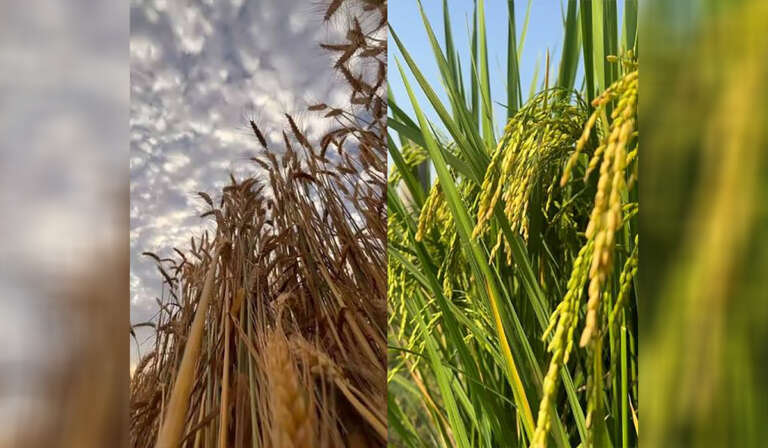
To understand the need to promote an alternative crop like bamboo in Punjab, it is first necessary to understand the challenges of the current agricultural system. Preparing the paddy crop requires a large amount of water. In many areas of Punjab, the main source of irrigation is groundwater. Due to its indiscriminate use over a long time, the water level is continuously going down in many parts of the state. The water situation in many blocks has become alarming. If crops requiring less water are not made a part of the agricultural system in the future, the water crisis could become even more severe. Therefore, there is a need for crops that, along with providing income to the farmers, also reduce the pressure on natural resources.
According to agricultural experts, continuously growing the same types of crops also affects soil nutrients. With the increased use of chemical fertilizers and pesticides for higher production, there remains a risk of damage to the soil’s natural fertility. Furthermore, paddy stubble management is also a big challenge. Stubble burning increases air pollution, and this has an adverse effect on human health as well as the environment. Therefore, crop diversification needs to be viewed not just as an economic issue, but also as an environmental one.
National Bamboo Mission’s Initiative! Necessary to Divert Farmers Toward Such Crops
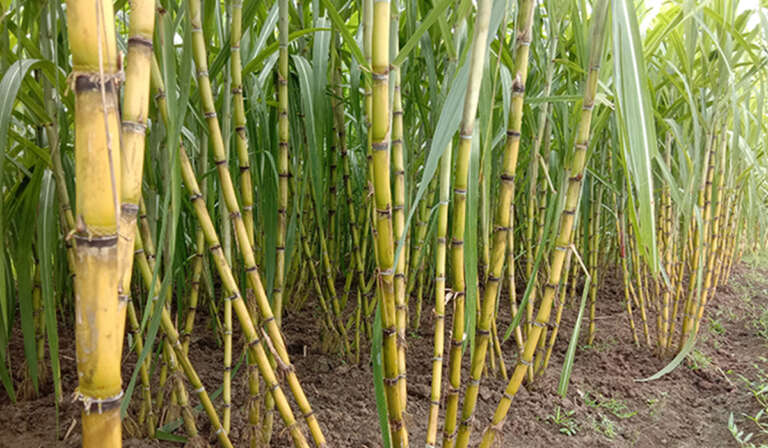
The increase in the cost of diesel, seeds, fertilizers, pesticides, labor, and agricultural machinery has increased the production cost for farmers. Although there is a provision for a Minimum Support Price for paddy and wheat, the rising costs continue to put pressure on the net income of farmers. Therefore, it is necessary to divert farmers toward crops that have market demand and possibilities for value addition.
The National Bamboo Mission is an important initiative to promote bamboo farming. Its objective is not only to increase bamboo production but also to develop the entire value chain associated with bamboo. This includes activities ranging from plant nurseries to farming, harvesting, processing, value addition, and the market. The approved amount of Rs 2.49 crore for Punjab and the plan for demonstration projects in an area of more than 857 acres indicate that bamboo is being viewed not merely as an alternative plant, but as a potential agro-industrial activity.
Why are the 857-Acre Demonstration Fields Important?
It is not an easy decision for a farmer to abandon his traditional crop and adopt a new one. He faces many questions related to yield, cost, market, sales, and income. In such a scenario, demonstration fields can act as practical training centers for farmers. Through these projects, farmers will be able to acquire information about bamboo sowing and planting techniques, irrigation, fertilizer management, protection from diseases and pests, maintenance, and harvesting methods.
Along with this, the performance of different bamboo varieties across various soils and climatic conditions can also be studied. Such demonstration fields can play a significant role in building confidence among farmers regarding the new crop.
Potential Benefits of Bamboo Farming / Possibility of Less Water and Lower Cost

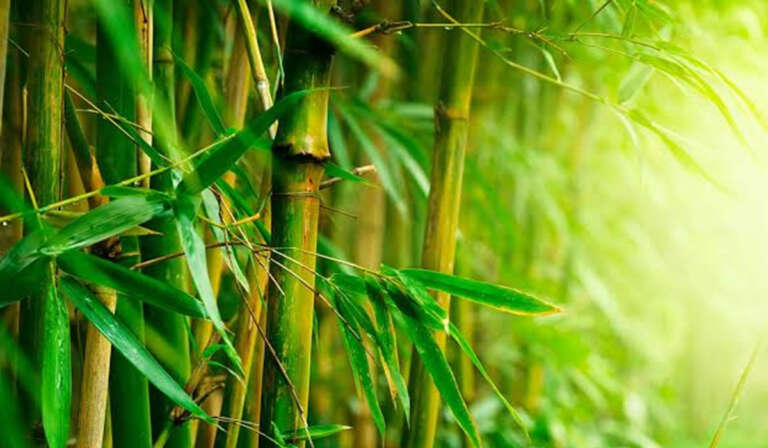
Bamboo is considered a potential alternative for agricultural diversification for many reasons. The biggest feature is that it is a perennial plant. Once a bamboo plantation is established, production can be taken from it for many years with proper management. Bamboo farming does not require keeping the fields flooded with water for a long time like paddy. This creates the possibility of water conservation.
However, the water requirement depends on the bamboo variety, soil, weather, and agricultural management. Similarly, bamboo being a perennial plant means there is no need for sowing a new crop every year and incurring all the associated expenses. This allows the cost structure in the long run to differ from traditional annual crops.
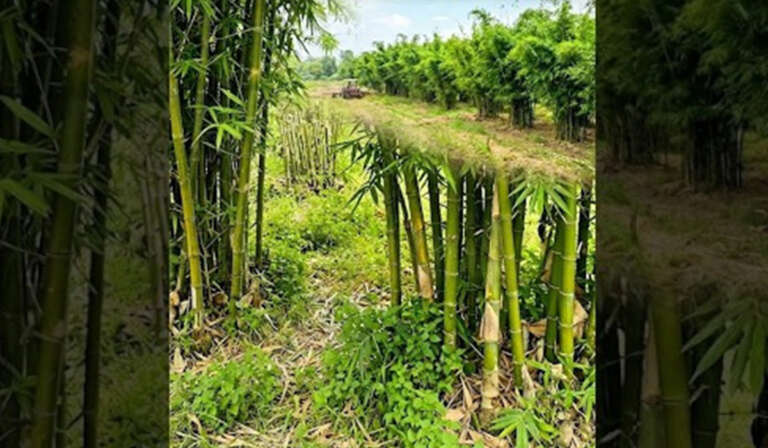
A significant characteristic of bamboo is its regenerative nature. Once a bamboo grove is established, new shoots and culms continue to be produced for several years with proper care. Because of this, the farmer does not need to replant every year. However, the income from bamboo will depend on the variety, production, cultivation costs, harvesting, transportation, and, above all, the market price. Therefore, instead of the simple formula of ‘plant once and earn for decades’, it would be more beneficial to adopt bamboo as a scientific and market-based farming practice.
Bamboo is among the fastest-growing plants and can contribute to absorbing carbon dioxide from the environment. Its roots help bind the soil, which can assist in reducing soil erosion. Bamboo can be used as a substitute for wood in many sectors. In this way, its farming can also strengthen an eco-friendly economy. The biggest feature of bamboo is that it is not used merely as an agricultural product. A variety of industrial products can be made from it. That is why bamboo is also called ‘green gold’.
What Can Be Made from Bamboo and What are the Challenges?
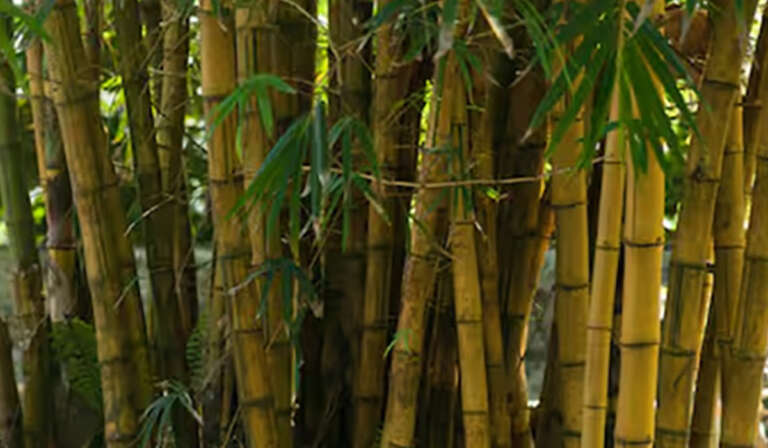
Paper and other products are made by preparing pulp from bamboo. This can help in developing alternatives to wood-based raw materials. By preparing fiber from bamboo, it is used in the textile sector. Market prospects for bamboo-based products are growing in this field. Chairs, tables, decorative items, baskets, and various items for household use are made from bamboo. This can create small-scale industries and employment opportunities in rural areas. The leftover parts of bamboo can be used in biomass, pellets, and other energy-related products. With the development of this sector, the demand for bamboo could increase further. Thus, if a processing and value-addition infrastructure is also developed alongside bamboo farming in Punjab, farmers can be linked to higher-value markets instead of just selling raw bamboo.
On the other hand, according to progressive farmer Surjit Singh, bamboo farming can be considered a potential alternative for Punjab, but it would not be right to consider it an immediate and complete replacement for paddy-wheat. Several fundamental challenges will have to be resolved for its success. First of all, a direct linkage with the market must be ensured. If farmers produce bamboo but there is no assured market for its sale, their confidence in the new crop may break. Therefore, it is necessary to develop prior agreements and market linkages with processing units, industrial units, and buyers.
Secondly, suitable bamboo varieties should be selected according to the soil and weather of Punjab. Agricultural universities and research institutes should conduct scientific research and field experiments regarding this. Thirdly, it is mandatory to provide farmers with complete technical information about bamboo farming. Training must be imparted for every stage, from planting to harvesting and sales. Bringing in just one new crop is not enough to save Punjab’s agriculture. Therefore, there is a need to bring a change in the entire agricultural system. Pulses, oilseeds, vegetables, fruits, animal husbandry, agroforestry, and perennial plants like bamboo will have to be made part of a larger agricultural strategy.
Bamboo can become a significant part of this change. Its specialty is that it links agriculture with industry. If a complete ecosystem of processing, value addition, product manufacturing, and marketing is developed in Punjab alongside bamboo production, it can also give new strength to the rural economy. Real success will come when Punjab’s agriculture moves forward not just on higher production, but on the principles of less water, lower cost, higher value, and environmental protection. Bamboo farming can prove to be a potential strong link in this transformation.


Leave a Comment