

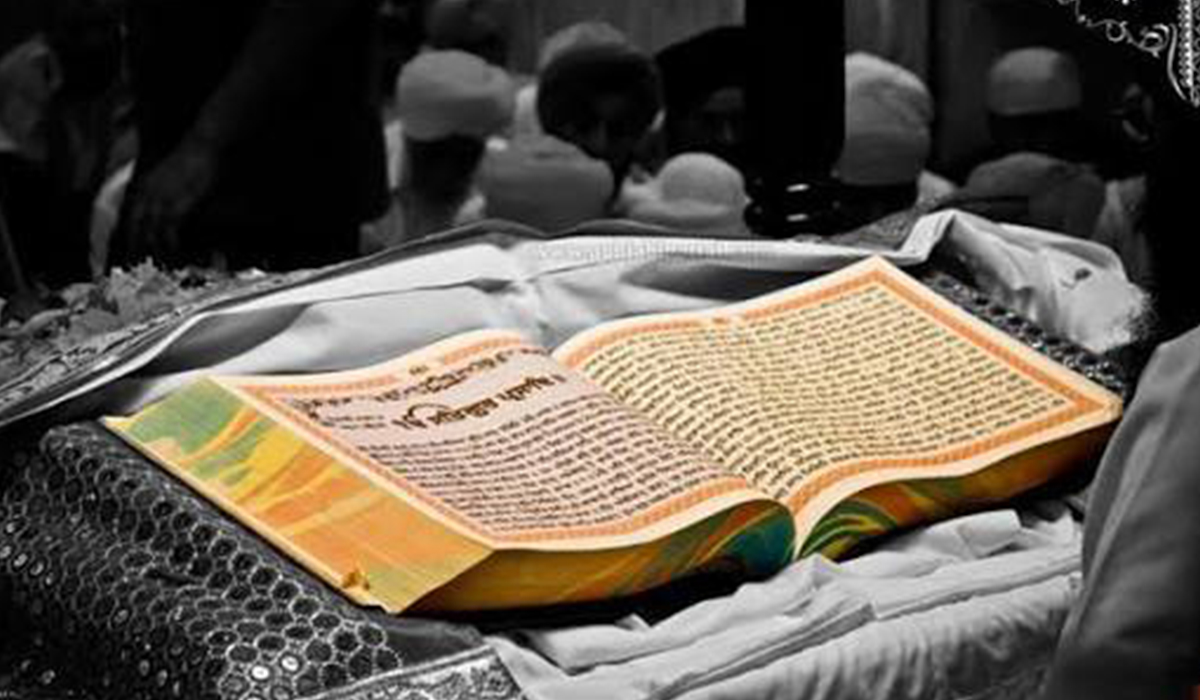

Sri Guru Granth Sahib is the embodiment of the Word Guru for all humanity. For the welfare of the universe, the fifth sovereign, Sri Guru Arjan Dev Ji, compiled the divine hymns of the Gurus, saints, and close Sikh devotees of the Guru’s house into the Adi Granth Sahib, with the assistance of the scribe Bhai Gurdas Ji. In strict accordance with the Gurmat philosophy and free from narrow limitations of religion, caste, place, language, poverty, or wealth, the compositions of the Gurus and saints were included in the Adi Granth. These hymns made the marginalized populace feel a sense of equality, delivered a message of universal kinship, awakened a spirit of self-respect, and ignited an ideological revolution against the inhumane treatment based on caste and religion prevalent in contemporary society. Among the Sikh Gurus, the compositions of six Gurus—Guru Nanak Dev Ji, Guru Angad Dev Ji, Guru Amar Das Ji, Guru Ram Das Ji, Guru Arjan Dev Ji, and Guru Tegh Bahadur Ji—were given a special place in Guru Granth Sahib Ji. Besides the Guru Sahibs, the compositions of 15 saints are also recorded, including Bhagat Jaidev, Baba Sheikh Farid, Bhagat Sadhana, Bhagat Trilochan, Bhagat Namdev, Bhagat Sain, Bhagat Ramanand, Bhagat Ravidas, Bhagat Kabir, Bhagat Beni, Bhagat Dhanna, Bhagat Pipa, Bhagat Surdas, Bhagat Bhikhan, and Bhagat Parmanand. In addition to these, the compositions of 11 Bhatts are included: Kalsah, Nalh, Gayand, Bhikha, Salh, Keerat, Bhalh, Mathura, Balh, Jalap, and Harbans. Apart from the Gurus, saints, and Bhatts, the words of four close Sikhs of the Guru’s house who hold high recognition and stature in Sikh society were also included in the Adi Granth, namely Bhai Mardana, Rai Balvand, Satta Doom, and Baba Sundar.
From ancient times in India, following the prevalence of the Vedas, people were divided into varnas based on their work. Four varnas and four classes were prevalent in society. The entire society was divided into four classes: Brahmin, Kshatriya, Vaishya, and Shudra. All four of these classes belonged to the Hindu religion. As time passed during the medieval period, the Muslim religion became prevalent in India. In 712 AD, Muhammad bin Qasim attacked the northwestern frontier province of India for the first time and established his settlement there. Many other people belonging to the Muslim religion came and settled in India along with Muhammad bin Qasim. They had their own customs and attire. Now, following Hinduism, Islam also began to take root in India. The invasions of Ghazni and Ghori brought the entire northern part of India under the fold of Islam. With the end of the Delhi Sultanate, the Lodhis ruled the throne of Delhi. Three kings of the Lodi dynasty ruled the throne of Delhi: the first was Bahlol Lodi, the second Sikandar Lodi, and the third Ibrahim Lodi. Guru Nanak Dev Ji was born during the time of Bahlol Lodi. It was Guru Nanak Dev Ji who, through the teachings he imparted during his travels in various directions, shaped them into a distinct spiritual path. For this reason, Nanak, the sovereign, is considered the founder of the Sikh religion.
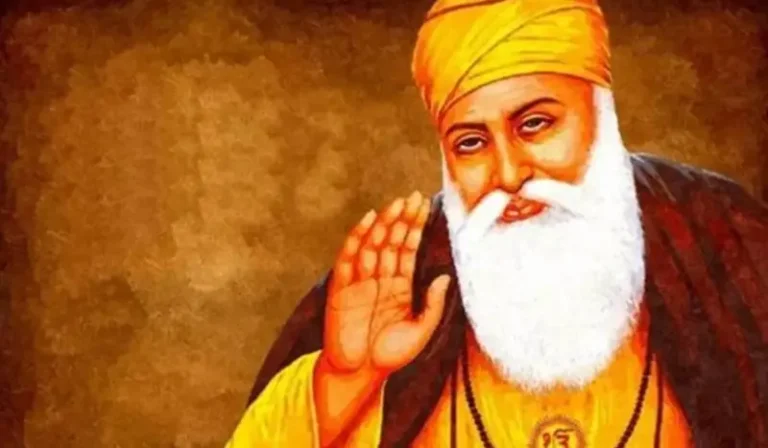
At the beginning of the 15th century, social conditions in India had deteriorated significantly. Many corrupt practices had crept into both Hinduism and Islam. The entire society was trapped in hollow rituals. People were miles away from the ultimate truth of life. Nanak Patshah set the entire humanity on the right path through his written words. Following Guru Nanak Patshah, the second Sikh Guru, Guru Angad Dev Ji, improved the Lunda script, propagated the Gurmukhī script, and systematically organized the words of Guru Nanak Dev Ji along with those of other saints and Bhatts collected by him. After Guru Angad Dev Ji, Guru Amar Das Ji, and subsequently Guru Ram Das Ji, continued this work. Following Guru Ram Das Ji, his youngest son Arjan—who from childhood was blessed with the boon “The maternal grandson shall be the ship of Gurbani,” given by Guru Amar Das Ji at birth—took up the task. Guru Arjan Dev Ji gathered the hymns of the first four Gurus, 15 saints, and 11 Bhatts. Adding his own 2,216 hymns to them, he had them transcribed by Bhai Gurdas Ji, the realized sage of that era, to prepare a Bir named the Adi Granth. In addition to the Gurus, saints, and Bhatts, the hymns of four close Sikhs of the Guru’s house who met the rigorous standards of the Sikh faith were also recorded in the Adi Granth. The Adi Granth is an extensive scripture consisting of 1,430 angs (pages) of Gurbani. This scripture is considered the holiest in Sikhism, and the bani written within it is regarded as the guiding light for Sikhs. The compilation of the Adi Granth was completed by Sri Guru Arjan Dev Maharaj through Bhai Gurdas Ji in August 1604 AD, and for the first time, in September 1604 AD, the Adi Granth was installed inside Harmandir Sahib in Amritsar.
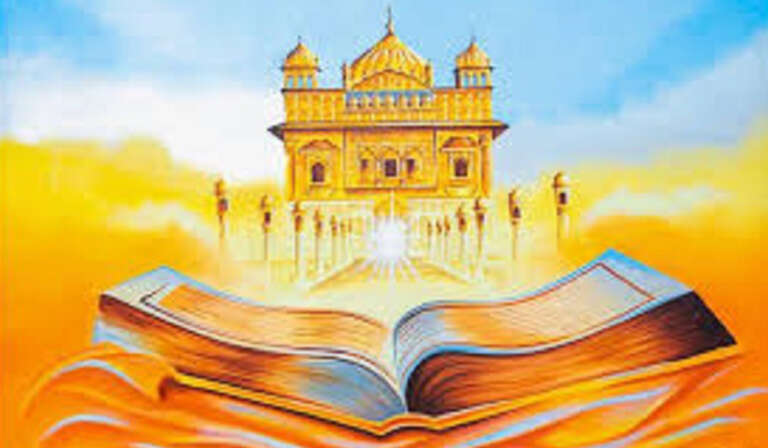
Having enshrined the Adi Granth at Sri Harmandir Sahib in September 1604 AD, a major question before the Guru’s house was who would oversee and care for it. At that time, the wisest person in the Sikh community who had spent the most time with the Gurus was Baba Buddha Ji. Baba Buddha Ji possessed a deeply religious and spiritual temperament. Recognizing these traits, Baba Buddha Ji was also appointed as the first Head Granthi of Harmandir Sahib. This scripture contains 1,430 pages and 5,894 hymns. The major portion of the Granth is divided into 31 main musical measures (Rags). To write the Adi Granth, Bhai Gurdas Ji used multiple languages. The Adi Granth was written in the Gurmukhī script incorporating several languages, such as Punjabi, Sanskrit, Hindi, Braj Bhasha, Bagri, Awadhi, Bhojpuri, Sindhi, Marathi, Marwari, Bengali, Persian, and Arabic. These diverse languages were used to complete the Adi Granth. Before having Bhai Gurdas Ji write the Adi Granth, Guru Arjan Dev Ji had obtained the bani and hymns of the first three Gurus from Baba Mohan Ji, who was the son of Guru Amar Das Ji. After Guru Arjan Dev Ji, his son Nanak Patshah’s sixth manifestation, Guru Hargobind Sahib, the master of Miri and Piri, ascended the Guru Gaddi. Guru Hargobind Maharaj had five sons and one daughter: Baba Gurditta Ji, Ani Rai, Atal Rai, Tegh Mal, Suraj Mal, and Bibi Biro. Baba Gurditta Ji was a deeply accomplished and holy person. His son was designated as the seventh manifestation of Nanak Patshah, who was Guru Har Rai Ji. However, his elder son, Baba Dhir Mal, felt aggrieved by this. Because of his close lineage to the Guru’s house, Baba Dhir Mal possessed that original handwritten Bir. After Guru Har Rai Ji, his son Guru Harkrishan Ji ascended the Guru Gaddi. Following Guru Harkrishan Ji, Tegh Mal—who in time became Guru Tegh Bahadur—was made the ninth Guru of Sikhism. Yet, the longing for the Guru Gaddi and jealousy toward the reigning Gurus still festered within Dhir Mal.
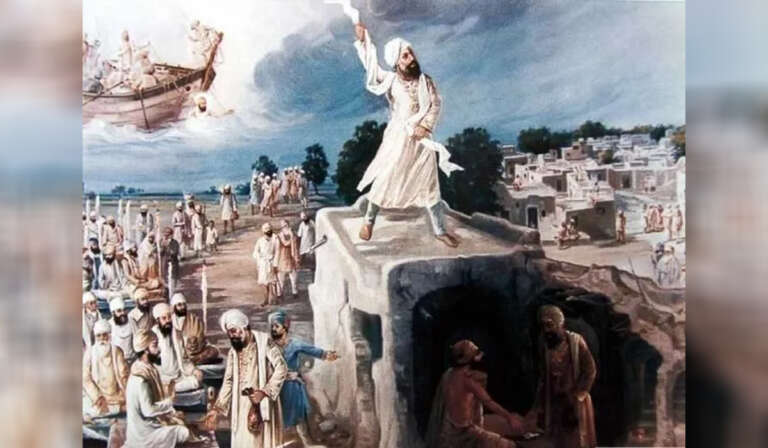
When Makhan Shah Lubana proclaimed “The Guru has been found!” at Baba Bakala and established Guru Tegh Bahadur Ji as the ninth Guru of Sikhism, Dhir Mal was filled with jealousy and anger. He bribed several of his masands and had an attack orchestrated against Guru Tegh Bahadur Ji. One of Dhir Mal’s masands, Shiha, even fired a gunshot at Guru Tegh Bahadur Ji. By the grace of God, however, the Guru escaped unharmed, sustaining only a minor injury. Leaving everything behind and abandoning the Majha region, Guru Tegh Bahadur Ji came to Kiratpur Sahib and established a new town called Chak Nanki. Over time, Chak Nanki grew into the city of bliss, Sri Anandpur Sahib. Guru Tegh Bahadur Ji attained martyrdom, the Khalsa Panth was revealed, Guru Gobind Singh Ji had to leave the fort of Anandpur Sahib, a fierce battle took place at Chamkaur, the elder Sahibzadas attained martyrdom alongside 40 Sikhs, and the younger Sahibzadas were entombed alive. Eventually, Guru Gobind Singh Ji reached Talwandi Sabo. Having outmaneuvered the Mughal and hill armies, Guru Gobind Singh Ji resolved to record the hymns of his father, Guru Tegh Bahadur Ji, into the Adi Granth.
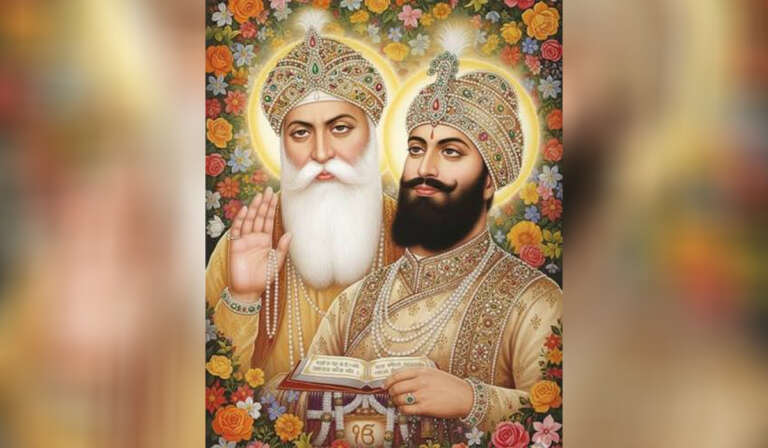
When the family of Guru Gobind Singh Ji was separated on the banks of the Sirsa River after leaving the fort of Anandpur, the swift-flowing waters of the Sirsa washed away all the handwritten texts the Guru possessed. The Guru sent several of his Sikhs from Talwandi Sabo to Baba Dhir Mal to bring back the original Bir. However, Baba Dhir Mal refused to hand over the Bir, saying, “Why do you take away our ancestral heritage? You call yourself the tenth manifestation of Nanak Patshah and know everything; if you are so capable, why don’t you write it yourself?” Thereupon, the Guru assigned this sacred duty to Bhai Mani Singh Ji. The Guru would utter the hymns from his lips, and Bhai Mani Singh Ji would write them down. Guru Gobind Singh Ji stayed on the soil of Damdama Sahib, Bathinda, for a full nine months, and right here, he had a new scripture compiled which included the hymns of the first five Gurus, 15 saints, 11 Bhatts, four close Sikhs of the Guru’s house, and the ninth sovereign, Guru Tegh Bahadur Ji. This scripture was given a new name, Sri Guru Granth Sahib. The Adi Granth compiled by Guru Arjan Dev Ji at Kartarpur Sahib contains only the first five hymns of Rehras Sahib. However, the Sri Guru Granth Sahib compiled by Guru Gobind Singh Ji on the soil of Bathinda includes nine hymns for Rehras Sahib, which congregations recite daily even today. The conclusion (Bhog) of both texts occurs at the same page marker (18-10-20). In 1708 AD, at Nanded Sahib in the Deccan, Sri Guru Gobind Singh Ji established Sri Guru Granth Sahib Ji as the perpetual Guru of the Sikhs in his final moments. This status of the Word as Guru has continued to be recognized in Sikhism ever since. In all Gurudwaras associated with Sikhism in Punjab and states outside Punjab, Sri Guru Granth Sahib Ji has been enshrined as Guru following Guru Gobind Singh Ji. According to the revised Nanakshahi calendar issued by the Shiromani Gurdwara Parbandhak Committee, this year in 2026, the 422nd First Parkash Purab of Sri Guru Granth Sahib Ji is being celebrated. On this occasion, devotees and administrators at Sri Darbar Sahib, Amritsar, have initiated decoration services using around 50 to 60 varieties of colorful indigenous and exotic fragrant flowers, which were completed by September 11, and the 422nd First Parkash Purab will be celebrated with great fervor and devotion on September 12.


Leave a Comment