

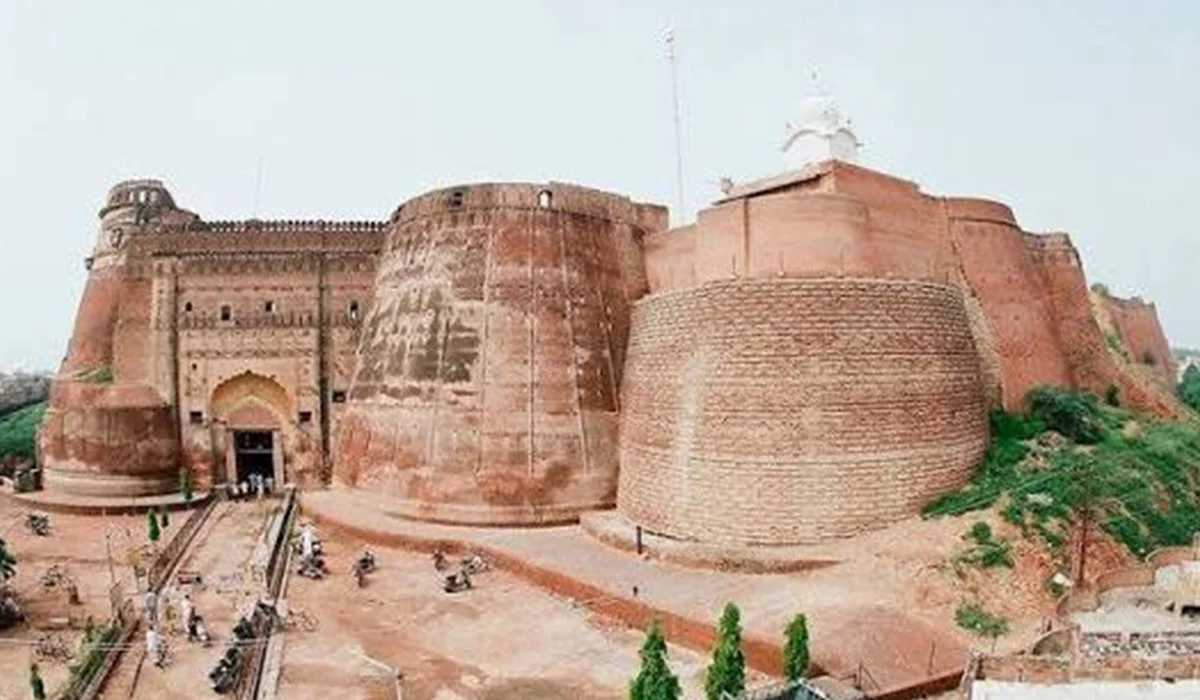

The Indian subcontinent is known across the world for its vast and colourful history. Among the strongest witnesses to this history are its ancient buildings, palaces, and forts. When we speak of India’s oldest forts, people often think of Rajasthan or central India. But very few know that one of the most ancient forts in India still standing today is Qila Mubarak, located in the heart of the historic city of Bathinda in Punjab.
This massive fort has witnessed not only Punjab’s political, religious, and architectural transformations, but also many major turning points in the history of India. Built largely of brick, the fort carries within it layers of history stretching from the Kushan period to the Mughal, Sikh, and British eras. Today, it has the status of a Monument of National Importance under the Government of India and is maintained by the Archaeological Survey of India (ASI).
Ancient Indus Valley Links and the Origins of Qila Mubarak, Bathinda
Before discussing Qila Mubarak, it is important to understand the antiquity of Bathinda itself. Bathinda is deeply connected with the ancient roots of Indian history. Archaeological findings suggest that the wider Bathinda region was associated with the ancient Indus Valley civilisation. Ancient remains discovered in surrounding areas are cited as evidence of this connection.
References to the broader region are also associated with ancient Indian texts such as the Rigveda and the Mahabharata. It is believed that this area lay along important commercial and political routes of ancient India.
In earlier times, Bathinda was situated near the northern edge of the Thar Desert, surrounded by large sand dunes. This geographical setting gave the region a degree of natural protection. One of the most distinctive features of Qila Mubarak is the type of bricks used in its construction.
According to archaeological interpretations, the foundations of the fort contain distinctive rectangular bricks associated with the Kushan period. It is believed that the original structure was built during the first century CE under Emperor Kanishka and Raja Dab.
Raja Dab, who is regarded in some traditions as an ancestor of Raja Vena Pal, is believed to have constructed the fort as a defensive structure against Huns and other invaders advancing from the northwest.
Over the centuries, different rulers expanded and modified the fort according to their military requirements. By the eleventh and twelfth centuries, it had developed into a major military fortress and served as an important defensive barrier against invading armies advancing towards Delhi.
Major Historical Turning Points and Rulers Associated with the Fort
The history of Qila Mubarak is filled with the victories, defeats, and political struggles of some of the most prominent rulers of the Indian subcontinent.
According to historical accounts, the origins of the fort are associated with Emperor Kanishka. Later, Mahmud of Ghazni attacked or occupied it in 1004 CE. Muhammad Ghori became associated with the fort in 1189 CE, followed by Prithviraj Chauhan in 1191 CE.
In 1240 CE, the fort became closely linked with the history of Razia Sultan. From the sixteenth to the eighteenth century, Sikh Guru Sahibs also visited this region, and in the eighteenth century the fort came under the influence of Maharaja Ala Singh of Patiala.
It is said that Mahmud of Ghazni attacked Bathinda and captured this powerful fortress in 1004 CE. In 1189 CE, Muhammad Ghori took control of the fort. However, before the First Battle of Tarain in 1191 CE, Hindu ruler Prithviraj Chauhan is said to have defeated Ghori’s forces after a prolonged siege and regained control of the fort.
Razia Sultan and Qila Mubarak
One of the most tragic and dramatic chapters in the history of Qila Mubarak is associated with Razia Sultan, the first and only woman ruler of the Delhi Sultanate.
Malik Altunia, the governor of Bathinda, rebelled against Razia. During the conflict, Razia’s loyal companion Yaqut was killed, and after her defeat, Razia was imprisoned inside Qila Mubarak.
According to local folklore and popular legends, Razia Sultan is believed to have jumped from a high balcony of the fort while attempting to escape her enemies and regroup her army. Even today, one section of the fort is popularly known as “Razia Di Burji”, or Razia’s Bastion.
Religious Significance, Sikh Gurus, and Sufi Saints
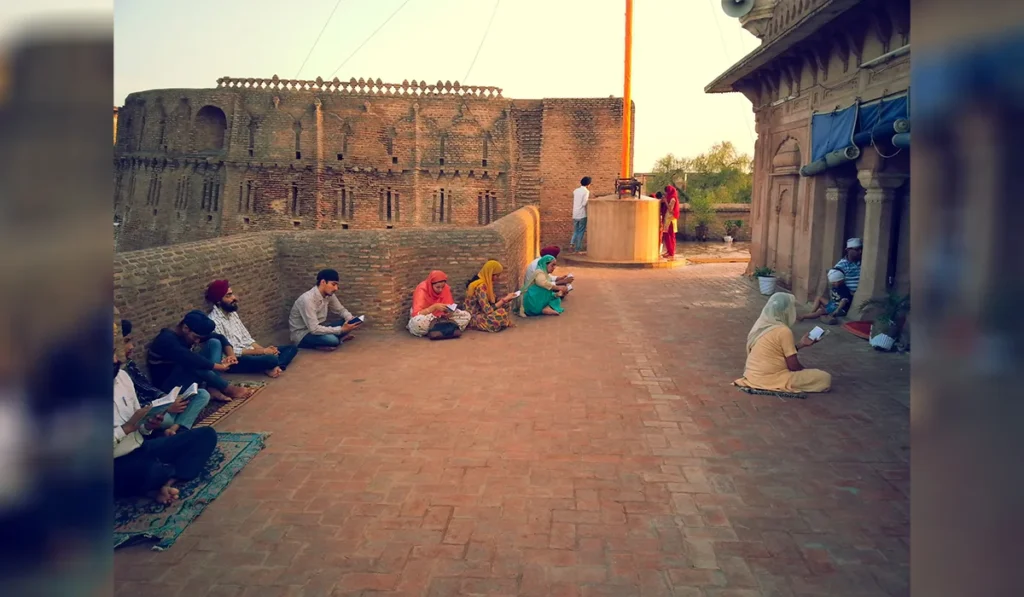
Qila Mubarak was not important merely from a military perspective. It also acquired deep spiritual and religious significance. In the eleventh century, the renowned Sufi saint Pir Baba Haji Rattan Ji is believed to have come to Bathinda and meditated near the fort.
The historic site is also associated with the visits of three Sikh Guru Sahibs. Guru Nanak Dev Ji, the founder of Sikhism, is believed to have visited Bathinda during his second Udasi around 1515 CE.
The ninth Sikh Guru, Guru Tegh Bahadur Ji, is associated with a visit to the fort during his journey through the Malwa region in 1665 CE. The tenth Sikh Guru, Sri Guru Gobind Singh Ji, is believed to have visited the fort in 1705 CE while travelling towards Talwandi Sabo, or Damdama Sahib.
Gurdwara Sri Qila Mubarak Sahib
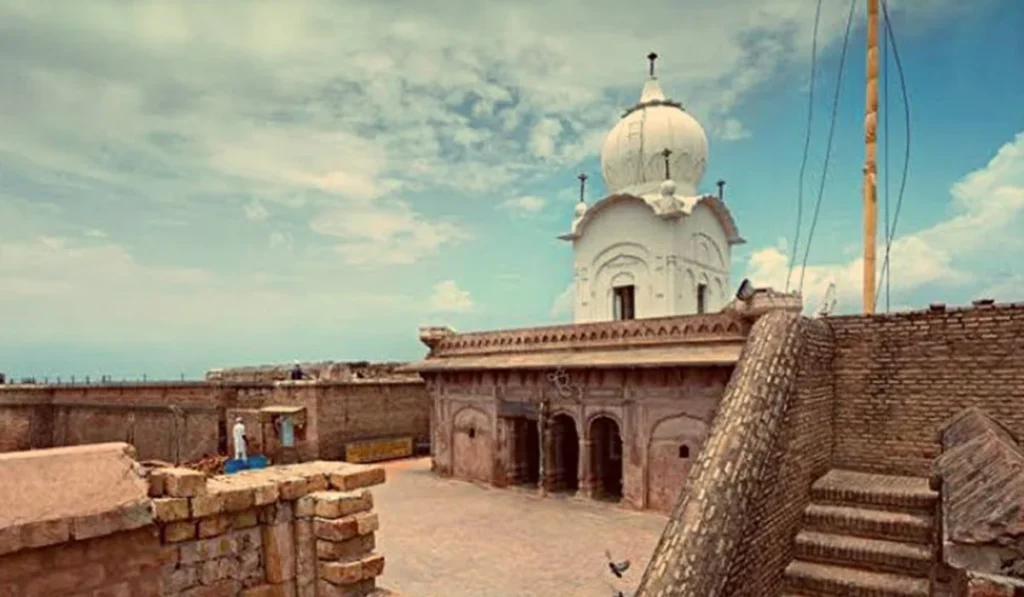
A popular Sakhi is associated with Guru Gobind Singh Ji’s visit. It is said that when Guru Sahib arrived here, local residents complained that a demon-like force or supernatural being had been troubling the people for a long time. According to tradition, Guru Sahib used his spiritual power to redeem the being, after which it departed towards Sirhind.
In memory of Guru Gobind Singh Ji’s sacred visit, a beautiful gurdwara was later built inside the fort. It is known as Gurdwara Sri Qila Mubarak Sahib. The present structure of the gurdwara was constructed in 1835 CE by Maharaja Karam Singh of the Patiala State.
The Patiala Dynasty and ‘Fort Gobindgarh’
In the middle of the eighteenth century, around 1754-1763 CE, Maharaja Ala Singh, the founder of the Patiala State, took control of the fort. In memory of the tenth Guru, Sri Guru Gobind Singh Ji, Maharaja Ala Singh renamed it Fort Gobindgarh.
The rulers of the Patiala dynasty used the fort as both a royal residence and a military base. They expanded the inner sections of the fort and constructed several attractive palatial buildings within the complex.
Architecture of Qila Mubarak
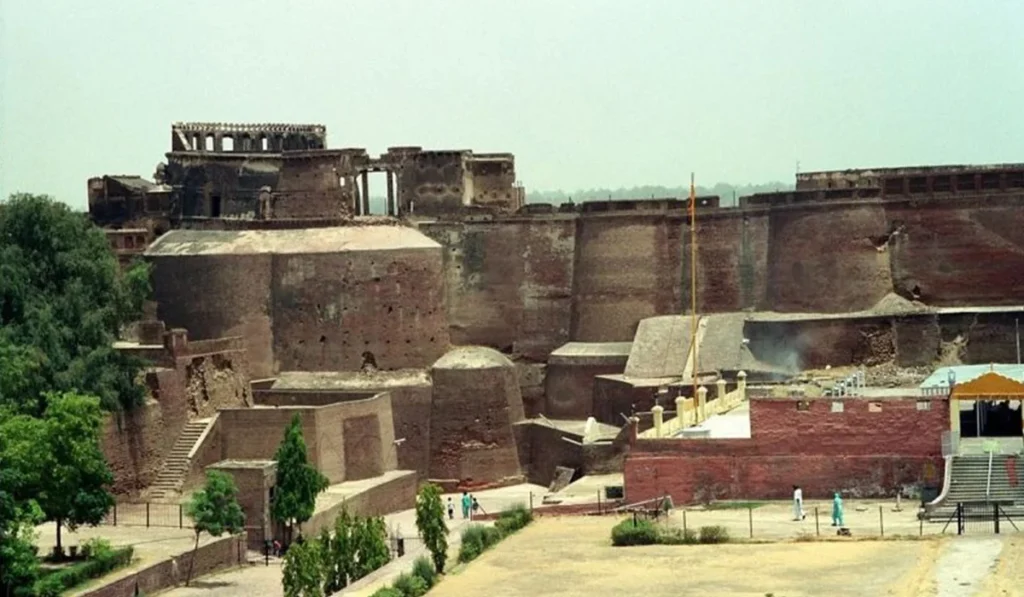
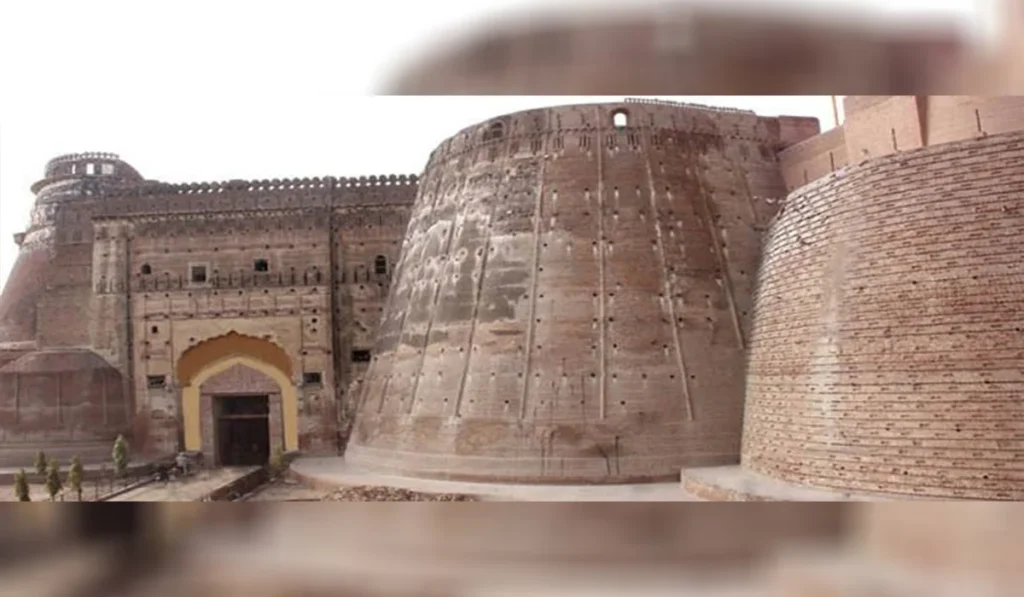
The architecture of Qila Mubarak is an outstanding example of ancient Indian and medieval military engineering. Its massive form has often been described as resembling a ship floating in a sea of sand.
The principal inner section is known as Qila Androon, which was used as a royal residential complex. It includes notable structures such as Moti Palace, Sheesh Mahal, Raj Mata Palace, and the Jail Palace.
From the point of view of defence, the fort walls include 36 smaller bastions and eight large bastions. These major bastions rise to a height of approximately 118 feet and were designed to strengthen the fort’s defence.
The entrance to the fort is also massive and royal in appearance. Today, Qila Mubarak stands in the middle of one of Bathinda’s busiest commercial areas, Dhobi Bazaar.
Amid the noise and movement of the modern city, this ancient royal structure continues to stand like a silent and solemn witness to history. Historical Timeline of Important Rulers and Events Associated with Qila Mubarak
The history of Qila Mubarak spans roughly two thousand years and is associated with several rulers and significant events. Its original construction is believed to date between approximately 90 and 110 CE, when Emperor Kanishka and Raja Dab are said to have built the fort using Kushan-period bricks.
In 1004 CE, Mahmud of Ghazni attacked and captured the fort. Around 1045 CE, Pir Baba Haji Rattan Ji is believed to have come here for meditation. In 1189 CE, Muhammad Ghori occupied the fort, but in 1191 CE, Prithviraj Chauhan is said to have regained control after defeating Ghori’s forces. A major event took place in 1240 CE when Razia Sultan was imprisoned here following her defeat by Altunia.
The fort later had the distinction of being associated with Sikh Guru Sahibs. Guru Nanak Dev Ji is believed to have visited in 1515 CE during his second Udasi, Guru Tegh Bahadur Ji in 1665 CE during his Malwa journey, and Guru Gobind Singh Ji in 1705 CE.
Later, around 1754-1763 CE, Maharaja Ala Singh brought the fort under the control of the Patiala State and renamed it Fort Gobindgarh. Finally, in 1835 CE, Maharaja Karam Singh constructed the present building of Gurdwara Sri Qila Mubarak inside the fort.
Present-Day Challenges and Conservation Efforts
Qila Mubarak faces several conservation challenges. Being nearly two thousand years old, its bricks and walls are gradually affected by rain, wind, and natural erosion. Rapid urbanisation in Bathinda and heavy congestion around Dhobi Bazaar have also resulted in unauthorised construction near the fort.
The Archaeological Survey of India periodically undertakes restoration work, including repairs to the walls, strengthening of bastions, and conservation measures aimed at promoting tourism. Bathinda’s Qila Mubarak is not merely a structure made of bricks and mortar.
It is an enduring symbol of India’s ancient prosperity, valour, spirituality, and historical continuity. The fort reminds us that Punjab has not only been an agricultural heartland but also one of the principal gateways through which the Indian subcontinent defended itself against invasions from the northwest. Today, it is important that the younger generation learns about this historic heritage.
It is the shared responsibility of the government and ordinary citizens to preserve this ancient living monument so that future generations can also take pride in this remarkable legacy.

Leave a Comment