

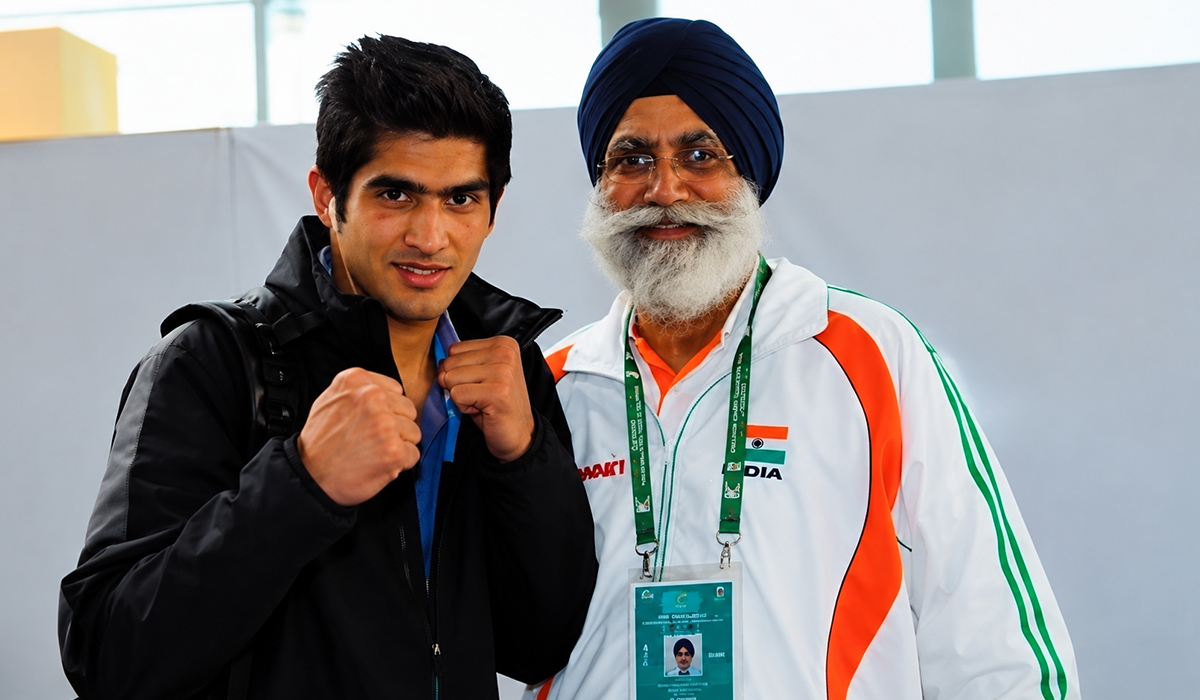

An Exclusive Interview for Sadda Punjab
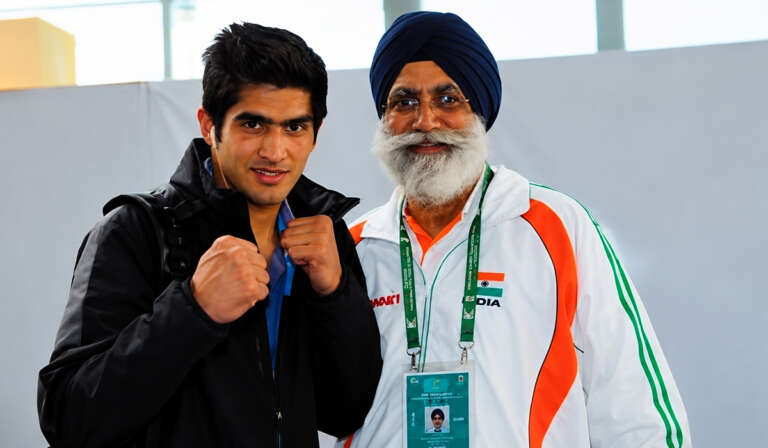
In the history of Indian sports, very few personalities have attained the respect and historical stature that Dronacharya Award winner Gurbax Singh Sandhu has. For over two decades as the chief national coach of the Indian men’s boxing team, Sandhu acted as the primary architect of the movement that transformed Indian boxing from a modest contender into a formidable world-class power.
His journey began at Sainik School Jamnagar, where mandatory boxing in the curriculum instilled a lifelong passion for the sport in him. After becoming a state-level champion, Sandhu earned a diploma in boxing coaching from the National Institute of Sports (NIS) Patiala in 1975; he received this training under the guidance of the legendary coach O.P. Bhardwaj (who was India’s first Dronacharya Awardee in boxing). Carrying forward this illustrious guru-shishya tradition, Sandhu took charge of the national team in 1993 and incorporated new methodologies such as scientific training, technical precision, better footwork, and tactical acumen in the ring.
The most crucial turning point of Sandhu’s coaching career came during the 2008 Beijing Olympic Games, where Vijender Singh won a historic bronze medal in the 75 kg category—which was the first Olympic medal for Indian men’s boxing. This significant achievement was followed by a series of other major accomplishments at the international level, including Vijender’s bronze at the 2009 Milan World Championships, 7 medals (including 3 golds) at the 2010 Delhi Commonwealth Games, 9 medals at the 2010 Guangzhou Asian Games, and a record number of 8 Indian male boxers qualifying for the 2012 London Olympic Games.
This legendary coach had an open and comprehensive interview with SaddaPunjab.com, in which he discussed his legacy, the reasons for Punjab falling behind Haryana in the field of sports, and his strategic plan to restore Punjab’s old glory in combat sports.
A Look at the Golden Era
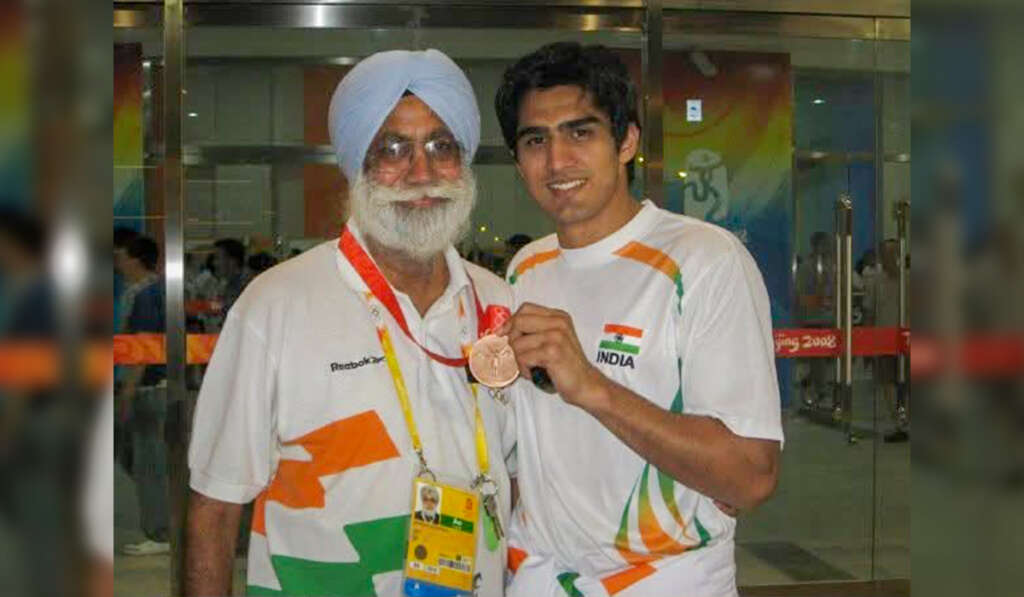
SaddaPunjab.com: Coach Sandhu, when you look back at your long tenure as the chief national coach—from Vijender’s historic bronze medal in Beijing to eight boxers qualifying for London 2012—what stands out the most about the development of Indian boxing under your supervision?
Coach Gurbax Singh Sandhu: “When I took charge of the national team in 1993, there was no lack of courage or hard work among Indian boxers. The only thing missing was scientific preparation and tactical acumen inside the ring. We had to teach our athletes how to understand the opponent, how to maintain the right distance, how to work on footwork, and how to instantly adapt to situations inside the ring. We moved beyond just a raw aggressive attitude and took steps toward creating ‘smart boxers’.”
When Vijender won the bronze medal in Beijing in 2008, it broke a mental barrier. Suddenly, the entire nation realized that an Indian boxer could stand on the Olympic podium and defeat the best athletes from Cuba, Russia, or Europe. Following this, World Championship medals, Asian Games gold medals, and eight Olympic qualifications for London 2012 proved that the Beijing success was not a coincidence, but rather the result of a planned and scientific training system.
Why is Haryana Ahead and Punjab Lagging Behind?
SaddaPunjab.com: Looking at the recently announced team for the Asian Games, eight out of eleven boxers belonged to Haryana. Being deeply connected to Punjab, how do you think Haryana has gone so far ahead in combat sports, while Punjab seems to have lagged behind?
Coach Gurbax Singh Sandhu: “I will avoid making negative comments about Punjab, but we have to accept the truth: Haryana is currently far ahead of Punjab in terms of sports infrastructure and methodology. The main difference lies in top-level administrative support and long-term security.”
In Haryana, state ministers and even the Chief Minister actively participate in state competitions. They don’t just offer praise; they announce guaranteed government job security and immediate financial rewards right away. Look at boxers like Vijender Singh or Akhil Kumar – they hold senior administrative posts at the SP and DSP levels. When a young boy or his parents see that sports success guarantees a comfortable life for the family, it changes everything. In Punjab, athletes like Jaipal Singh largely reached the SP level through individual determination rather than a planned policy framework.
Moreover, consider the difference seen during selection trials at Patiala or SAI centers. Parents from Haryana arrive there in large numbers. They rent rooms at their own expense, stand near the ring, and bring homemade ghee and pinnis to maintain their children’s health. In contrast, the presence of parents from Punjab is very low. In Haryana, sports is a shared family mission supported by a well-functioning club culture. Everyone—the athlete, the parents, and the coach—knows exactly what reward or benefit awaits them upon reaching their destination.
A Grassroots Blueprint for Punjab
SaddaPunjab.com: If you had to prepare a concrete and strategic plan for the Punjab Government and the Sports Department to rebuild the boxing infrastructure from scratch, where should they start?
Coach Gurbax Singh Sandhu: “Combat sports like boxing and wrestling naturally flourish in rural and remote areas, where our youth possess innate physical endurance and strength. You cannot build a sports culture simply by pampering athletes who have already won medals; you must establish infrastructure where the talent exists.”
Look at the village of Chakar in Ludhiana district. Two Canada-based Sidhu brothers adopted their native village and transformed it into a world-class boxing center. I used to stay at their home for weeks, guiding and training those young boys and girls. This same initiative taken at the village level produced world champions and medal-winning athletes like Simranjit Kaur Baath, without relying on government grants.
Punjab needs to adopt a three-point plan at the grassroots level:
⚬ Tehsil and Block-Level Centers: Establish at least one or two Centres of Excellence at the block and tehsil levels, especially in villages that show a passion for boxing. You only need a basic ring, basic equipment, and a dedicated coach.
⚬ Involve the NRI Diaspora: Punjab has an immense amount of NRI goodwill and wealth. The government should hand over local sports centers to committed NRIs for management and financial support while maintaining state oversight.
⚬ Four-Zone Domestic Calendar: Punjab’s athletes suffer from a lack of competitive match exposure. We should divide Punjab into four different zones and run regular inter-zone and inter-district tournaments with attractive cash prizes. Competition sharpens talent.
Coaching Standards, Allowances, and Youth Welfare
SaddaPunjab.com: Building infrastructure is only one side of the coin, but what about the human aspect, such as the daily welfare of coaches and young athletes? Also, how can sports help tackle the drug problem faced by the youth of Punjab?
Coach Gurbax Singh Sandhu: “Coaches are the backbone of any system. Punjab has two to three coaches per district, but their technical skills must be constantly updated. The government should send them for short-term refresher courses at NIS Patiala and SAI. Importantly, when state teams go to international events like the Commonwealth Games, promising local coaches should accompany the national team as observers to learn global strategies. And coaches should receive performance-based financial incentives above their salaries because incentives boost dedication.”
Regarding athlete welfare, while the Punjab government introduced dietary allowances and equipment support in 2023, consistency is key. A boxer needs regular, daily nutrition. Giving a lump-sum allowance once every four months is ineffective. Financial aid must be distributed every 15 days so that athletes can maintain their daily diet without any interruption. Look at private initiatives like the Inspire Institute of Sport, Reliance, or the Army Sports Institute. They succeed because they provide structured, 24-hour care.
The Human Touch – Coaching Psychology and Life Lessons
SaddaPunjab.com: You were respected not just as a strategist but also as a mentor and father figure to your boxers. How did you handle big stars like Vijender Singh, and what was the core ideology of your coaching?
Coach Gurbax Singh Sandhu: “In coaching, only 30% is physical training; the remaining 70% is psychology, empathy, and mentorship. Indian athletes are deeply connected to their families. During national camps, officials often demanded strict lockdowns, saying boxers shouldn’t go home for months. I would secretly allow my boxers to go home for short visits on weekends. An athlete who meets his parents returns to the camp with double the energy and enthusiasm.”
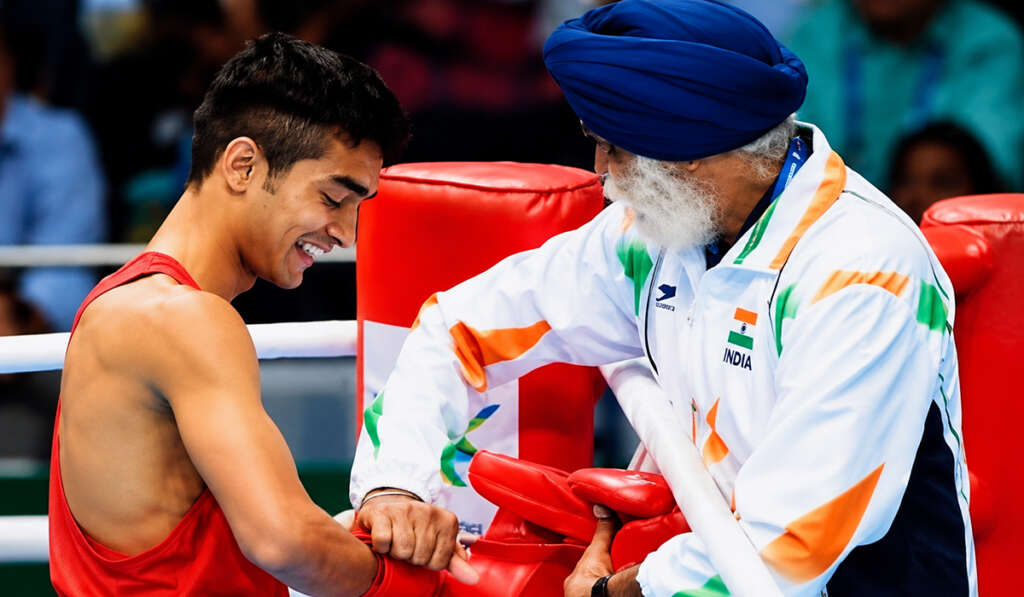
Every boxer requires a different style or approach. Take the example of Vijender himself—he had immense self-confidence. Before a bout, he would turn to me standing in the corner of the ring and say, ‘Sir, you sit back and relax, I will handle him.’ When a boxer has that kind of confidence, a wise coach steps back and lets him execute his strategy. On the other hand, boxers who lacked concentration needed harsh words or sometimes an encouraging slap to ignite their passion.
Those hostel boxers, who came from poor families, were like my own children. When an athlete knows that his coach genuinely cares about his well-being, he will sweat blood for him in the ring.
SaddaPunjab.com: Your achievements are an example for many, but I am sure this was only possible due to a lot of sacrifices and the contributions of many people. Would you like to talk about this aspect?
Coach Gurbax Singh Sandhu: “First of all, I want to thank my wife and children; if I didn’t have a supportive life partner and an encouraging atmosphere at home, my focus could have easily wavered. I also express my heartfelt gratitude to the eight to ten coaches who regularly looked after our boxers and fulfilled our goals; special mention goes to the Cuban coach B.I. Fernandez, who is still active as a ‘High Performance Coach’ in Haryana. I am also thankful to the coaches who work incredibly hard at the grassroots level.”
Finally, the scientific staff, including our biometrics experts and psychologists, played a crucial role in improving our athletes’ performances. I am deeply indebted to them.
SaddaPunjab.com: Coach sir, it has been almost ten years since your retirement. Now, when you look back at those years of active service, how do you view your life? And can we conclude this conversation with an inspiring message from you?
Coach Gurbax Singh Sandhu: “Well, I now live in Patiala in a house that I built with great love over the years. I am grateful for the life I got, and I have thoroughly enjoyed every moment of it. Boxing has given me everything. My entire life spent in boxing has taught me one fundamental principle: ‘Nothing is impossible.’ When a clear vision, strategic planning, and true empathy for humanity are combined, an Indian boxer can conquer the world.”
Leave a Comment