

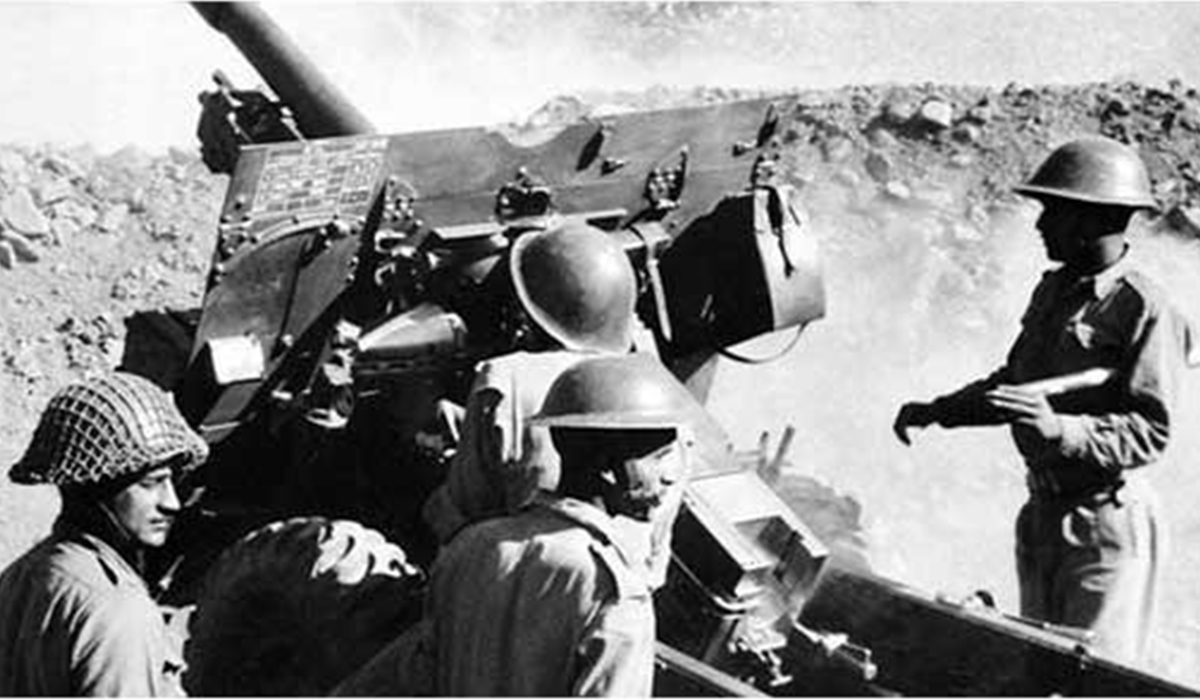

Pakistan has always been obsessed with capturing Jammu and Kashmir. After the 1962 war with China, we had not yet put our act together to reorganize the Indian Army. So, Field Marshal Ayub Khan, at that time, wanted to create an impact on his people and he wanted to capture Jammu and Kashmir.
He talked to his corps commanders and they agreed that was the best time- not only because India had not put its act together after 1962, but because America had given Pakistan 400 Patton tanks, one squadron of Starfighters, four squadrons of Sabre jets, two squadrons of B-57 bombers, a lot of medium artillery and heavy artillery, lots of communications equipment. So, Pakistan was on the up and up as far as the weapons were concerned. They presented Ayub Khan with three operations- Operation Desert Hawk, Operation Gibraltar and Operation Grand Slam.
Pakistan had made a great plan to capture Akhnoor. Now, Akhnoor is very strategic because its capture would mean that Pakistan would be able to capture Jammu on the southern side and the road to Siachen, the road to Ladakh, the road to Kashmir, and the alternative route to Srinagar would have been theirs.
So, they launched Operation Grand Slam. Unfortunately, 15 Corps, which was looking after Akhnoor, refused to accept the intelligence information that Pakistan was planning this big operation. We had only one brigade- 191 Brigade- with only two battalions in Jammu, with one battalion in the hill sector, whereas Pakistan attacked with two divisions, which meant they had six brigades, launched in two phases, whereas we had only two. And they had two armored regiments, whereas we had only one squadron of light tanks. So, the result was inevitable. Pakistan reached 12 miles short of Akhnoor by September 5th.
Opening a new front
At this time, decisions had to be taken as to what was to be done to save Akhnoor. And the only option was to open a second front in Punjab. A difficult decision to take, but Lal Bahadur Shastri, our diminutive Prime Minister with a lion heart, took that decision, and the second front was opened. 11 Corps was to attack towards Lahore, and 1 Corps was to attack towards Sialkot. The operation started on the 6th of September. That is how Punjab got involved in the war.
It must be remembered that at that time, Western Command extended from Ladakh down to Punjab, down to Rajasthan. So, all this was under the command of Lt Gen Harbhaksh Singh. So, he had a huge area to look after. And he was a person who was an on-the-spot commander. He wasn’t commanding from his office. He was travelling from place to place all the time. And he was a real tiger.
When we threatened Lahore and Sialkot, Pakistan had a contingency plan – to go for Amritsar and the Beas. So, at that time, Pakistan had two armoured divisions, whereas we had only one. So, they outnumbered us in armour, in artillery, in tanks, in everything. We were at a loss for what to do. We changed our stance to a defensive one. And we decided that we need to hold them at a place which cannot be bypassed. Now, everybody thinks that Khemkaran was the battleground.
It was not Khemkaran. It was Asal Uttar. Because Asal Uttar sits on the Khemkaran-Patti axis and the Khemkaran-Amritsar axis. So, it could not be bypassed. But we did not have enough strength. We had only two armoured regiments- the Deccan Horse and 3 Cavalry, which was in reserve for Dera Baba Nanak. The CO of 3 Cav, Salim Caleb, decided to disobey orders, and he rushed back to Asal Uttar to be part of the U formation to hold the Pakistani offensive. And that is how the Pakistani offensive was destroyed.
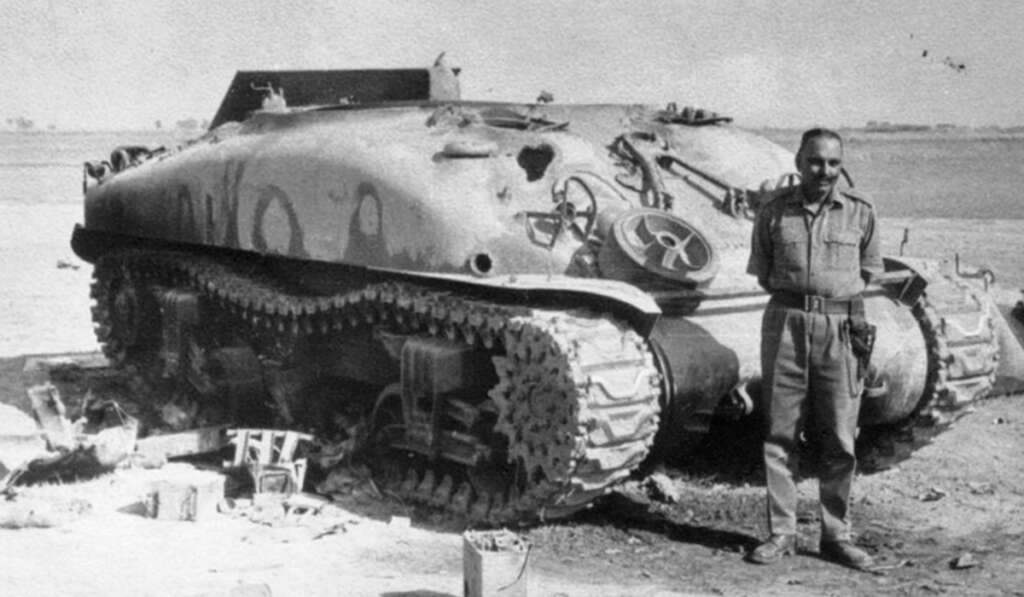
But what people perhaps do not know is that, at that time, even though the battle was on, the Punjab farmers were still tending to their fields. Till they were told to leave because of the impending battle. So, they cut the irrigation bunds and the water flooded all the fields. The Pakistani tanks got bogged down in these fields and became sitting targets. We destroyed 97 Pattons of Pakistani armoured division. Whereas we lost 29 tanks with 40 damaged.
Thwarting the Pakistani offensive
What the Indian army didn’t realise is that the 4th Infantry Division took up defences on the approach line of the Pakistan strike force. So, we were stopping them in their tracks. The first line of defence was by 4 Grenadiers. And that’s where Abdul Hamid came into play. Everybody should understand, he was a quartermaster. CQMH Abdul Hamid, that means Company Quarter Master Havildar Abdul Hamid. How was a quartermaster handling the RCL (recoil-less) guns? The anti-tank guns? A quartermaster has no part to play.
What had happened was that the 4 Grenadiers were supposed to be taking over defences in Shuga sector. So, all the company commanders, the 2IC and all the special platoon commanders had gone to Shuga sector. There was nobody to handle the guns. And there were no company commanders. But the CO said, “Don’t worry, I’ll handle the battalion. I’ll handle this war with my young officers and my platoon commanders.” And he put Abdul Hamid in charge of the anti-tank detachment. Now, Abdul Hamid had done the RCL course in Mhow and got a very high grading. But they had no RCL guns. So, he went to the ordnance factories, got the RCL guns, zeroed the guns. And when the Pakistani 1st Armoured Division approached the defences, he waited till they came within 30 metres of them.
He shot down the first tank. The crews of the other two tanks ran away. And two more tanks were there in the running order. Then a little while later, another troop of tanks came, he destroyed another one. In all, he destroyed seven Patton tanks. He used his RCL gun and changed location to avoid the artillery fire. He had destroyed six Patton tanks, when the final approach came. He zeroed in on his seventh tank. But the tank too had him in its firing line and Abdul Hamid was killed. But by that time, India had destroyed 13 Pakistani tanks in that sector. So, 4 Grenadiers played a great part in the destruction of the Pakistan Armoured Division.
The point is, Abdul Hamid, for one individual to destroy three tanks, initially, he was recommended for a Param Vir Chakra. But then, after destroying four more invincible Patton tanks, he should have got another Param Vir Chakra, meaning a bar to the Param Vir Chakra. He didn’t get it, but he deserved it, in my opinion. So, Abdul Hamid played a great part as an individual towards the success of the Asal Uttar battle.
The Heroes of Punjab
All this was part of Lt Gen Harbaksh Singh’s strategy. He was going from place to place. He was not a person who sat down in the headquarters. And on the 9th of September, he had had a very tiring day. He had not slept for 48 hours. He went to sleep and he told his ADC, “Don’t wake me up unless it’s something very important.” Now, at this time, General J N Chaudhuri, the Chief of Army Staff, was told that the Pakistani Armored Division is heading for Amritsar and Beas, and we need to fall back to Beas.
So, when the Chief of Army Staff called Lt Gen Harbaksh Singh asking him to withdraw towards the Beas, he said, “That is not an acceptable order. Either you give it to me in writing, or you come here tomorrow and give me the orders personally. Otherwise, I’m not accepting this order.”
However, there were no formal orders. Lt Gen Harbaksh Singh knew what had happened at Asal Uttar, because the Pakistani Armoured Division started this attack on the 8th of September. And this was the 9th. By this time, we had destroyed part of the Pakistani assault. And he knew that we were in a good position to halt the Pakistani offensive. And that’s exactly what happened. We broke up the Pakistani offensive. And the operation was called off.
Rajinder Singh Sparrow, how did he get that name? There is no formal information on this. But, in 1947-48, Sparrow was commanding 7th Cavalry. And he did something wonderful because he took armour to J&K. Now, the tanks could not cross the bridges because their weight was too much. So, he decided to remove the turrets and move the tanks and the turrets separately and reassemble them at Baltal.
This was something extraordinary. So, a British war correspondent told him, “You are an eagle.” Now, you know, in the Indian Army, we have code words for officers. And the EME is called Eagle. So, he said, “No, I’m not like an eagle, I’m like a sparrow.” That is how, according to folklore, his name came to be Sparrow.
In the 1965 war, Sparrow was commanding 1 armoured division, but that was towards Sialkot. And 2nd armoured brigade was in the Lahore sector. The Deccan Horse and 3 Cavalry were the two regiments which managed to destroy all these tanks in the Battle of Asal Uttar. And Asal Uttar became the graveyard of the Pakistani tanks. 97 Pakistani tanks were destroyed in the area of Asal Uttar alone. And 64 tanks were destroyed in the Battle of Phillaura. So, together, that amounted to nearly half the tanks given by America to Pakistan.
The 1965 war was fought across West Bengal, Ladakh, J&K, Punjab and Rajasthan. When the ceasefire took place, Pakistan said it was a draw; neither side was victorious. But there’s no such thing as a draw. Either it’s victory or there’s defeat. Now, at the end of this war, we had captured 1528 square kilometers of Pakistan territory. Well, they had captured just 554 kilometers.
Von Clausewitz, who was a military strategist, he says, victory is considered to be won by the side which destroys the opponent’s war machine and the will to fight. And that’s exactly what happened in this war. We destroyed Pakistani armour. We destroyed over nearly 200 tanks. And we had captured more territory. So, therefore, it is not a draw.
It was a victory for India, which Pakistan never accepts. But it was a hard-won victory.
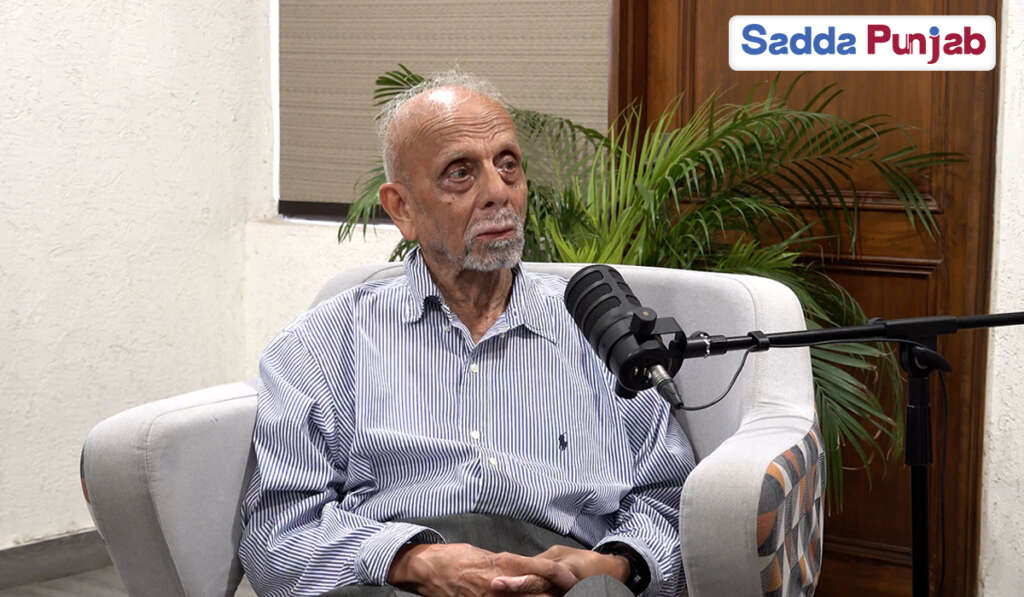
Based on a podcast recorded with Maj Gen Ian Cardozo (Retd) for Sadda Punjab. Cardozo is a veteran of the 1965 Indo-Pak war and author of ‘1965 Courage Unleashed’.
Leave a Comment