

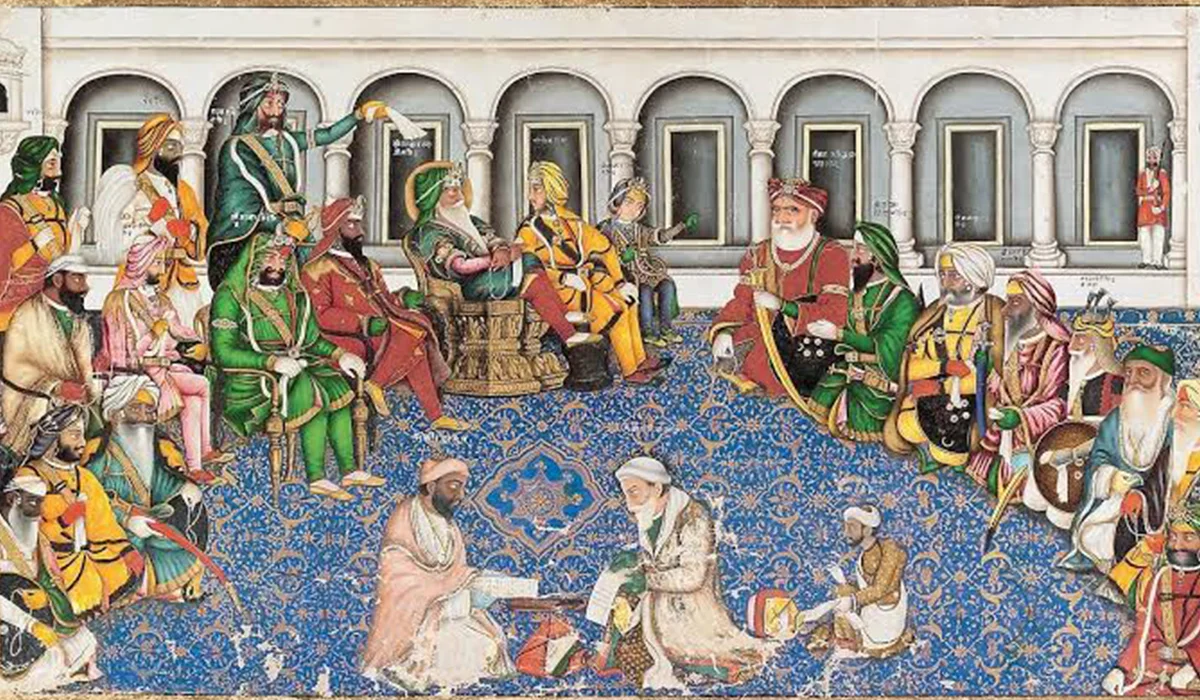

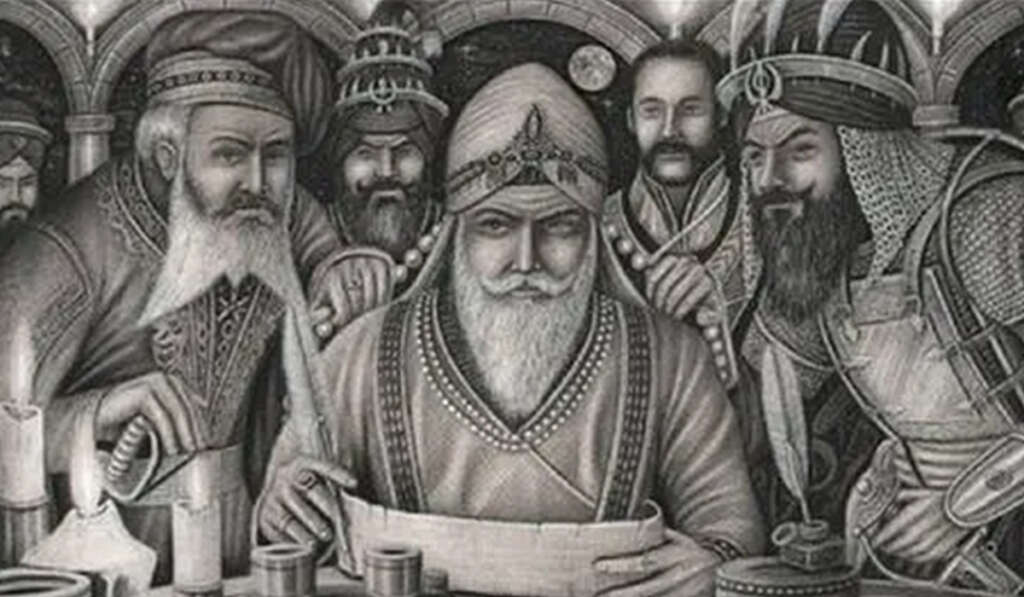
Until the mid-18th century, the Sikhs of Punjab continued to operate without any political reins. Although the Taruna Dal, Buddha Dal, and Dal Khalsa provided the Sikhs with a distinct identity, during the Misl period, the political acumen of the Sikhs could not stand against Abdali’s invasions. The lifestyle and economy of the Sikhs were broken by these eight attacks on Punjab. The Chhota Ghallughara (Lesser Holocaust) and Vadda Ghallughara (Great Holocaust) are witnesses to the fact that an open massacre of Sikhs had begun in Punjab. The Sardars of the Shukarchakia Misl—Budh Singh, Nodh Singh, Charat Singh, Maha Singh, and Ranjit Singh—worked like a thread weaving Punjab together into a rosary. In 1799, after routing the Bhangi Sardars from the capital of Punjab, Lahore, Maharaja Ranjit Singh minted Gobindshahi and Nanakshahi coins and declared himself the independent King of Punjab.
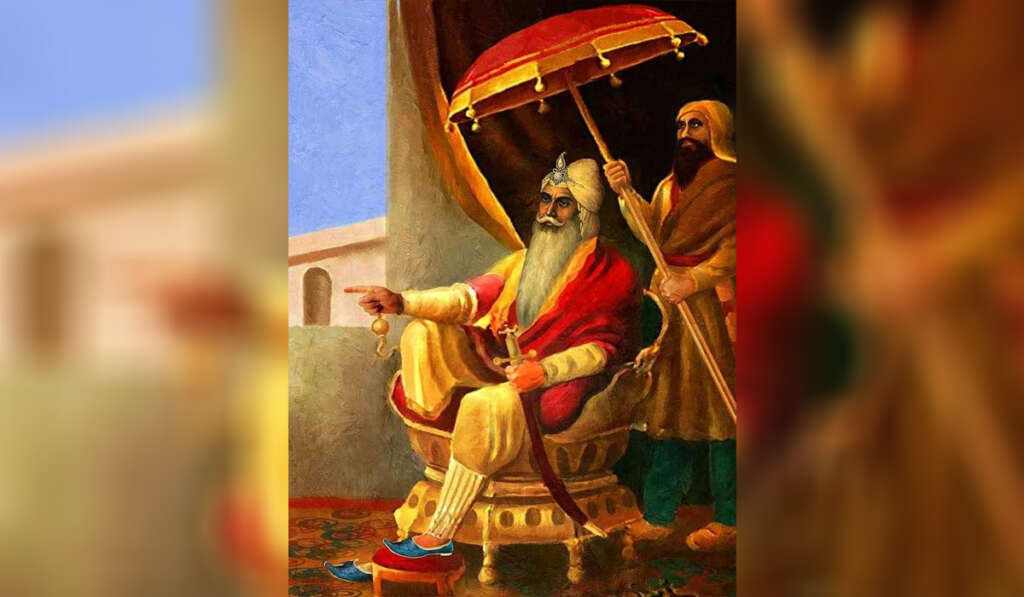
With his political wisdom, Maharaja Ranjit Singh ended the Misls and planned to bring the whole of Punjab under his control. Although Maharaja Ranjit Singh is known globally as the founder of the Sikh Empire, a great military strategist, and an efficient administrator, less attention has been paid to his work in the field of education. By uniting the mutually fighting Misls of Punjab, he established a strong and stable kingdom, which not only strengthened political and military power but also promoted social welfare. Among his lesser-discussed achievements were the progressive initiatives taken for the spread and development of education. Maharaja Ranjit Singh firmly believed that education was the most effective tool to raise the standard of living of the people. Although he himself had received very little formal education, having taken up the responsibilities of war and governance at an early age, he completely understood the transformative power of knowledge and education. Historians believe that although the court language of Maharaja Ranjit Singh was Persian, due to his minimal formal education, whenever he issued a royal decree (Farman), it was done in Punjabi. The Maharaja’s courtiers would translate that decree into Persian and enforce it throughout the kingdom. His foresight was not limited merely to warfare and administration but also extended to the intellectual development of society.
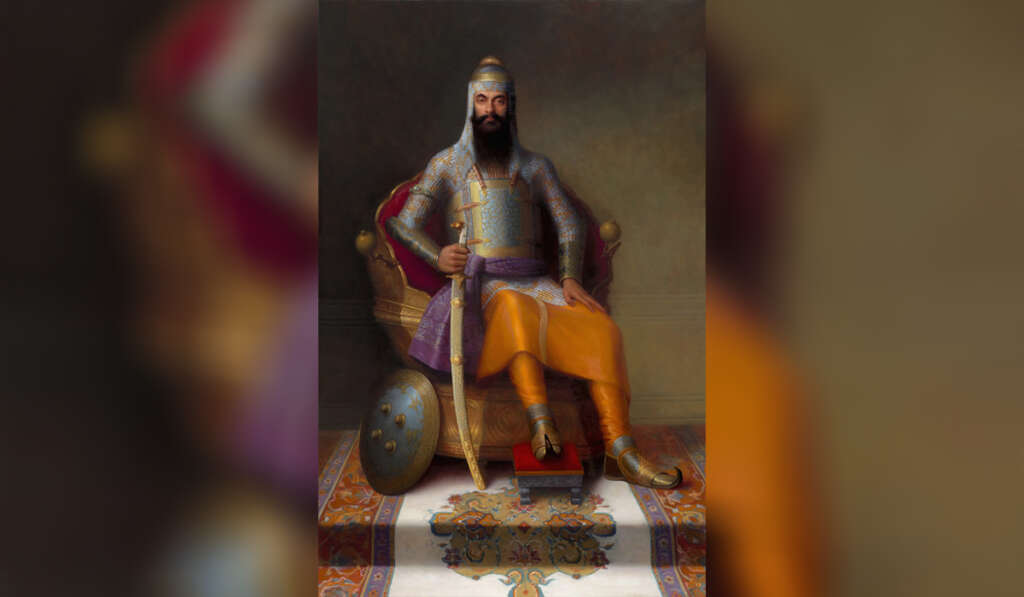
When Maharaja Ranjit Singh came to power, there was no convenient education system in Punjab. Formal education was mainly restricted to royal families, wealthy landlords, and the upper class. One of the prominent educational institutions of that time was the Madrasa of Mian Wadda located in Lahore, associated with the tomb of the famous religious figure Mian Wadda. This institution was established centuries before the Sikh rule and primarily taught the Quran to the sons of royal families, elites, and influential families. Recognizing these limitations, Maharaja Ranjit Singh adopted a more inclusive education policy. He did not limit state patronage to any one religion but provided financial assistance to the educational institutions of different religions, such as Maktabs, Madrasas, Pathshalas, and Sikh educational centers. Furthermore, he granted jagirs (land grants), stipends, and other grants to scholars and teachers so that these institutions could run smoothly. The study of Persian, Punjabi, Sanskrit, Arabic, Gurmukhi, and other subjects related to administrative needs was also encouraged in his kingdom. This education policy was a symbol of Maharaja Ranjit Singh’s religious tolerance and secular thinking. The patronage given to the educational institutions of various religious communities is proof that education in his kingdom was not considered a special privilege of a single class or religion, but an instrument of public welfare. Thus, his rule proved to be a significant step toward the expansion and development of education in nineteenth-century Punjab. Most of the crucial information we have about the educational reforms introduced by Maharaja Ranjit Singh comes from the famous work of British scholar and traveler Gottlieb Wilhelm Leitner, History of Indigenous Education in the Punjab: Since Annexation and in 1882. In this work, Leitner writes that there was no shortage of funds for the establishment of schools and other educational institutions in Punjab. He notes that before the establishment of the Sikh rule, Punjab had been under Mughal rule for centuries. At that time, Madrasas were the most popular educational institutions in the region, where students of all religions received education. For this reason, even though Maharaja Ranjit Singh was a Sikh ruler, he did not make any fundamental changes to this prevalent education system. Many of the initial educational centers established by him were indeed Madrasas, as they were the most popular and widespread educational institutions of the time. Maharaja Ranjit Singh not only generously funded these Madrasas but also established some new Madrasas in Lahore under his patronage.
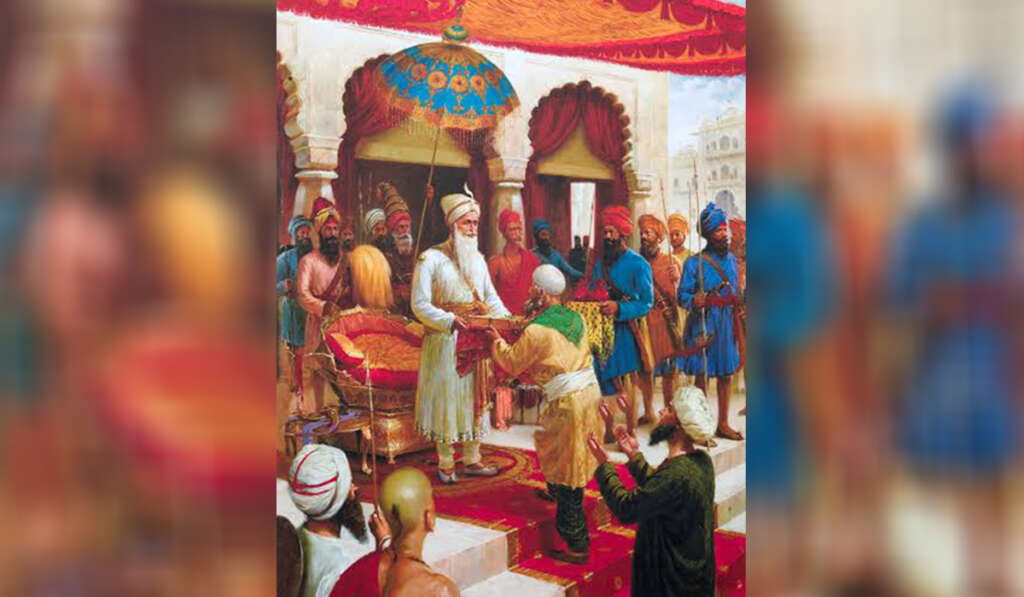
The patronage of education was not limited to Maharaja Ranjit Singh alone; his family also made significant contributions to the propagation and spread of education. His wife, Maharani Moran Sarkar, is particularly noteworthy in this context. She got two Madrasas established in Lahore. The first Madrasa was adjacent to her haveli, associated with the mosque she built in the Papar Mandi area of the walled city of Lahore. Although her haveli no longer exists today, a simple training school for girls still runs in that mosque. The second Madrasa established by Maharani Moran Sarkar was associated with the shrine of the famous sixteenth-century Sufi saint Madho Lal Hussain in Baghbanpura, Lahore. This institution also became a significant center for the propagation of education and the development of religious-cultural knowledge at that time. During the reign of Maharaja Ranjit Singh, traditional Gurukuls and Gurmukhi schools were also established. Sanskrit language was primarily taught in the Gurukuls, while the study of the Gurmukhi (Punjabi) language was given prominence in the Gurmukhi schools. Additionally, Mahajani schools were set up, where subjects related to market management, commercial transactions, accounting, and economic activities were taught. This education was specially designed keeping in mind the needs of the merchant class. Many of the Gurmukhi schools were run in the bungas situated around the parikrama of Sri Harmandir Sahib. These bungas were primarily built for the purpose of protecting the Harmandir Sahib, but as the threat hovering over this holy shrine diminished over time, their role also changed. Consequently, these bungas evolved into important centers of education and scholarship. Under the patronage of Maharaja Ranjit Singh, vocational and craft educational institutions were also established throughout the Sikh Empire. These provided training in arts such as Miniature Painting, Sketching, Drafting, Architecture, and Calligraphy. In the context of the mid-nineteenth century, it was a highly progressive step that schools for girls were also established in many places during Maharaja Ranjit Singh’s reign, thereby encouraging women’s education.
In the Sikh Empire, education was not only encouraged on a massive scale, but it also instilled a new thirst for learning among the people desirous of acquiring knowledge. According to the Lahore District Report (1860), just before the British annexation of Punjab (1849-50), there were 576 schools in the capital Lahore alone, in which 4,225 students were receiving education. This report also indicates that at that time, across the whole of Punjab, at least 3.3 lakh students were studying advanced Oriental Literature, Oriental Law, Logic, Philosophy, and Medicine through Persian, Arabic, and Sanskrit languages in various educational institutions. Furthermore, there were 18 formal schools established for girls in Lahore. Alongside this, specialized schools affiliated with Hindu, Muslim, and Sikh institutions were operating, where high-level education in technical training, languages, mathematics, and logic was provided. These facts demonstrate that during Maharaja Ranjit Singh’s reign, the education system of Punjab was not confined to religious instruction but also accorded a significant place to intellectual, scientific, and technical subjects.
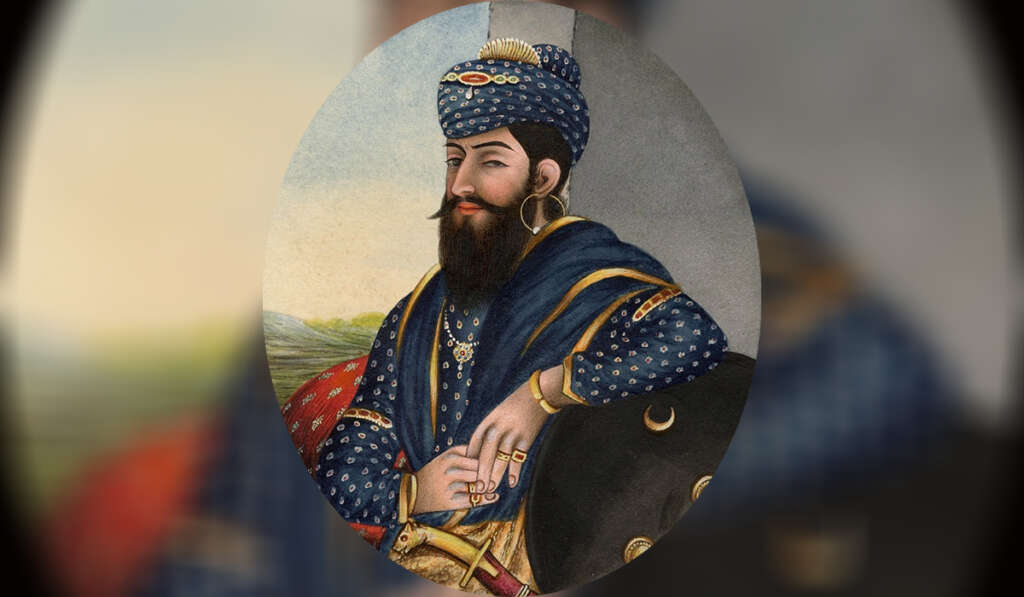
Although the spread of education had occurred on a large scale in the Sikh Empire, Maharaja Ranjit Singh wanted to ensure that its benefits equally reached the rural areas of Punjab. It was his desire that even if village children could not attend school regularly like their urban peers, they must at least learn to read and write. To achieve this objective, the Maharaja initiated a new and unique ‘Qaida’ system. Maharaja Ranjit Singh entrusted the responsibility of preparing this scheme to his scholarly and educated commander Faqir Syed Nur-ud-din, who was the younger brother of the Empire’s foreign minister, Faqir Aziz-ud-din. Faqir Nur-ud-din prepared a Qaida or booklet named ‘Qaida Noor’ for this purpose. In this booklet, the alphabets and basic writing of Gurmukhi, Shahmukhi, Urdu, and Persian languages were taught. Along with this, basic mathematics used in daily life was also included in it. About 5,000 copies of this booklet were prepared and distributed among the Nambardars (village headmen) across Punjab. Every Nambardar was ordered to study the Qaida Noor within three months and thereafter give five copies of it to five persons in his village.Simultaneously, it was made mandatory for him to personally write a letter to Maharaja Ranjit Singh informing him that he had learned to write and had distributed five copies of the Qaida Noor to others as per the instructions. This same process was adopted by the five individuals who received the Qaida from the Nambardar. Each of them gave this booklet to five more persons, taking up the task of teaching them how to read and write. In this way, a chain campaign for the spread of literacy started in Punjab, which played a crucial role in taking education to every village. Initially, some Nambardars did not take this scheme seriously and failed to send the required letters to the Maharaja. Maharaja Ranjit Singh removed such Nambardars from their posts so that it would serve as a precedent for others to implement this education campaign with full responsibility.
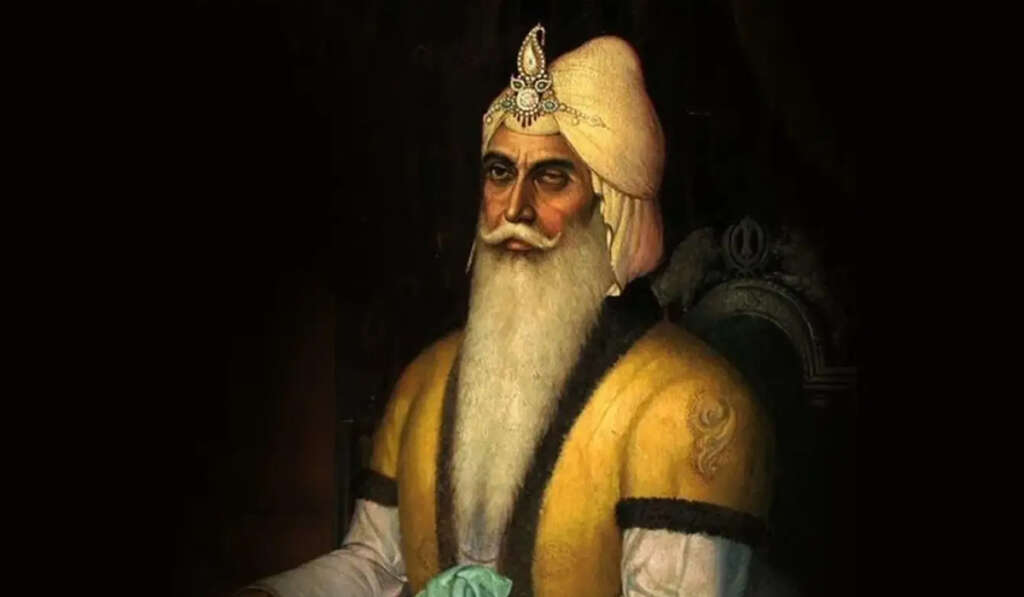
This makes it clear that Maharaja Ranjit Singh had a special affection and deep respect for education and scholarship. Even though the foundation of his government was a strong military power, he provided full patronage to the development of the indigenous education system and literature. He generously donated in the form of lands, jagirs, and wealth for the smooth operation of educational institutions. Maharaja Ranjit Singh not only protected and patronized pre-existing educational institutions but also made new and positive contributions to the development of education. He provided grants to all educational institutions without any discrimination based on religion, caste, or social background. Members of the royal family were taught English, Hindi, and Persian languages, reflecting his foresight and positive perspective toward multilingual education. This also proves that the Muslim community and other religious groups had equal opportunities in education and educational institutions, both as teachers and students. Maharaja Ranjit Singh provided full freedom and opportunities to all communities, including the entire Muslim population, to acquire new skills and knowledge so that they could raise their standard of living and contribute to the all-round development of society. But unfortunately, upon Maharaja Ranjit Singh’s death in 1839, his successors did not pay special attention to the royal court. The Qaida system was also soon discontinued, and when Punjab came under the control of the British East India Company in 1849, shortly thereafter, new educational centers and colleges were opened in Punjab strictly under the English education system associated with British rule.

Leave a Comment