

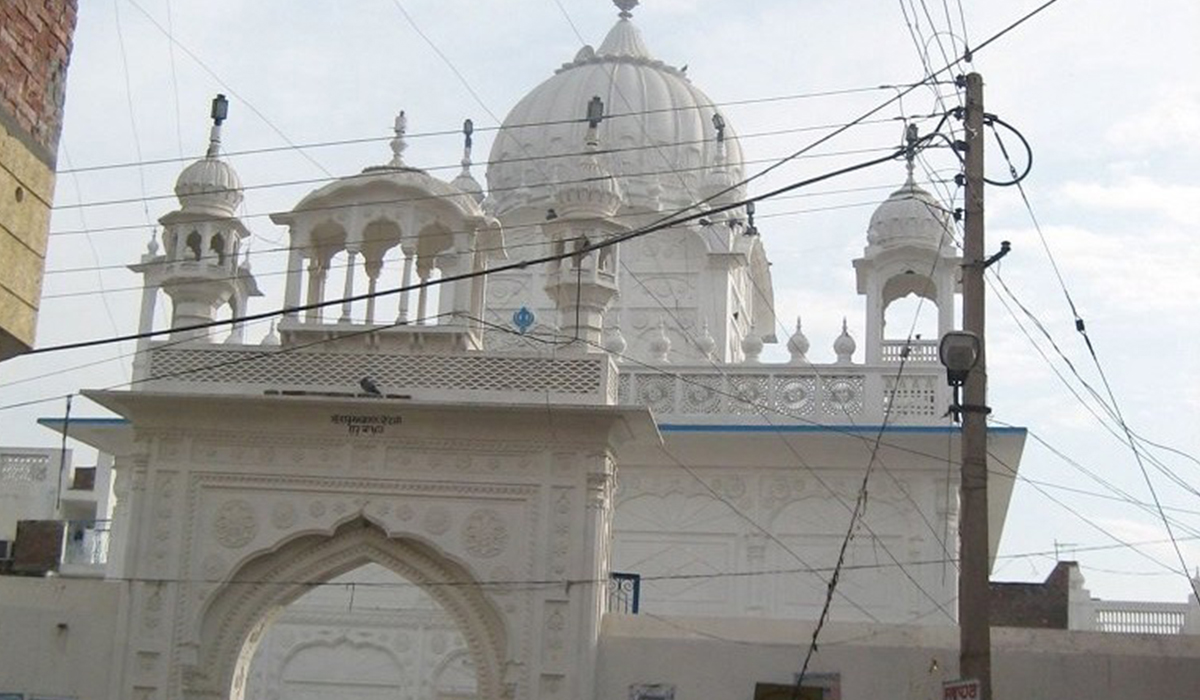

The holy land of Tarn Taran Sahib is such an important center of Sikh history, religious faith, and spiritual heritage, in whose lap many historical places blessed with the touch of the Gurus’ feet are adorned. Whenever Tarn Taran Sahib is mentioned, the first thing that comes to mind is the divine glory of Sri Darbar Sahib and the vast Amrit Sarovar established by the fifth Guru, Sri Guru Arjan Dev Ji. But near this great Guru-abode, there is another very holy place, which is known today as ‘Gurdwara Guru Ka Khooh’.
Gurdwara “Guru Ka Khooh” is not just a religious place, but a living witness to many important phases of Sikh history. On one hand, it preserves the memories associated with the service, meditation, and congregation (Sangat) of the fifth Guru, Sri Guru Arjan Dev Ji, while on the other hand, it has a deep connection with the immortal sacrifice of the early martyrs of the Gurdwara Reform Movement that started in the early 20th century. For this reason, along with faith, this place is also an important symbol of the historical consciousness and Panthic struggle of the Sikh community.
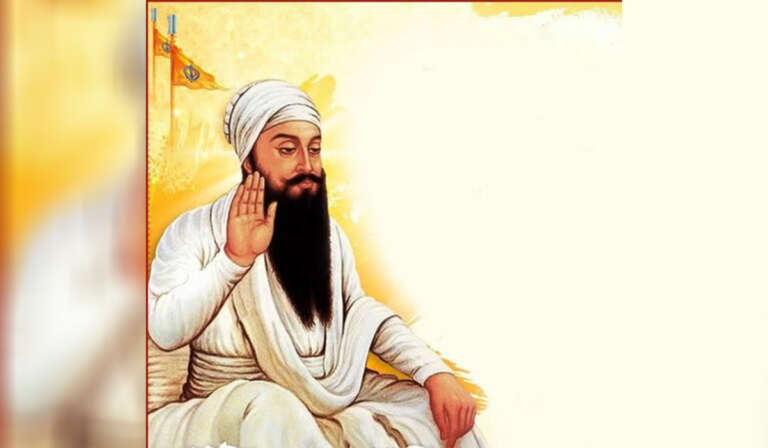
According to historians, the fifth Guru, Sri Guru Arjan Dev Ji, laid the foundation of the city of Tarn Taran on the land of Majha in the late 16th century. The objective of the Guru Sahib was to provide relief related to spiritual, social, and human life to the people living in this area. Under this objective, a vast Sarovar (pool) was excavated here, which was named ‘Tarn Taran’. ‘Tarn Taran’ means that path or means which takes a living being across the worldly ocean (Bhavsagar).
In the development of Tarn Taran and the excavation work of the Sarovar, Guru Arjan Dev Ji himself used to perform Sewa (voluntary service) along with the Sangat. The message of service, humility, and collective hard work was given to the Sangat by the Guru. After the service tasks related to the excavation of the Amrit Sarovar and the construction of the city, Guru Sahib used to go to a nearby peaceful place to rest for some time.
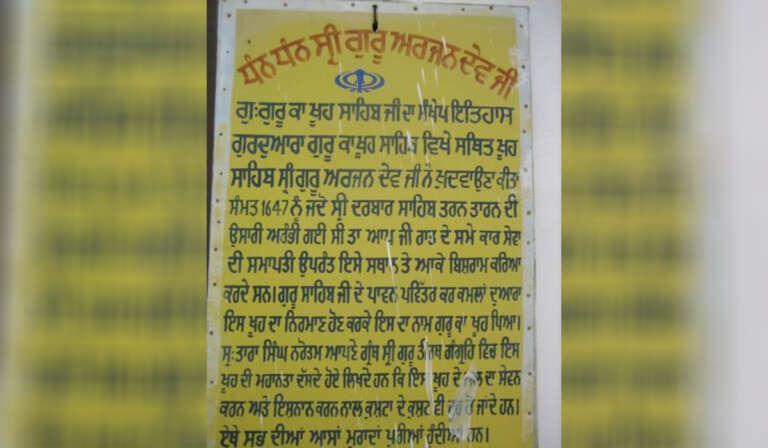
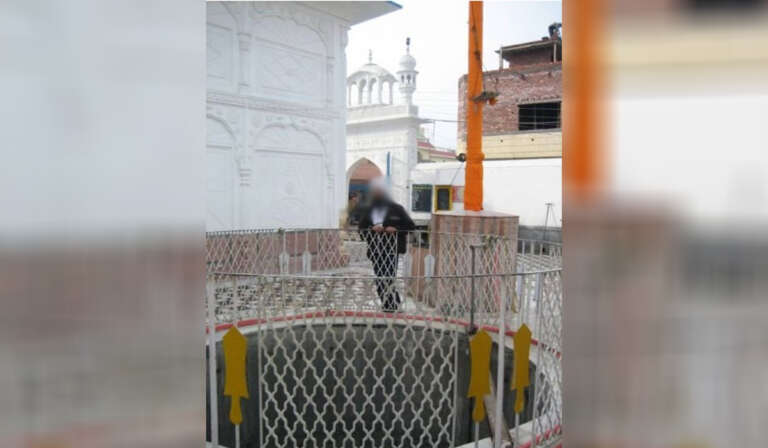
This place was full of natural beauty and a well (Khooh) was also present here. From this well, Guru Sahib and the Sangats used to get water for drinking and other needs. With the passage of time, this well became associated with the memory of Guru Sahib and became a great center of devotion for the Sangat.
‘Manji Sahib’ and ‘Guru Ka Khooh’

At the place where Sri Guru Arjan Dev Ji used to rest after Sewa, a holy Manji (cot) was placed for the Guru to sit on. Sitting here, Guru Sahib would converse with the Sangat, listen to their sorrows and pains, and inspire them to connect with Naam-Simran (meditation) and Gurbani. Because of this, this place became of special importance in the eyes of the Sangat.
After some time, a holy memorial place was established here in the form of ‘Manji Sahib’. The historical well situated near it also became famous by the name of ‘Guru Ka Khooh’ due to its association with the memory of Guru Sahib. Today, this entire complex of the Gurdwara is a center of devotion, meditation, and historical consciousness for the Sangat. Deep religious faith of the Sangat is attached to this well. Devotees consider it a holy memorial of Guru Sahib’s time. Coming here, along with connecting with the historical heritage, the Sangat prays for peace of mind and performs Naam-Simran.
The Gurdwara Reform Movement and the Saka of Tarn Taran
The history of Gurdwara Guru Ka Khooh is not only related to the Guru-period. It is also connected to a very important and painful chapter of the Gurdwara Reform Movement that started in the early 20th century. During the British rule, the management of many historical Gurdwaras in Punjab had gone into the hands of Mahants. Over time, allegations started emerging against some Mahants of using Gurdwara properties as personal assets and violating Gurdwara maryada (code of conduct). Due to this situation, widespread resentment arose among the Sikh Sangats and the demand to bring the Gurdwaras under Panthic management began to gain momentum.
During the period of 1920-21, with the establishment of the Shiromani Gurdwara Parbandhak Committee and Shiromani Akali Dal, the Gurdwara Reform Movement got an organized form. Under this movement, peaceful efforts were made in Tarn Taran as well to free the Gurdwara management from the control of the Mahants. In January 1921, Sikh reformers and Akali Jathas gathered at Sri Darbar Sahib Tarn Taran and raised their voice for reform in the Gurdwara management and the restoration of Gurmat Maryada. During this, tension escalated and the supporters of the Mahants attacked the Singhs. In this attack, many Singhs were seriously injured.
This Saka (tragedy) of Tarn Taran added a new chapter to Sikh history. Bhai Hazara Singh and Bhai Hukam Singh, who were injured in this incident, sacrificed their lives for the Panth. Bhai Hazara Singh Aladinpur was a fearless and dedicated sewadar associated with the Gurdwara Reform Movement. He suffered severe injuries during the attack. Unable to bear the injuries, he attained martyrdom. His martyrdom is remembered by connecting it with the initial chapters of martyrdom of the Gurdwara Reform Movement.
Bhai Hukam Singh Wasudev, who was injured in the same incident, also attained martyrdom. The sacrifice of both Singhs created more determination in the minds of the Sikh Sangat towards the Gurdwara Reform Movement. Their martyrdom gave the message that the Sikh Sangat will not step back from any sacrifice for the freedom of the Gurdwaras and the restoration of Gurmat Maryada. After this, the Gurdwara Reform Movement intensified further and important events like the Saka of Nankana Sahib, the Jaito Morcha, etc., influenced the direction of Sikh history.
The last rites (cremation) of Shaheed Bhai Hazara Singh and Shaheed Bhai Hukam Singh were performed at the holy place near Gurdwara Guru Ka Khooh. They were given a final farewell with full Sikh traditional honors by the Sangat. This last rite, performed amidst the echoes of Ardas and Jaikaras, became a memorable event in the history of the Sikh Panth.
Even today, the memorials related to the martyrs in the Gurdwara Sahib complex remind the Sangat of their sacrifice. Devotees bowing here realize that Sikh history is not just a history of spiritual achievements, but also a history of countless sacrifices made for truth, religion, justice, and maryada. The current form of Gurdwara Guru Ka Khooh reflects the simplicity and beauty of Sikh religious architecture. Sri Guru Granth Sahib Ji is installed (Prakash) in the main Darbar Hall of the Gurdwara. Nitnem, Gurbani Kirtan, and Gurmat programs continue to be held here.
The biggest feature of this place is the historical well and Manji Sahib. Both these places keep the memories associated with Guru Arjan Dev Ji’s service here and the Sangat alive. Along with this, the memorial of the martyrs connects this Gurdwara with the history of the Gurdwara Reform Movement. The atmosphere of the Gurdwara is peaceful and spiritual. The Sangat coming here sits for some time to listen to Gurbani, do Naam-Simran, and offer Ardas. A few moments away from the bustling life of Tarn Taran, this place provides concentration and spiritual peace to the mind.
The tradition of Sewa and Vand Chhakna (sharing) has a special place in the Sikh religion. At Gurdwara Guru Ka Khooh too, this tradition is carried out with devotion and a selfless spirit to this day. Along with the local Sangats, devotees coming from far-off places also participate in cleaning, preparing Langar, washing utensils, and other services at the Gurdwara. No discrimination is made with anyone in the Langar on the basis of caste, religion, class, or economic status. Every person is seated in the same pangat (row) and served Prashada (food). On the occasion of Masya (new moon), Gurpurabs, and martyrdom days, special religious congregations and Langars are also organized here. Thus, the tradition of service remains an integral part of the spiritual identity of this place.
Gurdwara ‘Guru Ka Khooh’: A Historical Center for Devotees Visiting Tarn Taran
Today, Gurdwara Guru Ka Khooh is an important religious and historical center for devotees visiting Tarn Taran. After the darshan of Sri Darbar Sahib, the Sangat also pays obeisance at this historical Guru-abode. This place connects the new generation with two important aspects of Sikh history. On one hand, there are memories of Sri Guru Arjan Dev Ji’s service, Sangat, and spiritual life here, while on the other hand, the saga filled with the sacrifice of the Gurdwara Reform Movement comes forward through the martyrdom of Bhai Hazara Singh and Bhai Hukam Singh.
From this aspect, this place can also become an important source of historical education for Sikh youth. A visit to historical places is not limited to just religious darshan, but it also gives the new generation an opportunity to understand the meaning of their heritage, the teachings of the Gurus, and the sacrifices for the Panth. Gurdwara Guru Ka Khooh, Tarn Taran, is a unique confluence of faith, service, spirituality, and martyrdom in Sikh history. This place is not just a building made of bricks and stones, but a living document of centuries-old Sikh heritage. Gurdwara Guru Ka Khooh gives us the message that the service associated with the Guru’s house is not just a means of personal spiritual upliftment, but also a symbol of social bonding, human equality, and Panthic responsibility. The tradition of Ardas, Kirtan, Langar, and Sewa happening here is carrying that same message forward even today.

Leave a Comment