


Jagjit Singh Zirvi, the great singer from the small town of Zira in Ferozepur district, spent his whole life singing songs colored in literary and social hues. He earned a great name, sang extensively as a soloist, also sang with Surinder Kaur and Parkash Kaur, and even received a National Award. Ultimately, he passed away in Toronto. Dr. Barjinder Singh Hamdard, the owner and Chief Editor of Ajit newspaper, had written somewhere that when passing through Zira, one instantly remembers Jagjit Zirvi, but once we cross Zira, Zirvi gets lost in the dusty streets of Zira. This comment by Hamdard Sahib is quite remarkable, and my meeting with Jagjit Zirvi in Brampton is etched in my memory.
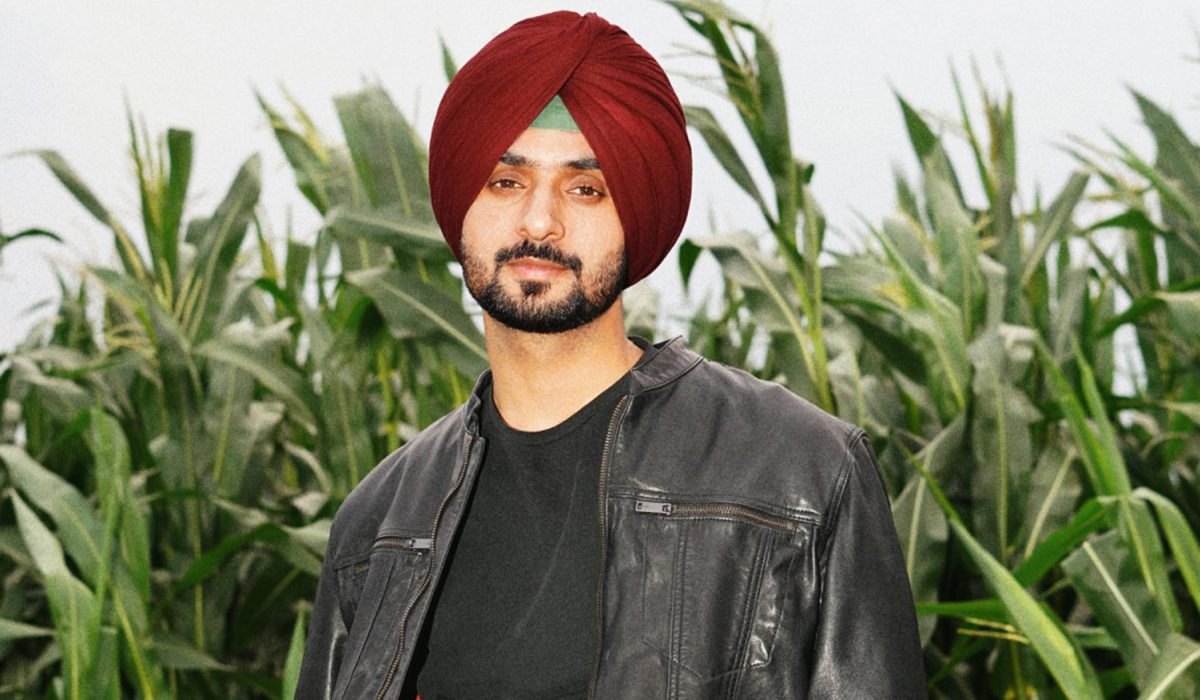
After Zirvi’s departure, it did not seem at all that from the direction of Zira (from the lovely village of Lohke), a gust of cool, musical breeze would ever come again, cast a spell on the surroundings with its unique melody, and prove to be a great singer of a young age at the international level. That musical breeze would create a stir all around like a melodious swift wind, and he would earn the honor of becoming a great artist at a young age. He would mostly write his own songs and sing them himself, exactly the way Ustad Lal Chand Yamla Ji used to write and sing his own songs, and the way our Gurdas Maan also writes and sings his own songs. Nirvair Pannu, along with being a capable singer, is also successful as a poet. In his songs, he uses small metaphors that the newer generation understands very quickly. This young boy has made the world ‘crazy’ (kamli). In every street corner, neighborhood, phone tune, in cars, airplanes, palaces, and pubs—everywhere, Nirvair Pannu’s voice is echoing. If I write straightforwardly, while singing, Nirvair establishes a dialogue with the listener, meaning he talks—small, love-filled talks. I feel that Nirvair’s Pannu ancestors must have done some virtuous deeds that Nirvair was born in their home. His voice has a unique fold and a captivating curl.
When I heard him many times, I asked myself, what an alaap this boy has! So effortlessly, like the thin ripples of water in a sarovar (pool)! What kind of alaap is this—sometimes absolutely straight and direct? He started a song with an alaap, and it felt as if someone sitting under a frost-laden tree was taking warm breaths, or a burning sand dune, awaiting a drizzle, was measuring the path between the sky and the earth, or somewhere far away in a dense black forest, a wandering cuckoo was searching for the lyrics of an ignored folk song! I felt that when Nirvair Pannu sings, he brings comfort:
Kade saanu kol bitha lai ni
Tu saanu gal naal la lai ni
(Make me sit near you sometime, girl / Embrace me sometime, girl)
These lyrics strike a chord; there is absolutely no noise of instruments. The notes bloom like flowers, and it feels as if peace is embracing you. When he picks up the lyrics:
Ni gall sunda nahi
Ih dil chandra jiha
Vasson bahar ho gaya
Ni tere naal pyar ho gaya—
(Girl, it doesn’t listen / This crazy heart / It has gone out of control / Girl, I’ve fallen in love with you—)
Then the dryness seems to vanish from parched hearts, and the emotion of love seems to take wing. Hearing ‘Ni khalipan jiha hoya tere baajh kude’ (Girl, there is a sense of emptiness without you), every mind feels the realization of existence and non-existence, and the boiling of loneliness.
Listening to Nirvair Pannu, I feel—perhaps I am wrong here—that sometimes Nirvair seems to me like the younger ‘real brother’ of Shiv Batalvi, as if someone carrying a bundle of sorrows on his head is roaming around searching for it, or perhaps Shiv came in a dream and told him, ‘Little one, keep following in my footsteps!’ He has mentioned Shiv in several of his songs. Sometimes it feels that Nirvair is mending broken hearts with his painful sweetness, applying a healing balm. Listening to him, broken hearts find solace. Courage seems to return, a sorrowful heart feels peace. This is the real art, and it is also the duty of pure art to pull a suffering soul out of sorrow and provide comfort. Sometimes it starts to feel that Nirvair is not singing, he is worshiping. Sometimes it seems he is crying out in the form of a papiha (rainbird), crying in anticipation of the drizzle of love’s purity, or else separation, longing, agony, and sorrow—all combined together—a cuckoo is crying out in a dense forest.
His alaap sounds like the playing of some ancient, melodious veena. The uniqueness of his voice is as distinctly rich as he himself is. Listening to him, an attraction constantly remains. Our new generation has embraced Nirvair to such an extent that listening to him early in the morning makes them feel peace and innate comfort.
Sleeping or awake, Nirvair spends every moment with himself and his poetry. The musical note (Sur) does not separate from him, and the space of the note maintains a distance from him. The inspiration for poetry comes to him spontaneously. At about twenty-six or twenty-seven years of age, Nirvair is an artist blessed by nature. He studied in his village itself, near his house, in a Guru Nanak Public School. There, writer Major Sandhu Malsian Wala and his wife used to teach; Bibi Sandhu would make Nirvair sit on her lap and teach him how to write letters. They say he was a very sweet and innocent child, didn’t do any mischief, nor did he make a fuss. It was here that his elder sisters, Parminder Kaur and Rajwinder Kaur, also studied with them. Even today, having become a superstar, he never misses going to meet his teacher at his home. Major Singh says that neither arrogance came into him, nor did ego come near him; rather, his humility has grown further. Due to Major’s family visiting Nirvair’s parents, everyone knows each other closely.
He completed his fifth grade from Baba Jass School, and to study in the sixth grade, he was sent to Patiala to his aunt (Bhua) Amrik Kaur. He applied his mind there and got admitted to the Government School in Civil Lines along with his aunt’s children. Nirvair’s mother, Amandeep Kaur, and father, Tarsem Singh, wanted their son to acquire higher education and become a big officer, but art was taking a stretch inside him. Tarsem Singh says that while walking, he used to softly hum these lyrics:
Sohniyo narazgi te nahi
Je gall dil wali keh deyan
(Beautiful one, hope you’re not upset / If I tell you the matter of my heart)
So these were the signs of his devotion and dedication towards music.
After the twelfth grade, Nirvair got admitted to Mohindra College. Here he got a very beautiful time and started singing boliyan with the college’s Bhangra team. Day by day, his voice began to shine, and he started getting recognized as a melodious singer in the college, and thus he began winning cultural competitions. To gain an understanding of music, he also went to Master Sagar Ji for some days. He would often consult with his aunt’s son-in-law, Hardeep Singh, regarding music. One day, they created a link themselves and put it on YouTube, and it got a good response, and incidentally, they received the support of Sharan Shergill from abroad. Around 2018, his enthusiasm was growing further, he got in touch with the Juke Dock company, and then there was no looking back. The journey that started with the song ‘Pistol’ (which was written by Gill Kupian) became long and pleasant. He wrote the song ‘Bandook’ himself, and the ‘gun’ fired well too. Whatever style of his singing he sang, it scaled great heights. In 2022, the religious hue ‘Guru Ki Fauj’ made him even more popular; a glimpse of the folk style Kavishari can also be seen in his voice. Whatever he sang for dancing and jumping around was entirely accepted. A listener seeks every variety and aesthetic taste, and Nirvair understands this very well. He made a film with Bir Singh—’Suhe Ve Cheere Walia’—and he was the hero. Now a new film project is happening, under the name ‘Tu Keh Taan Sahi’, a presentation by Juke Dock Films. It is being directed by Jatinder Mauhar and written by Balwinder Bullet. Noor Chahal will be seen alongside Nirvair. Listeners and viewers are waiting for the 30th of October.
He has done many shows in the country and abroad, which have been highly successful. Even living away from his village, he is very close to his birthplace; he has a heartfelt attachment to the village. Today, seeing their grandson’s rise, respect, and honor, his grandfather Sardar Gurcharan Singh and grandmother Surjit Kaur must be extremely happy sitting in heaven. His mother Amandeep Kaur and father Tarsem Singh Khalsa say with great pride that our son has given us so much honor that it’s hard to even imagine it in seven lifetimes; he is so promising that he never brought any complaint from anywhere, never gave an opportunity to be angry. We are proud that we are the parents of Nirvair Pannu.

Leave a Comment