

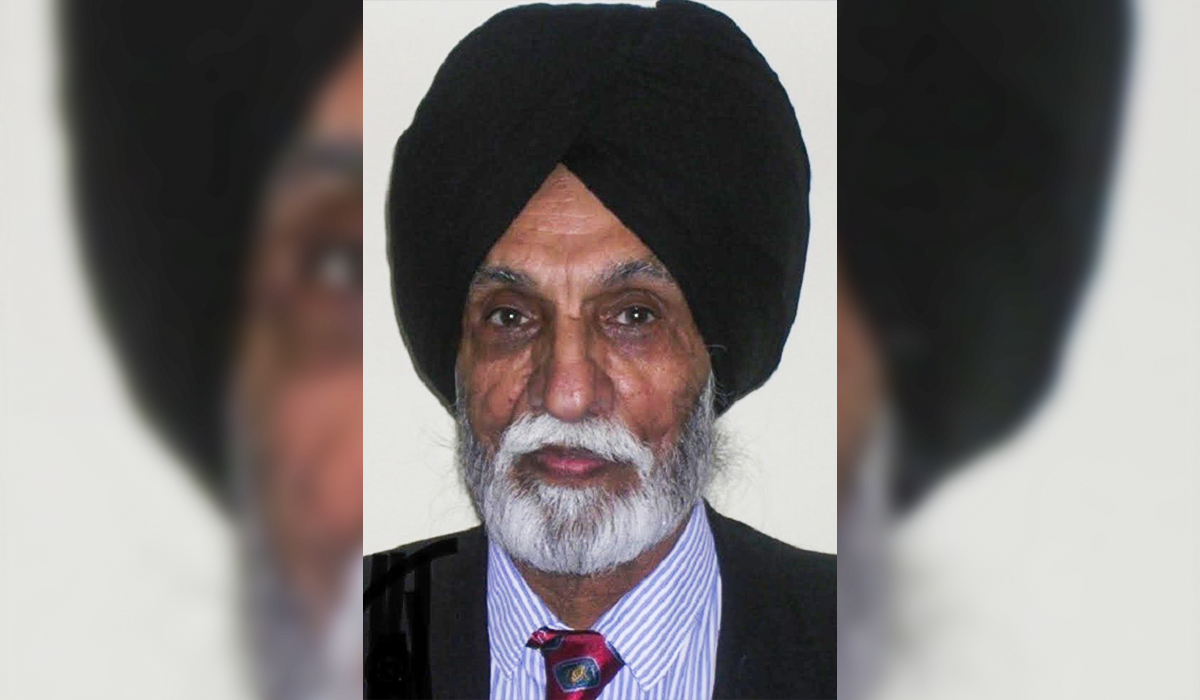

Born on 12 August 1933 in the famous hockey village of Sansarpur in Jalandhar, Gurdev Singh Kular was a product of that era when hockey was not just a game but a passion and a part of life in the playgrounds of Punjab. Sansarpur has given India many international and Olympic hockey players and Gurdev Singh’s name is taken with great respect in this golden tradition.
Gurdev Singh’s father Subedar Thakur Singh himself was a part of the Indian Army hockey team. In 1926, he had made a historic tour of New Zealand and Australia with the Indian Army hockey team. Thus, Gurdev Singh got the inspiration and atmosphere of hockey from his family. He studied at Cantonment High School, Jalandhar and started making his mark in hockey during his student life. In 1956, he also represented India in the Youth Festival held in Poland.
Melbourne 1956, the most memorable chapter of life
The brightest page of Gurdev Singh Kular’s career was the 1956 Melbourne Olympics. He played in the position of Inside Right in the Indian team and India won the gold medal by defeating Pakistan 1-0 in the final. In the Melbourne Olympics, Gurdev Singh scored two goals against Afghanistan in his first Olympic match. India won that match 14-0. In the next match, he also scored three goals against the USA. In Melbourne, the front row of Gurdev Singh, Udam Singh and the great Balbir Singh Senior gave such strength to the Indian attack that this trio contributed to 24 of India’s 38 goals in the tournament.
India also led in the Asian Games
Gurdev Singh was a part of the Indian team in the 1958 Tokyo Asian Games and India won the silver medal. But another historic moment in his career was the 1962 Jakarta Asian Games. This time he was given the captaincy of the Indian team. Under his leadership, India won a silver medal. Thus, he has one Olympic gold and two Asian Games silver medals in his account. Gurdev Singh’s name is among the selected players of Indian hockey who represented India in both the Olympics and Asian Games and also led the country as a captain.
Gurdev Singh joined the Punjab Police in 1956 and played for the Punjab Police and Punjab teams from 1956 to 1967. His game was not limited to the national team only, but he also achieved many great achievements in domestic hockey. Under his captaincy, Punjab won the gold medal in the National Hockey Championship held in Bhopal in 1962. Punjab also won the title in 1965, while Punjab won bronze medals in 1961, 1963 and 1964.
He also achieved great successes with the Punjab Police team. In 1956, 1959, 1961, 1962, 1964 and 1966, Punjab Police won gold medals in the All India Police Games and Gurdev Singh was an important part of these victories. The 1966 Beaton Cup was also a memorable moment in his career. Punjab Police won this prestigious title and Gurdev Singh scored the winning goal against Signals in the final match.
Hockey connection from India to England
In 1961, he also went on a tour of New Zealand and Australia with the Indian Wanderers Hockey Team. This tour was one of the important trips of his international sports career. It is important to clarify one fact here that according to the available hockey records, Gurdev Singh retired from international hockey in 1962, but continued to play for Punjab Police and Punjab till 1967. In 1967, he moved to the UK. Even after reaching England, his connection with hockey did not end. He played hockey for Airedale Hockey Club and Bingley Hockey Club in Leeds.
Gurdev Singh’s sporting development was greatly influenced by his family heritage and the hockey environment of Jalandhar-Punjab at that time. He also had close sporting contact with Dhyan Chand, the great hockey player and coach of his time. Dhyan Chand was in the role of national selector and coach in the late 1950s and early 1960s and had several meetings with Gurdev Singh. However, there is no solid information in the available reliable records to call any of Gurdev Singh’s personal coaches his “chief coach”. Therefore, it would not be right to call any person his personal coach without evidence.
History made by overcoming difficulties
Today, players have modern astroturf, scientific training, fitness staff and many facilities. Gurdev Singh’s era was completely different. Despite poor facilities, natural grounds and limited resources, he made his place on the world stage. His greatest strength was discipline, hard work on the field, the mindset of playing for the team and the hockey tradition of Sansarpur.
One gold medal, two silver medals and countless memories / Major achievements of Gurdev Singh Kular
- 1956 Melbourne Olympics – Gold medal
- 1958 Tokyo Asian Games – Silver
- 1962 Jakarta Asian Games – Silver and captain of the Indian team
- 1962 National Hockey Championship – Gold as captain of Punjab
- 1965 National Hockey Championship – Punjab
- All India Police Games – 1956, 1959, 1961, 1962, 1964 and 1966
- 1966 Beaton Cup – Punjab Police; Winning goal in the final
- 1956 Youth Festival, Representing India in Poland
- 1961 New Zealand-Australia tour with Indian Wanderers Team
Not death, end of an era
Gurdev Singh Kular passed away on 8 February 2024 in Leeds, England at the age of 90. His passing broke another vibrant link in the golden era of Indian hockey, when India was considered the king of world hockey.
But the story of Gurdev Singh Kular still lives on in the streets of Sansarpur, the hockey grounds of Punjab and in India’s Olympic history. The Melbourne gold medal, the captaincy of Jakarta, the winning goal of the Beaten Cup and countless services rendered in the uniform of the Punjab Police—all these make him not just a player, but an immortal name of the golden era of Indian hockey.
Leave a Comment