


Punjab is called the ‘grain storehouse’ of the country. In the 1960s, when India was grappling with a severe food crisis and the challenge of hunger, the hardworking farmers of Punjab embraced the Green Revolution and laid a solid foundation for the country’s food security. Through record production of wheat and paddy, Punjab made a major contribution to the central grain reserve. But after more than half a century, Punjab’s agricultural system is facing serious environmental, economic and social challenges.
The same cropping cycle of wheat and paddy has given farmers some income stability and security through government procurement of paddy-wheat, but this has come at a cost to Punjab’s natural resources. The ground water table is continuously going down, soil fertility is affected and excessive use of chemical fertilizers and pesticides has damaged the natural balance of agriculture.
In this background, the question becomes important whether now is the time to implement scientific zoning of crops in Punjab? If it is implemented in conjunction with the economic interests of farmers, crop diversification can give a new direction to Punjab’s agriculture.
What is crop zoning?
Crop zoning means demarcating different areas of the state for cultivation of specific crops based on their soil, water availability, climate, geographical conditions and agricultural potential. An area where a crop can produce more with less water, less cost and better quality can be promoted for that crop. The main objective of crop zoning should not be to impose any crop on the farmers but to provide them with better options based on scientific information, market guarantee and economic support.
On the other hand, groundwater crisis is one of the biggest challenges in Punjab. In many areas, water discharges far exceed natural recharge. Paddy cultivation requires a large amount of water. Hence promotion of maize, pulses, oilseeds, millets and other low water intensive crops in water scarce areas can be an important step towards water conservation.
Improve soil health/control pests and diseases
Long-term continuation of the same cropping cycle can lead to nutrient imbalances in the soil. Crop diversity and crop rotation can improve soil biological health. Crops like pulses also help in maintaining soil fertility.
If the same crop is cultivated on a large scale, the risk of pests and diseases may increase. This also increases the use and cost of pesticides. Crop diversification can help reduce this risk.
Expectations from Punjab’s geographical diversity, zoning possibilities and successful initiatives
The geographical area of Punjab is about 50,362 sq km. Although the size of the state is not large, there is considerable variation in soil, water, climate and agricultural conditions among its various regions. Therefore, instead of a single cropping policy, an area-specific farming plan may be more effective.
Pathankot, Hoshiarpur, Rupnagar and surrounding areas along the Shivalik Hills have different geographical conditions from plains Punjab. Fruit plants, vegetables, herbs and agro-forestry can be encouraged here. Maize, millets and pulses can also be good choices in less irrigated areas.
Several areas of central Punjab including Ludhiana, Jalandhar, Kapurthala, Patiala, Sangrur and Amritsar are known for their fertile soil. Special zones can be developed here for growing wheat and paddy as well as maize, moong, potato, sugarcane, vegetables and green fodder for livestock.
Water quality and soil conditions are different in some areas of Bathinda, Mansa, Muktsar, Fazilka and Ferozepur (south-west Malwa). This area has traditionally been known for cotton cultivation. Along with cotton, mustard, raya, gram, moong, chilli and other compatible crops can be encouraged here.
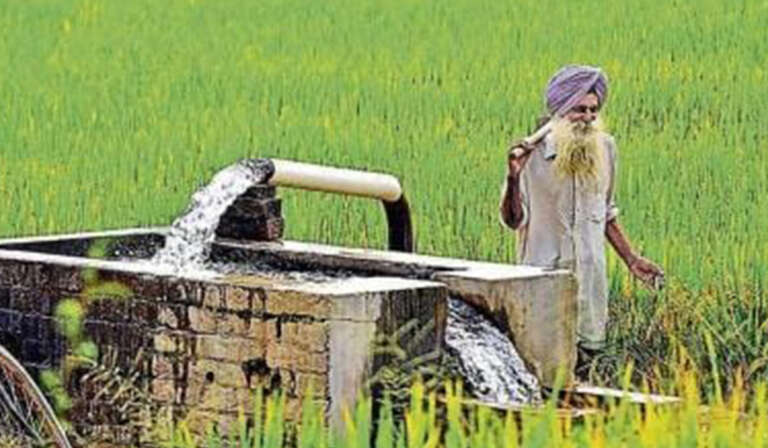
Many progressive farmers of Punjab are already moving towards crop diversification. Chilli cultivation in some areas of Ferozepur has created new opportunities for farmers. If the production of red and green chillies is linked to processing and marketing, then more great possibilities can arise in this sector.
Similarly, some young farmers of Punjab are also moving towards dragon fruit, strawberry and other high value horticultural crops. Although there are market and technical risks associated with these crops, with proper technical guidance and marketing, they can become a good source of income in small areas.
Farmers associated with potato and seed production in the Doaba region have also made a special identity. These examples show that Punjab’s agriculture is not limited to wheat and paddy only.
Challenges to the success of crop zoning
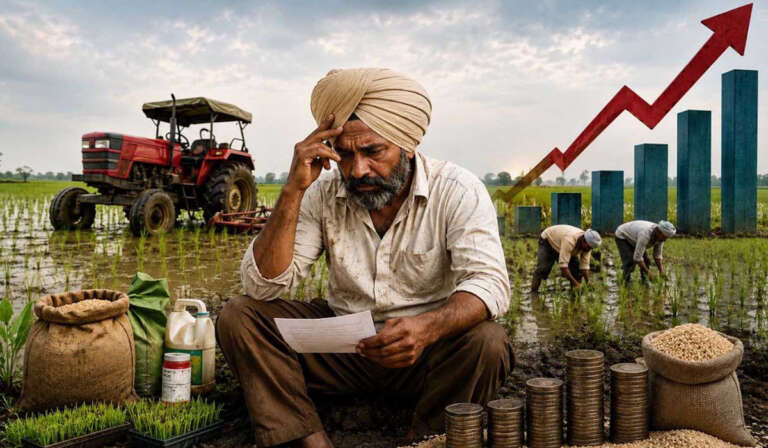
Despite the obvious benefits of crop diversification, the common farmer is hesitant to adopt it. The biggest reason for this is the economic risk. The government procurement system for wheat and paddy provides the farmer with a certain market. In comparison, the uncertainty of procurement and prices for maize, pulses, oilseeds, vegetables and fruits worries the farmer.
Vegetables and fruits are perishable commodities. If production increases and demand does not match it, prices can fall rapidly. Apart from this, due to lack of cold storage, processing units and modern cold-chain, farmers are not able to get the full value of their produce. Therefore, just saying that farmers should switch from paddy to other crops is not enough. It is imperative to provide complete arrangements from seed to market for alternative crops.
To make crop zoning successful, the government will have to formulate a long-term policy. First of all, scientific mapping of soil, water and climate should be done by the Punjab Agricultural University and the Agriculture Department. Based on that data, suitable crops can be identified for each region.
Secondly, if the government motivates farmers to grow maize, pulses or oilseeds instead of paddy, then there should be an effective price protection and government procurement arrangement for them. The farmer should be confident that growing alternative crops will not insecure his income. Third, farmers adopting low-water crops can be given financial incentives or direct income support per acre. This can reduce the initial economic risk associated with the new crop. Fourth, every crop zone should be linked to an agro-industrial cluster. Processing units should be set up where chilli or tomato is grown. Units for juice, pulp, dry fruits and other value-added products should be set up in fruit producing areas. Along with this, expansion of cold storage and cold-chain infrastructure is also necessary.
Let’s get back to the solution… Change is the way forward
By the way, the export infrastructure should be strengthened to take Punjab’s fruits and vegetables to the big markets of the country as well as foreign markets. Punjab’s agriculture stands at a historic juncture today. The wheat-paddy cycle strengthened Punjab’s role in the country’s food security, but its long-term effects have raised serious questions before water, soil and environment.
Scientific zoning of crops can be an important way to make Punjab’s agriculture sustainable, diversified and economically strong. But for this, it is not enough to simply ask the farmer to change crops. He will have to be given complete security of market, price, procurement, insurance, processing and technical support.
If the Punjab government, agricultural scientists, industry and farmers come together to formulate a joint long-term strategy, Punjab can meet the growing needs of pulses, oilseeds, fruits and vegetables while conserving its natural resources. In this way, Punjab can once again become a guide to give a new direction to Indian agriculture.



Leave a Comment