

To understand the electoral politics of Punjab, it is necessary to understand the geographical, social, and political picture of each assembly constituency. In our election caravan, we are talking about Assembly Constituency No. 5 – Dinanagar, of Gurdaspur district.
Dinanagar is a constituency where the rural area is quite large compared to the urban area. Along with this, the challenges associated with the border and its historical legacy make the identity of this constituency even more distinct.
History associated with Maharaja Ranjit Singh
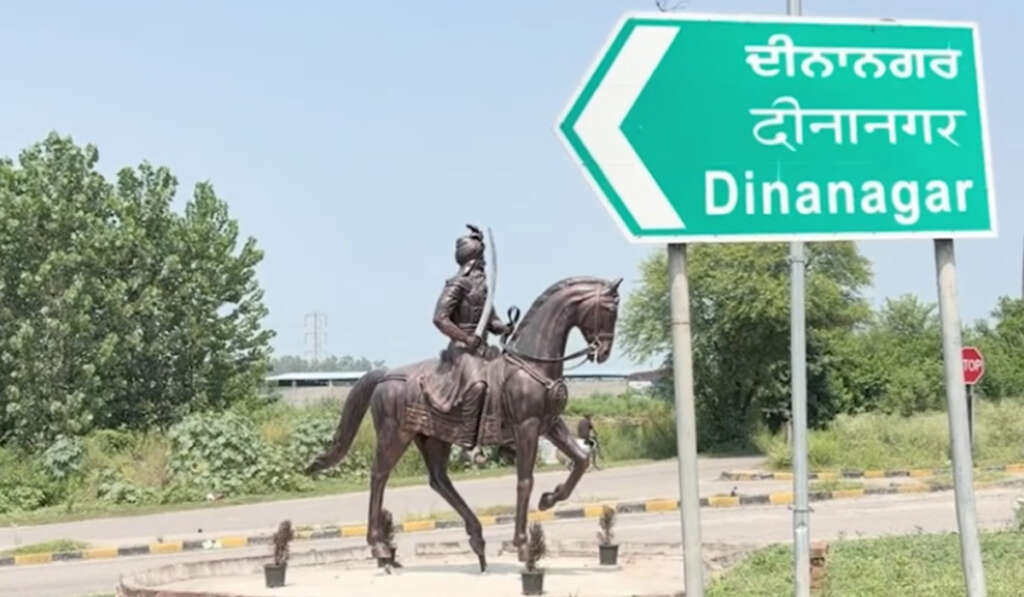
The history of Dinanagar is specifically linked to the era of Maharaja Ranjit Singh. It is said that Maharaja Ranjit Singh used to hold his court here during the summer months.
Even today, the Baradari of Dinanagar encapsulates the memory of that era. However, the identity of Dinanagar is not limited only to its history. The real picture of this constituency is also visible in its vast rural areas and border villages.
Therefore, to understand the electoral politics of Dinanagar, it is important to look at the needs of the villages and border areas along with the city.
86 Percent Rural, 14 Percent Urban
According to voter statistics, about 86 percent of the population of Dinanagar constituency lives in rural areas, while about 14 percent of the population is urban.
It is also a reserved constituency for Scheduled Castes, where the Scheduled Caste population is said to be around 32 percent.
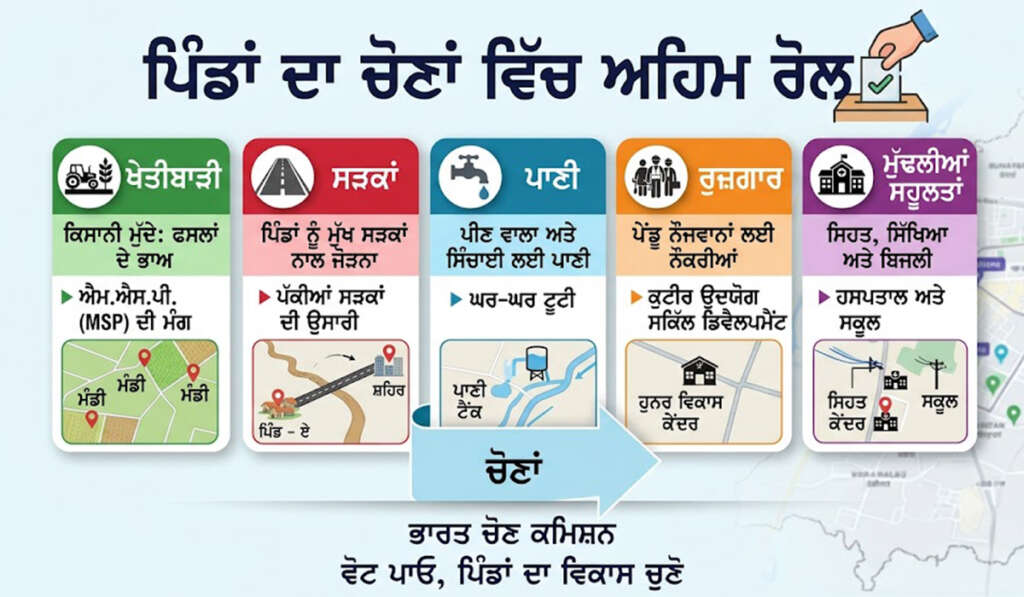
Due to the large rural area, issues like agriculture, roads, water, employment, and basic facilities remain prominent in the electoral discourse of Dinanagar.
Nearly Two Lakh Voters in 2022
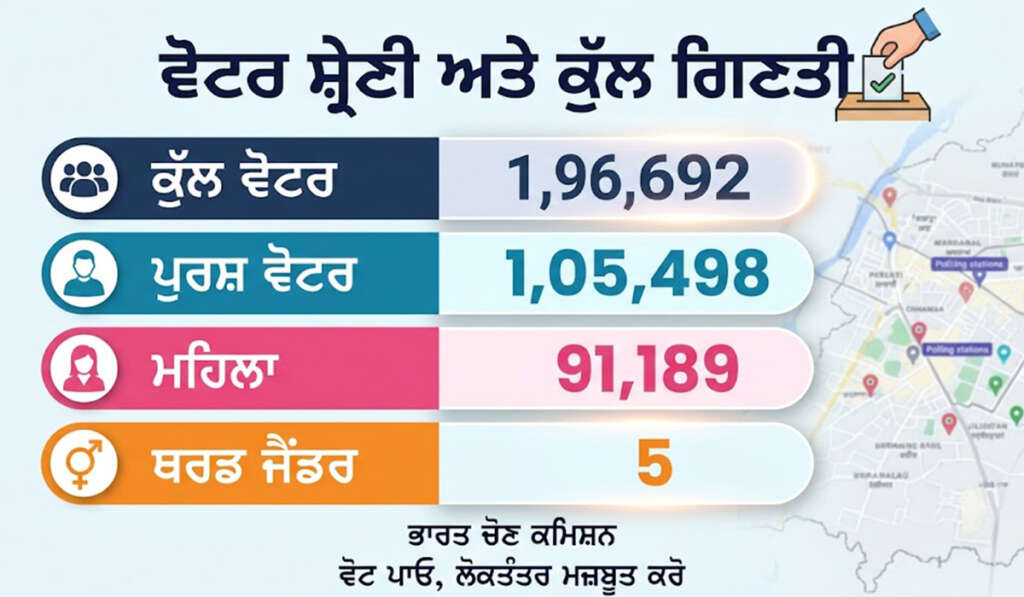
According to the 2022 voter statistics, a total of 1 lakh 96 thousand 692 voters were registered in the Dinanagar assembly constituency.
These included 1 lakh 5 thousand 498 male, 91 thousand 189 female, and 5 third-gender voters. A total of 229 polling stations were set up for the voters.
The religious picture of Dinanagar is also diverse. According to statistics, there is about 52 percent Hindu, 39 percent Sikh, and 7 percent Christian population here, while the share of other communities is about 2 percent.
The Political Legacy of Dinanagar
Politically, the Congress has had a long-standing influence in Dinanagar. In the ten assembly elections held since 1977, the Congress has won this seat seven times, while the BJP has registered a victory twice.
Some families have also had a long-standing presence in the politics of Dinanagar. Among them, the name of the Chaudhary family comes to the forefront prominently.
After Jai Muni Chaudhary, Aruna Chaudhary also made her place in the politics of Dinanagar, and the political presence of this family has remained a part of the constituency’s electoral politics for many years.
BJP’s Victory in 1997 and 2007
The BJP also registered victories in Dinanagar in 1997 and 2007. After this, the Congress once again strengthened its grip.
Aruna Chaudhary won three consecutive assembly elections on a Congress ticket from 2012 to 2022.
But the picture of the contest in the 2022 election was somewhat different. This time, along with the Congress and the BJP, the Aam Aadmi Party was also in the fray as a significant contender.
A Margin of Only 1,131 Votes in 2022
In the 2022 assembly election, Aruna Chaudhary from Congress, Shamsher Singh from Aam Aadmi Party, and Renu Kashyap from BJP were in the electoral fray.
In the results, Aruna Chaudhary received 51 thousand 133 votes, while Aam Aadmi Party’s Shamsher Singh received 50 thousand 2 votes.
The margin of victory between the two was only 1 thousand 131 votes. BJP’s Renu Kashyap received 20 thousand 560 votes.
Thus, the Congress registered a victory on the Dinanagar seat, but the margin of victory was quite narrow. Aruna Chaudhary is the sitting MLA from Dinanagar.
Electoral Issues of Dinanagar
When the difference between victory and defeat in an assembly constituency is merely around a thousand votes, the importance of every vote in the electoral contest becomes evident.
Due to the large rural area in Dinanagar, issues like agriculture, roads, water, employment, and basic facilities remain part of the electoral discussion. Along with this, local needs associated with border areas are also significant in the constituency’s picture.
The Social Picture Changed After the 1947 Partition
An important historical aspect related to Dinanagar is connected to the 1947 India-Pakistan partition.
Before the partition, the Muslim population is said to have been the largest religious group in Dinanagar. After the partition, a large number of Muslim families moved to Pakistan, while the settlement of Hindu and Sikh families coming from Pakistan brought a major change in the religious and social structure of Dinanagar.
The Hasli Canal’s Connection to the Mughal Era
Another interesting thing related to the identity of Dinanagar is the Hasli Canal passing through here. Its history goes back to the Mughal era.
It is said that this canal was built to take water from the Ravi River and deliver it to the royal gardens of Lahore. Later, this same water also supported the gardens and agriculture of Dinanagar.
Thus, the story of Dinanagar is not merely the electoral story of an assembly constituency. It encompasses within itself history, the border, rural society, agriculture, social structure, and a long-running political legacy.
After understanding the political and social picture of Dinanagar in this sixth phase of the election caravan, we will now encounter the electoral story of another assembly constituency of Punjab in the next phase.
Leave a Comment