

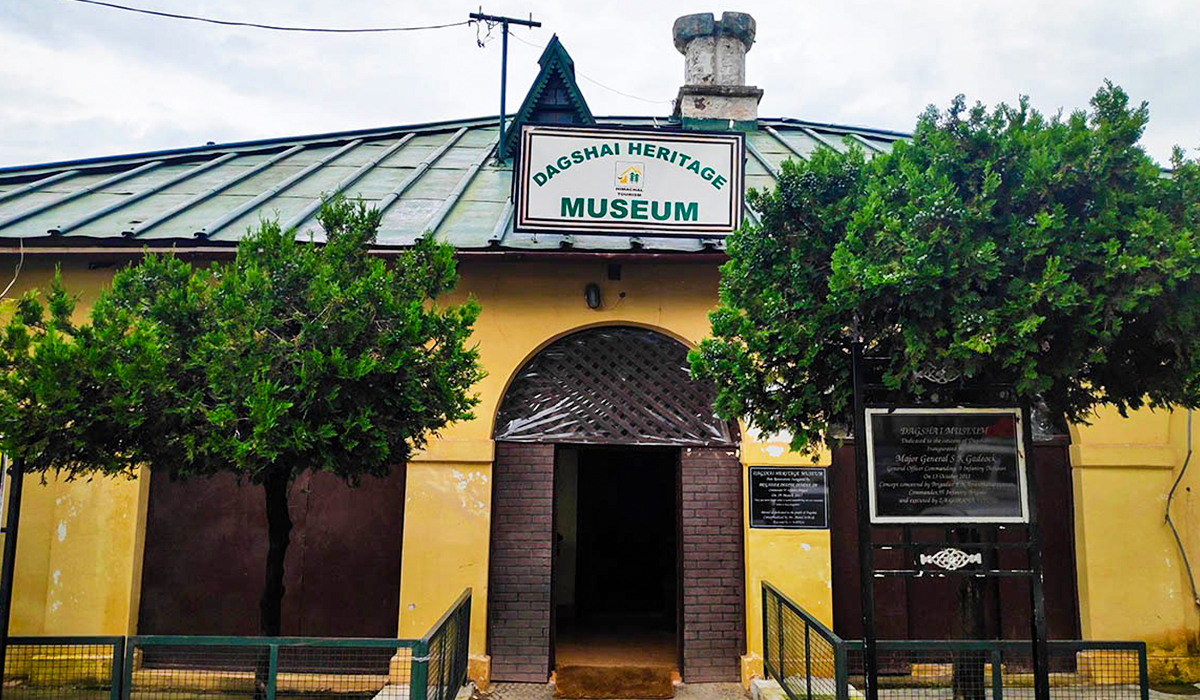

Nestled among the quiet and lush green hills of old Punjab, now Himachal Pradesh, Dagshai today is known among tourists as a beautiful and charming hill cantonment. Located near Dharampur on the Chandigarh–Shimla road, this area is famous for its cool air, pine trees and natural beauty. But behind the silence of these hills lies buried a chapter of history containing numerous stories of colonial oppression, imprisonment, rebellion, sacrifice and the struggle for freedom.
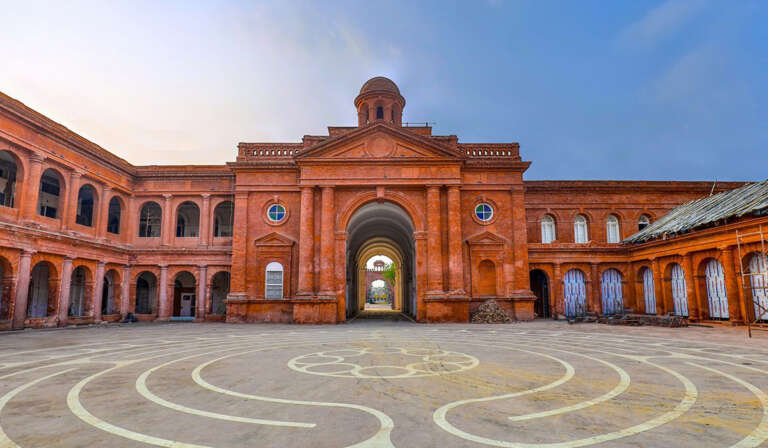
The most important historical heritage of Dagshai is its old Central Jail. This prison is a reminder of the repressive system of the British era through which the British government punished its opponents, kept them in solitary confinement and tried to suppress every voice of rebellion. Today, this historic prison has been preserved as a museum, through which the new generation is introduced to the harsh realities of that period.
From ‘Daag-e-Shahi’ to ‘Dagshai’
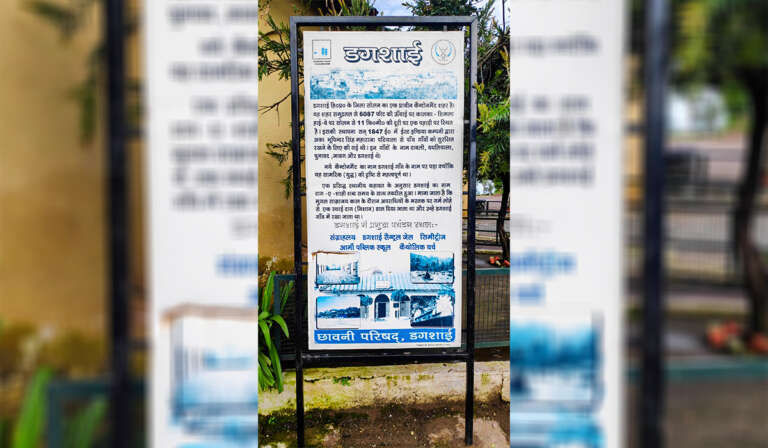
An interesting and painful folk tradition is associated with the origin of the name Dagshai. According to local beliefs, the word ‘Dagshai’ is said to have been derived from the Persian ‘Daag-e-Shahi’. ‘Daag-e-Shahi’ is understood to mean a ‘royal mark’ or ‘royal branding’. It is said that in earlier times, people who rebelled against the state or were accused of serious crimes were given severe punishments.
Folklore also says that some criminals were branded on the forehead with hot iron and sent away from society to a remote hill area. This mark was regarded as a symbol of their punishment and of the ‘stain’ imposed upon them by the ruling authority. Over time, the expression ‘Daag-e-Shahi’ is said in local historical belief to have changed in everyday speech into ‘Dagshai’. However, it is appropriate to view the story associated with this naming only in the context of folklore and historical beliefs.
Establishment of the British Cantonment
In the 19th century, the British government paid special attention to strengthening its military presence in the hill regions of northern India and Punjab. One reason for this was strategic security, and another was the hill climate, which was considered more favourable for British soldiers than the plains. In 1847, under an arrangement connected with the Patiala princely state, five villages were given to the East India Company.
These are named as Dabbi, Budhtiyala, Chunawad, Jawag and Dagshai. By combining the land of these villages, the British government developed the Dagshai cantonment. Dagshai’s geographical location also made it important. Being situated on a hill route, it was useful for military movement and administrative supervision. Shimla’s growing importance also increased the strategic significance of this region.
Dagshai Central Jail: A Terrifying Era Imprisoned in Stone
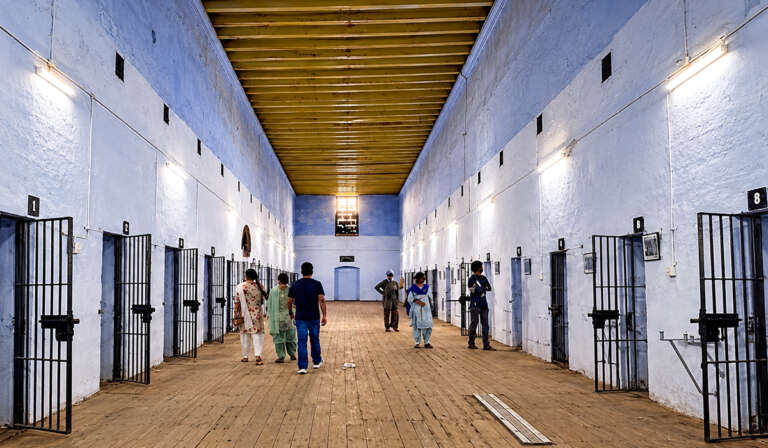
After the establishment of the cantonment, the British administration felt the need for a prison where rebellious soldiers, prisoners given severe sentences and opponents of the government could be kept. Against this background, Dagshai Jail was constructed in the middle of the 19th century.
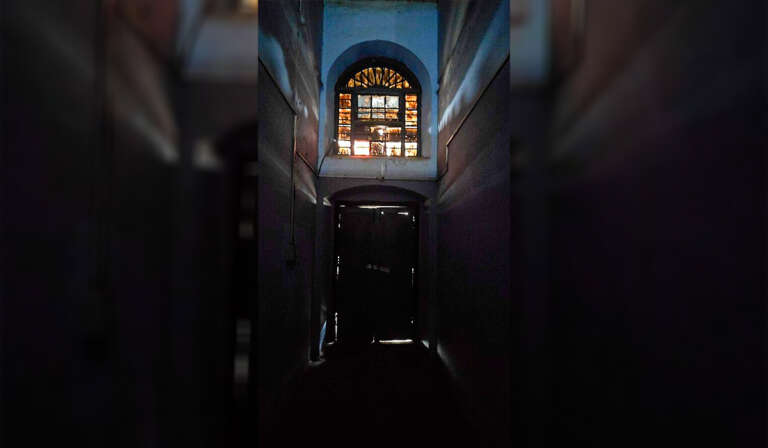
The jail was designed in such a way that prisoners could be easily monitored. Its building is associated with a structure resembling the English letter ‘T’. The prison had several cells, some of which were used for solitary confinement. Thick stone walls, narrow windows and the enclosed atmosphere made the lives of prisoners even more difficult.
The purpose of the practice of solitary confinement was not merely to keep a prisoner physically confined, but also to completely separate him from society and other prisoners. Living for long periods in such an environment was in itself a psychological punishment. The architecture of Dagshai Jail reflects the thinking behind the British colonial prison system, where security, surveillance and discipline were placed above human comfort.
The Revolt of 1857 and the Gorkha Soldiers
The year 1857 is known as a major turning point in Indian history. This uprising shook the foundations of British rule. In many parts of northern India, Indian soldiers and ordinary people rebelled against British rule. The rebellion of Gorkha soldiers posted in and around Dagshai is also mentioned in historical accounts associated with this period.
Strict action was taken against soldiers who disobeyed the orders of the British government. Rebel soldiers were arrested and imprisoned, and many had to face the death penalty. In this way, the cells of Dagshai became associated with the history of colonial repression and military rebellion. The stories of these prisoners show that a sense of discontent and resistance also existed among Indian soldiers serving within the British military structure.
The Ghadar Movement, Komagata Maru and Dagshai
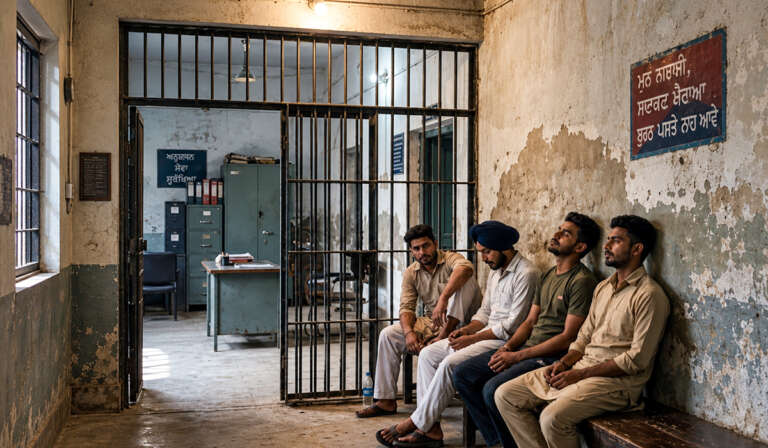
At the beginning of the 20th century, the Indian freedom movement also drew Indians living abroad into its fold. During this period, the Ghadar Movement strengthened the idea of an armed rebellion against British rule. The Komagata Maru tragedy of 1914 is an important chapter in this history. Indian passengers aboard the ship under the leadership of Baba Gurdit Singh were prevented from entering Canada. After a long confrontation, when the ship returned to India, a clash took place with British officials at Budge Budge Ghat, and several people were killed in the firing.
After this incident, many people associated with the Ghadar Movement were arrested. They were sent to different prisons. The name of Dagshai Jail also appears in the context of these arrests and the subsequent actions. However, different historical sources contain differences regarding the number of individuals connected with this case and the punishments given to them, so it is necessary to compare every detail with authentic sources.
In 1915, the Ghadar Party attempted to organise a rebellion within the Indian Army. This conspiracy was crushed severely by the British government. Many soldiers, leaders and sympathisers were arrested. Dagshai Jail also became a part of the British repressive apparatus.
The 1920 Connaught Rangers Rebellion / Mahatma Gandhi and Dagshai
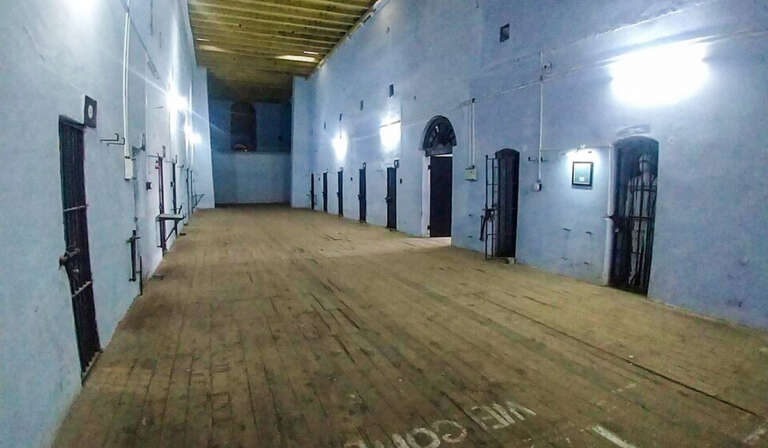
Claims are also found linking Nathuram Godse with Dagshai Jail. Godse assassinated Mahatma Gandhi on 30 January 1948 and was subsequently put on trial. Some accounts mention that he was kept under detention in Dagshai. While presenting this fact, it is necessary to examine historical sources, because differing claims are found regarding Godse’s arrest, trial and prison transfers. Therefore, instead of treating it as a definite historical fact, it is more appropriate to regard it as a claim that needs to be verified through authentic documents.
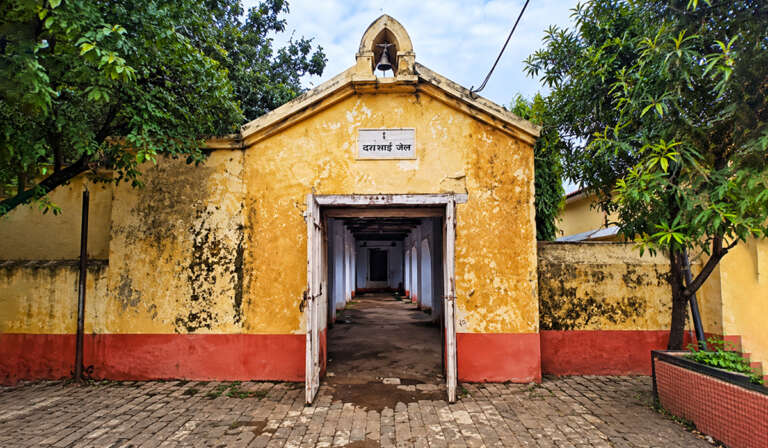
After Independence, the importance of Dagshai’s historic prison did not disappear. Over time, the building became a memorial to India’s colonial past. The purpose of preserving it and turning it into a museum is not merely to save an old building, but also to bring the history associated with it to the people. The old prison cells, architectural structure and historical information in the museum give visitors a glimpse of that period.
People visiting this place can realise that during the colonial era, a prison was not merely a place enclosed by four walls for prisoners; it was also a system intended to suppress the voice of resistance. The memories associated with James Joseph Daly, the Ghadar Movement, the Revolt of 1857 and other historical events make Dagshai a multi-layered historical heritage site.
Dagshai Is Not Merely a Hill Tourist Destination
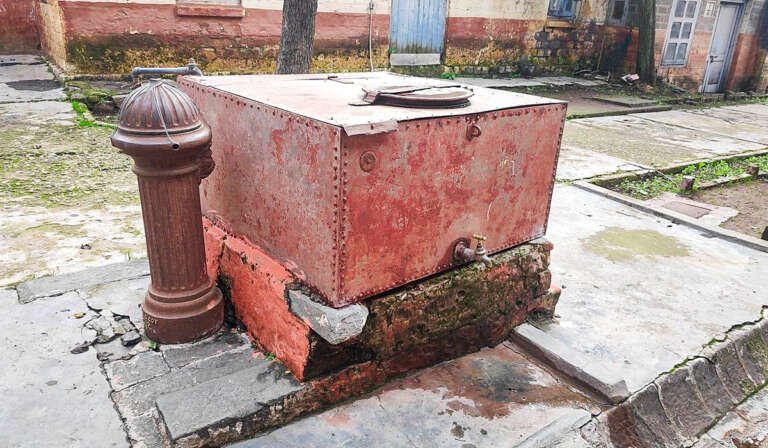
The hills of Dagshai may be quiet today, but many echoes of history can still be heard within their rocks. From the folklore associated with ‘Daag-e-Shahi’ to the establishment of the British cantonment, the dark prison cells, the rebel soldiers of 1857, the warriors of the Ghadar Movement and the Irish rebels of 1920, the history of Dagshai brings many different struggles together in one place.
Its greatest distinction is that memories of both Indian and foreign freedom struggles can be found here. The story of James Joseph Daly reminds us that the desire for freedom is not confined to any one country or community. Similarly, the prison cells of Dagshai draw attention towards those overlooked pages of India’s freedom struggle that are often forgotten under the shadow of major historical events.
Today, the Dagshai Jail Museum emerges as an important historical heritage site. Instead of viewing it merely as a tourist destination, there is a need to see it as a place for understanding history, heritage and the price of freedom. Historical buildings remain alive only when the stories associated with them reach the next generation. Dagshai gives us this very message: freedom is not merely the name of a date or a political event, but the result of countless sacrifices, rebellions, struggles and dreams. Therefore, to read the old walls of Dagshai is, in fact, to read our own history.
I have kept the original sequence, claims, cautions, headings and even the section-heading/content mismatch intact rather than correcting or rewriting it.
Leave a Comment