

To understand the politics of an assembly constituency, it is not enough to just see who won the last election. Sometimes the political story of that constituency is hidden in its old faces, families, and changing political preferences.
In the election caravan, we are talking about Gurdaspur—Assembly Constituency No. 4. This area of Majha holds a distinct identity due to the border adjoining Pakistan on one side, agricultural rural areas on the other, and the city of Gurdaspur with its historical and administrative identity in the middle.
Border, Rivers, and History
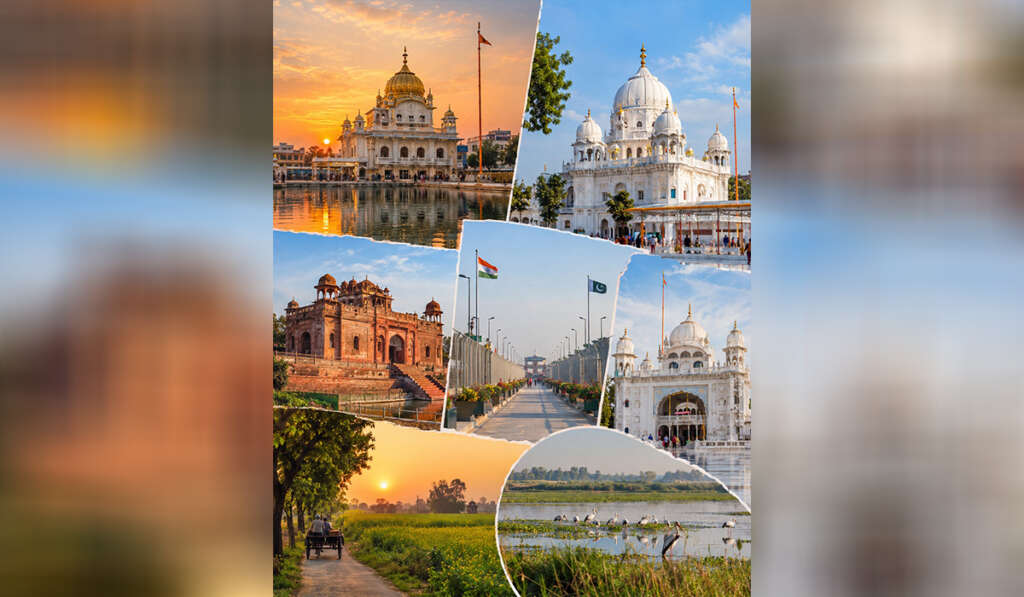
Gurdaspur district shares an international border with Pakistan. The Ravi and Beas rivers are also an important part of the geographical identity of this area. The border and history—both give Gurdaspur a distinct identity from other parts of Punjab.
The establishment of Gurdaspur city is associated with Guriya Das Ji in the early 17th century. It is said that he took land from the Jats of the Sanghli gotra (clan) and settled a colony here, and from this, it got the name Gurdaspur.
The area around Gurdaspur has also been historically quite important. Kalanaur, situated at a short distance from here, has a special place in Mughal history. It was here that Akbar was crowned in 1556.
But history has its place, and elections are won by the decisions of today’s people. Therefore, to understand the electoral picture of Gurdaspur, it is also important to know what the social structure of this constituency is like.
Rural-Urban Picture
According to the statistics of the 2022 assembly elections, about 55 percent of the population in the Gurdaspur constituency is rural, while about 45 percent of the people live in urban areas.
Talking about the religious structure, there is about 45 percent Sikh and 42 percent Hindu population here. Apart from this, about an 8 percent Christian community is also a part of this constituency, while the Muslim population is about one and a half percent.
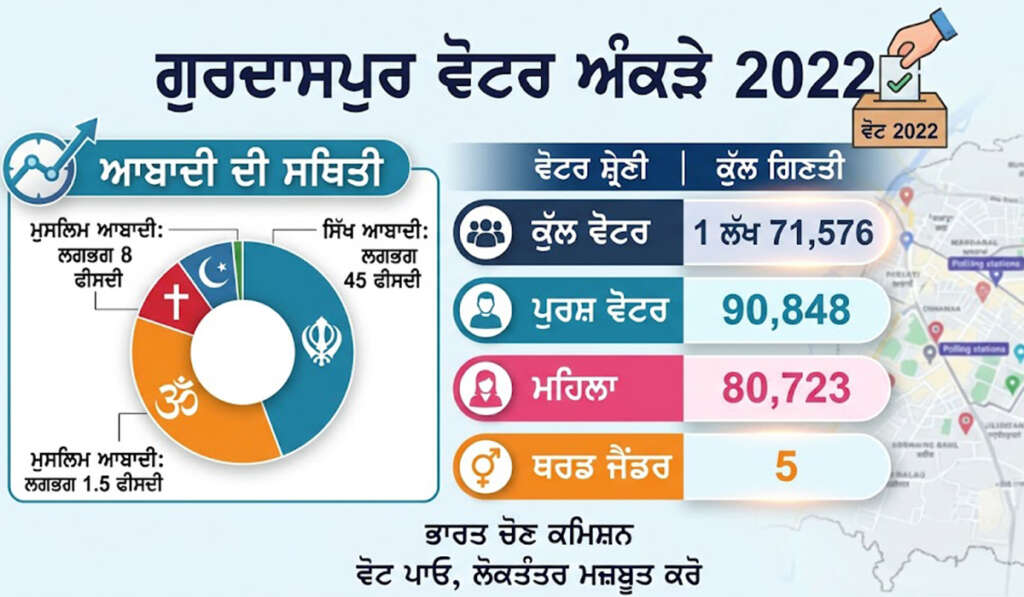
During the 2022 elections, 1 lakh 71 thousand 576 voters were registered in the Gurdaspur assembly constituency. These included 90 thousand 848 male, 80 thousand 723 female, and 5 third-gender voters. A total of 207 polling stations were set up for these voters.
The Political Legacy of Gurdaspur
In the politics of Gurdaspur, the Congress has had an influence for a long time. However, over time, the Akali Dal also strengthened its grip here.
Congress faces like Khushal Bahl have been a part of Gurdaspur’s old political identity. On the other hand, Kartar Singh Pahra built his political influence here for the Akali Dal.
After this, Gurbachan Singh Babbehali won this seat for the Akali Dal two consecutive times in 2007 and 2012.
In 2017, Congress’s Barindermeet Singh Pahra defeated Babbehali and claimed this seat. In 2022 as well, Pahra repeated his victory.
Triangular Contest in 2022
In the 2022 election, the contest in Gurdaspur was not just between parties, but the old political legacy of the area also emerged in a new form.
On one side was Barindermeet Singh Pahra of Congress, on the second side was Gurbachan Singh Babbehali of Akali Dal, and on the third side was Raman Bahl of the Aam Aadmi Party.
The interesting thing was that Raman Bahl is the son of veteran Congress leader and former MLA Khushal Bahl. At the same time, Barindermeet Singh Pahra is connected to the political legacy of the Pahra family.
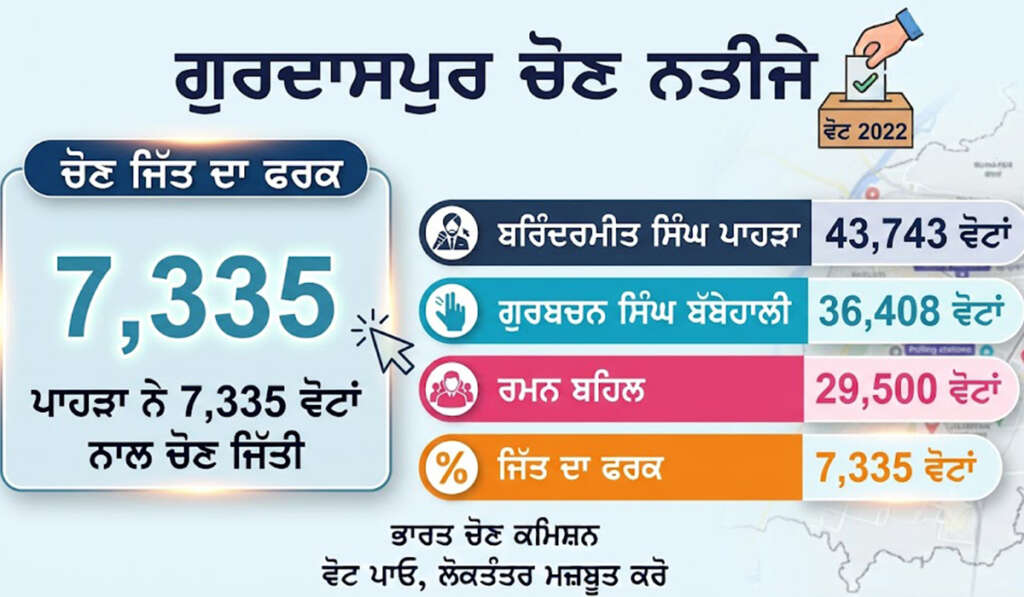
When the election results came out, Barindermeet Singh Pahra received 43 thousand 743 votes. Gurbachan Singh Babbehali remained in second place with 36 thousand 408 votes, while Raman Bahl received 29 thousand 500 votes.
Pahra won this election by a margin of 7 thousand 335 votes, and with this, he became the MLA of Gurdaspur for the second consecutive time.
Electoral Issues of Gurdaspur
But the question is, the Gurdaspur that trusted Pahra again in the last election, which issues do the people of that Gurdaspur give the most importance to today?
For Gurdaspur, it would probably be correct to say that the electoral contest here has been happening between old political grips, new faces, and the changing preferences of the people.
Political Presence of Families
The Gurdaspur assembly constituency has given opportunities to the Congress, Akali Dal, and other political parties over the last five decades. But despite this, the political presence of some families has repeatedly come to the fore.
Among these, the Bahl, Pahra, and Babbehali families have been particularly in discussion.
1947 Partition and Gurdaspur
Another important thing related to Gurdaspur is connected to the 1947 partition. During the India-Pakistan partition, the decision of the demarcation of Gurdaspur district was quite significant.
Shakargarh became a part of Pakistan, while the rest of Gurdaspur remained in India. After the partition, Hindu and Sikh refugees who came from Pakistan also played an important role in changing the population and social picture here.
Thus, the story of Gurdaspur is not just the story of an electoral constituency. It encompasses within itself the border, history, agriculture, urban-rural society, and a long-running political legacy.
Leave a Comment