


Lahore’s Heera Mandi: The immense artistic heritage, cultural decline and social tragedy of ‘Shahi Mohalla’
The mention of Lahore brings to mind many images related to history and culture – the Badshahi Mosque, Lahore Fort, Shalamar Bagh, Anarkali Bazaar and the grandeur of old mansions. But there is also an area of this historic city, the very mention of which raises questions related to infamy, hesitation and morality in the general social perception. This area is – Heera Mandi. Today, ‘Heera Mandi’ is often known as the alleged red-light area of Lahore. Due to this, a large part of its identity has been associated with prostitution and social stigma. But delving into the deeper layers of history reveals another picture of this area, a cultural world where traditions of music, dance, poetry, literature and ethos have maintained their identity for centuries.
The old name of this area is said to be ‘Shahi Mohalla’. The Tawaifs living here were not just women associated with entertainment, but were many talented artists of their time. Many of them were skilled in singing, Kathak, poetry, language, conversation and court ethos. Therefore, to see the story of Hira Mandi only as a history of prostitution would be to ignore its larger cultural aspect.
From ‘Shahi Mohalla’ to ‘Hira Mandi’
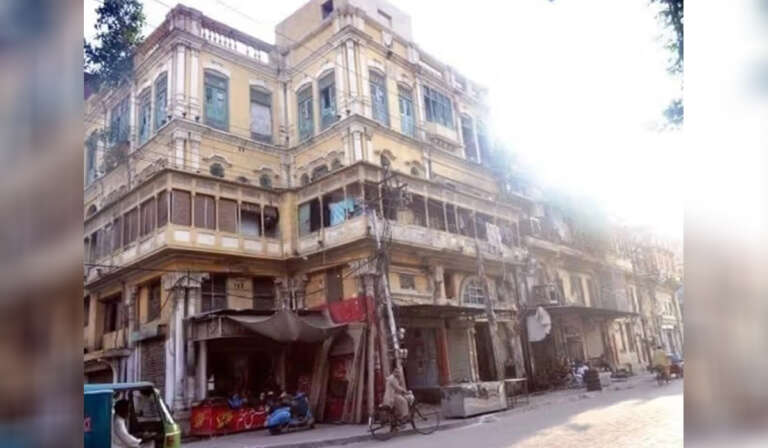
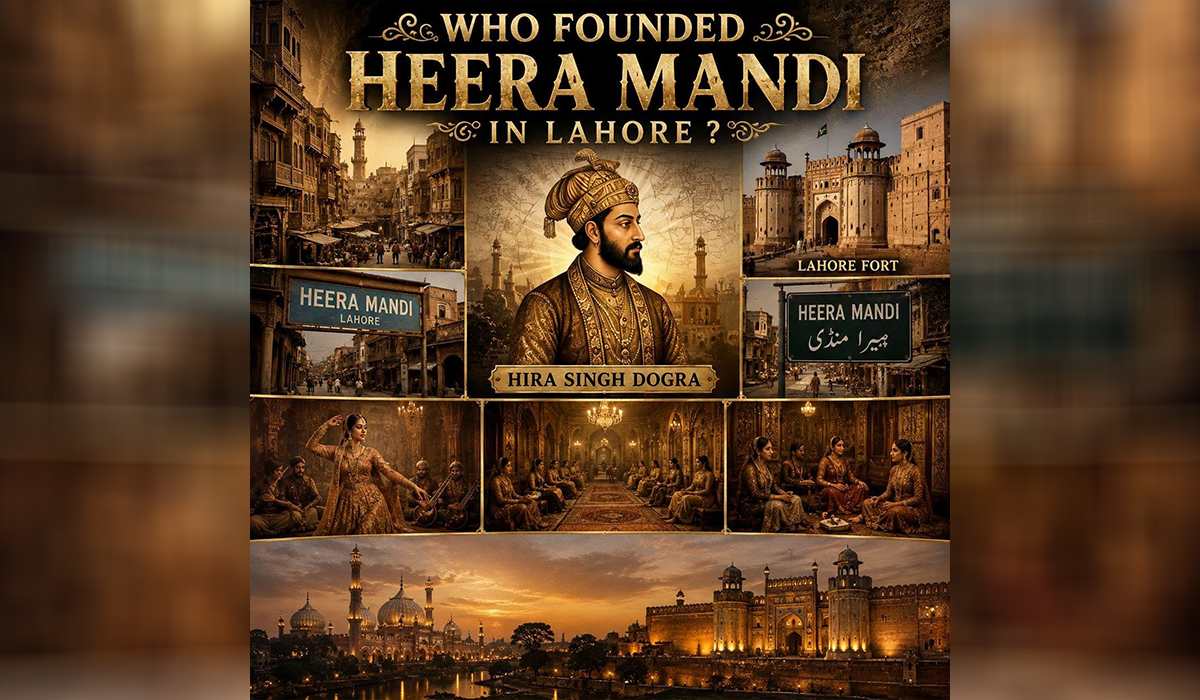
This area, located near the Lahore Fort, was associated with court culture during the Mughal period. Music, poetry and dance were given importance in the courts of the Mughal emperors. This cultural atmosphere also affected Lahore and parts of the city developed as colonies of artists and musicians. There are various traditions in history regarding the origin of the name ‘Heera Mandi’. According to a popular belief, the area came to be called ‘Heera Mandi’ due to a grain market associated with Hira Singh Dogra during the Sikh rule. Over time, this name became the identity of the entire area and the name ‘Shahi Mohalla’ was left behind.
An important point here is that linking the word ‘Heera’ with the beauty of the women here or any imaginary ‘diamond market’ is not considered a historically reliable explanation. The tradition of a market associated with Hira Singh Dogra behind the name is more prevalent.
Tawaif! The identity of a forgotten artist
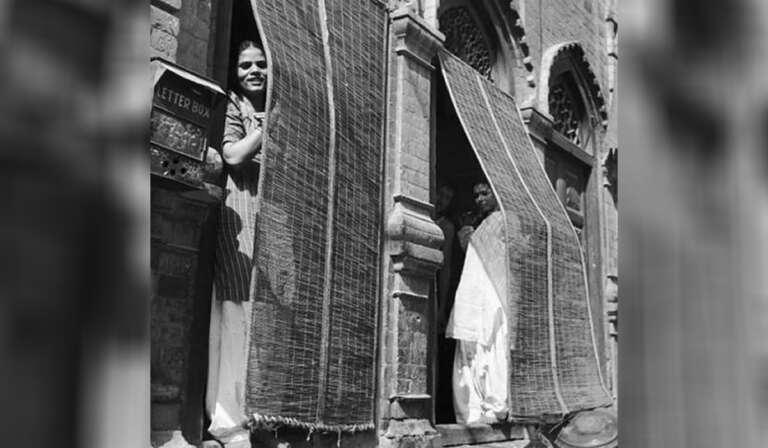
Today, the word ‘Tawaif’ is often used in a derogatory sense, but in the historical context, the image of this word is quite complex. Many Tawaifs were trained artists of high level music and dance. They not only sang or danced, but were also familiar with poetry, language, conversation and court etiquette. Their kothas served in many cases as centres of cultural learning. Young men of the upper class came here to listen to music, understand poetry and learn court etiquette. In this environment, social arts such as sitting, talking, treating guests and appreciating poetry or music were also given importance.
That is why viewing the Tawaifi culture only in the context of physical relations becomes a one-sided interpretation of history. However, it is also important that the life of every Tawaifi is not presented as a story of freedom and glory. In this world, exploitation, economic dependence and the pressures of a patriarchal society were also present. A proper understanding of history is made only by looking at these two aspects together.
Kothas! Centres of music and culture
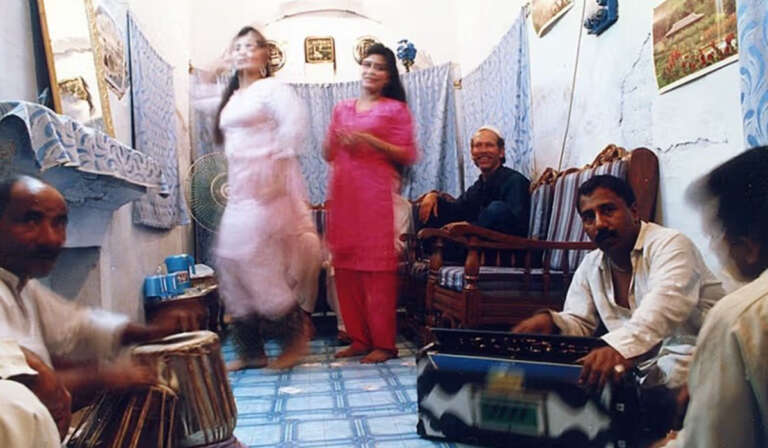
In ancient times, the meaning of the word ‘kotha’ was different from the context it is today. Many kothas were cultural centers where music, dance and poetry gatherings were held. Here, one could listen to and learn different styles of classical music. The gatherings of the tawaifs gave a big platform to the traditions of thumri, dadra, ghazal and other semi-classical singing. Similarly, these cultural places also played a role in preserving the expression, mannerisms and presentation of emotions of Kathak dance. Urdu and Persian poetry also had a deep connection with these gatherings. Poets would present their works and singers-artists would adapt them to tunes. In this way, poetry, music and dance used to connect with each other to create a unique cultural world.
Women’s Economic and Social Role/Ustad, Inheritance and Musical Tradition
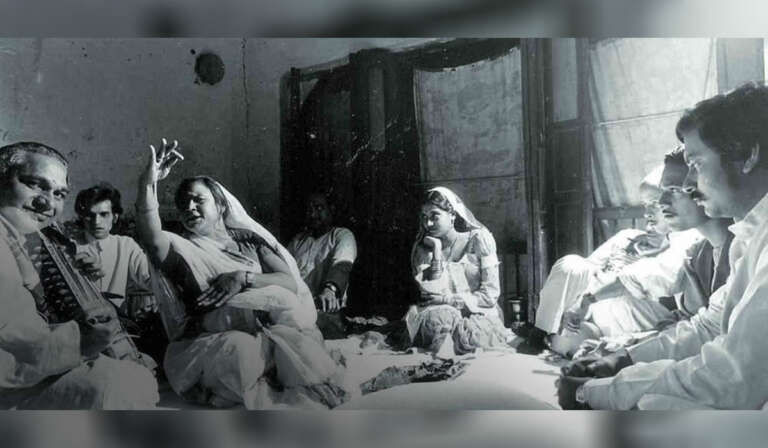
An important aspect of the Tawaif culture was the economic role of women. Many famous Tawaifs were heads of their households and depended on their earnings. They managed entire groups of artists, musicians and apprentices. The role of the ‘nayaka’ or head of the house was crucial in this structure. She took decisions related to the training of artists, relations with guests, income and management of the household. Some women also became property owners.
For this reason, the world of Tawaifs is also seen as an aspect of the limited but significant economic autonomy of women in the history of the Indian subcontinent. But to call it a purely ‘matriarchal society’ would be a claim made without caution. It was a specific professional and cultural structure, in which women had greater rights in certain areas.
The role of male musicians was also extremely important in the cultural structure of the diamond market. Ustads, Mirasi and artists belonging to different families used to train the tawaifs in music. Musical gatherings were decorated with instruments like sarangi, tabla and tanpure. Sometimes, the success of a tawaif was due to the hard work of its ustad, musicians and the entire artistic group for years. This collaboration contributed to keeping the oral tradition of music alive from generation to generation. The role of tawaifs and kothas in preserving many of the musical traditions that are today considered the common heritage of South Asia cannot be completely ignored.
British Era! New Ethics and Changing Identity
When talking about the cultural decline of the diamond market, the mention of the British Raj is important. The British rule brought with it Victorian ethics, administrative classification and new legal structures. They started dividing many of the complex cultural institutions of Indian society into their administrative categories. Instead of understanding the artistic and social role of the tawaifs, they were largely seen as ‘dancers’ or ‘prostitutes’. Infection-control policies associated with the British military regime also accelerated the process of regulating and policing red-light areas. This weakened the old social identity of the tawaif and began to be replaced by the colonial category of ‘prostitutes’. This change was not just legal; it also affected social thinking.
The 1947 Partition took away many great artists
The Partition of India dealt a deep blow to the cultural life of Punjab. Many Hindu and Sikh artists and families associated with the musical and artistic milieu of Lahore migrated to India. On the other hand, Muslim artists from many cities in India also migrated to Pakistan. This massive human displacement disrupted the cultural network that had been built over centuries. The patronage of music had changed, the court system had ended and cultural institutions were taking new forms in the new state. After this phase, the old artistic identity of the diamond market gradually began to weaken.
However, during the rule of General Zia-ul-Haq from 1977 to 1988, the policies of Islamization in Pakistan also affected the social, artistic and entertainment sectors. The environment became difficult for many artists associated with music and dance. Police surveillance, social pressure and cultural restrictions in the diamond market also weakened the old artistic structure. When traditional platforms associated with the arts began to dry up, the income of many families was affected. It is also important to note here that describing prostitution as a result of a single government policy would be an oversimplification of history. Several factors such as poverty, social marginalization, patriarchy, demand and legal-administrative pressure combined to create the current picture of this area.
The Shahi Mohalla of the past and the diamond market of today in the same place…
The Shahi Mohalla of the past and the diamond market of today, despite being in the same place, appear quite different in their social identities. In the old days, art, music and cultural gatherings here were patronized by certain sections of society. Today, a large part of the identity of this area is associated with prostitution and social stigma. The Tawaif of the past might have been an experienced artist, while many women living in today’s red-light areas face poverty, compulsion and exploitation. Therefore, instead of creating a romantic picture of the past, it is important to understand both sides of history, art and exploitation.
A Lost Cultural Heritage
The biggest tragedy of the diamond market is not that its identity changed; the biggest tragedy is that its old artistic heritage could not be preserved on a large scale. The oral heritage of the old havelis, mehfils, musical traditions and gharanas gradually weakened. The stories of many artists were not recorded in the history books. Their art, struggle and contribution remained confined to personal memories. Today, when films and web series present the story of the diamond market in the form of glamour and romance, the audience should also understand the historical questions hidden behind it. It was not just a world of magnificent dresses, mehfils and love stories; it was also a story of the hard work of artists, the economic autonomy of women, social restrictions and the changing political climate.
What does the diamond market teach us?
The history of Hira Mandi teaches us that no area or community can be judged solely on the basis of its current infamy. History is a long process, in which politics, society, economy, religion, art and human compulsions are intertwined. Shahi Mohalla was once an important part of Lahore’s cultural life. Tawaifs and musicians contributed to keeping alive many traditions of music, dance and poetry. Later, colonial policies, partition, changing social thinking, economic changes and political-religious pressures gradually changed this world.
Therefore, calling Hira Mandi simply an ‘infamous street’ does not do justice to its history. Similarly, it is not right to completely romanticize its past. The real history lies between these two extremes, a history that has both wonderful art, women’s economic freedoms to some extent, but also exploitation, compulsion and social double standards.
The story of the diamond market ultimately asks us a profound question; are we ready to understand a cultural heritage with its entire history, or will we accept a discredited label as its full identity? Perhaps the answer to this question is the first step in understanding the history of the diamond market.


Leave a Comment