
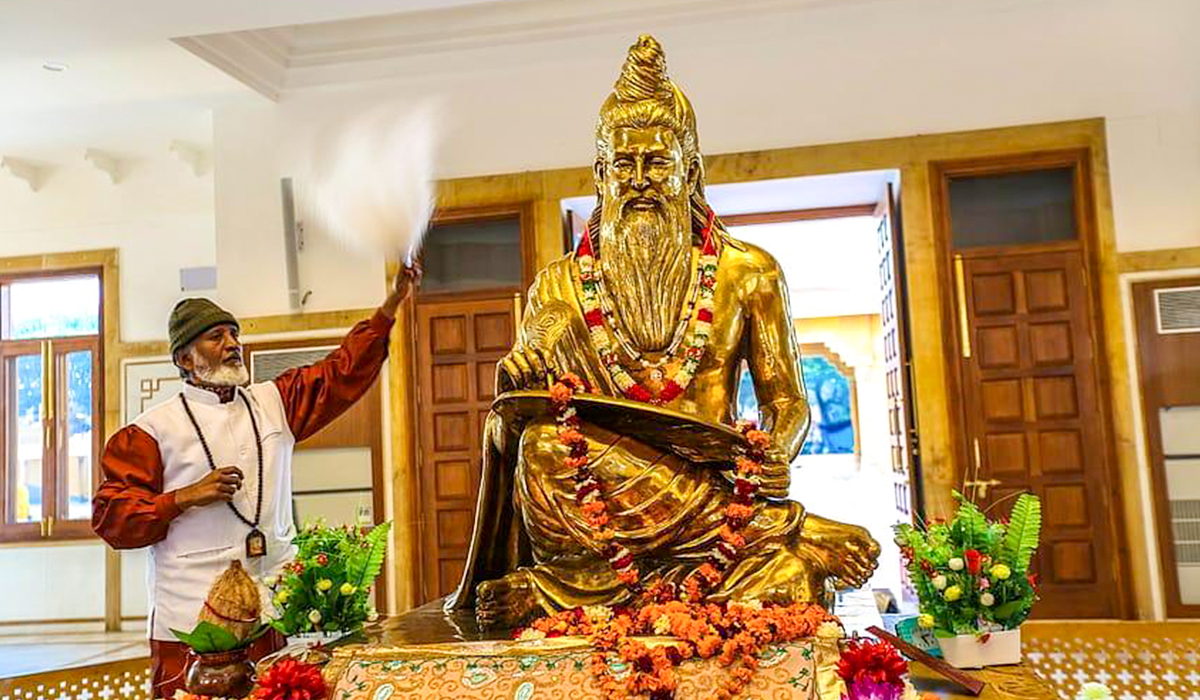

Ram Tirath in Amritsar, the mention of Maharishi Valmiki Ji in Sri Guru Granth Sahib, and the genealogical traditions associated with Luv-Kush are important aspects of Punjab’s religious and cultural history.
Maharishi Valmiki Ji is one of the most significant figures in Indian literature and religious tradition. He is revered as the creator of the Ramayana and the ‘Adi Kavi’ (First Poet). His legacy in Punjab is deeply connected with religious faith, folk traditions, social identity, and historical pilgrimage sites. Along with this, the mention of Valmiki Ji in Sri Guru Granth Sahib and some genealogical traditions linked to the Ramayana are essential for understanding his connection with Sikh history.
However, while understanding this subject, it is necessary to distinguish between historical facts, religious beliefs, and folk traditions.
Ram Tirath, Amritsar: The Prominent Center of Valmiki Ji’s Legacy
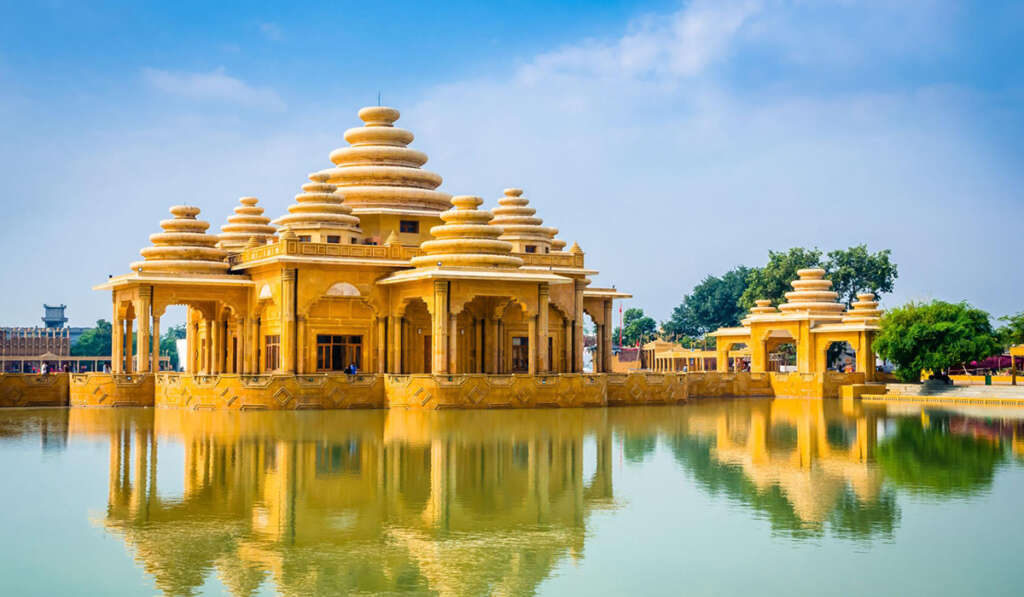
The most famous religious site associated with Maharishi Valmiki Ji in Punjab is the Bhagwan Valmiki Tirath Sthal, Ram Tirath, located near Amritsar. According to religious belief, this is the place where Maharishi Valmiki Ji had his ashram and where Mata Sita spent some time of her life. In this same tradition, the birth, upbringing, and education of Luv and Kush are also associated with this site.
The temple, sarovar (holy pool), and other religious structures located at Ram Tirath reflect its importance. Every year, religious congregations and a fair are held here, attended by a large number of devotees. This place is a major center of the religious and cultural identity of the Valmiki tradition in Punjab.
In 2016, a special law was enacted by the Punjab Government for the management of Ram Tirath, which made provisions for a Shrine Board for the administration and maintenance of this site. This step further clarified the institutional significance of Ram Tirath within Punjab’s religious heritage.
It is worth noting that considering Ram Tirath as Valmiki Ji’s ashram and the birthplace of Luv-Kush is a part of religious tradition. Independent historical confirmation of all these events is not available on the same level.
Mention of Valmiki Ji in Sri Guru Granth Sahib
An important aspect of the relationship between Valmiki Ji and Sikhism comes to light through his mention in Sri Guru Granth Sahib. In Gurbani, Valmiki Ji’s example is given to explain the transformation in a person’s spiritual life, the grace of God, and the importance of seeking refuge in the Guru.
On Ang 995 of Sri Guru Granth Sahib, a line is recorded in the hymn (Shabad) of Bhagat Dhanna Ji:
“Dhanna Jatt Balmik Batwara Gurmukh Paar Paia ||”
This line implies that a person can attain spiritual elevation through the grace of God and a Gurmukh (Guru-oriented) life. Here, the mention of Valmiki Ji is understood as an example of that spiritual transformation where a person’s life turns towards devotion to God and the true path.
Similarly, the mention of Valmiki Ji is also found in the Bani of Sri Guru Arjan Dev Ji. The line recorded on Ang 999 of Sri Guru Granth Sahib is:
“Balmik Supcharo Tario Badhik Tare Bichare ||”
This example connects with the ideology of Sikhism in which a person’s spiritual state is viewed in the context of God’s grace and spiritual transformation, rather than birth or social identity.
Thus, the mention of Valmiki Ji in Gurbani indicates an ideological relationship between Sikhism and the ancient Indian religious-literary tradition. However, this mention should not be considered as evidence of direct historical contact between Valmiki Ji and the Sikh Gurus.
The Genealogical Tradition Associated with Guru Nanak Dev Ji and Guru Gobind Singh Ji
In some religious traditions associated with Ram Tirath, Luv and Kush are also linked to the lineage of the Sikh Gurus. According to prevalent belief, the Bedi lineage of Guru Nanak Dev Ji is connected with Kush, and the Sodhi lineage of Guru Gobind Singh Ji is connected with Luv.
These beliefs are part of the Ramayana tradition and the genealogical legends of Punjab. They hold religious and cultural significance, but presenting them as independently proven historical facts regarding the lineage of the Sikh Gurus requires separate evidence.
Therefore, while mentioning this connection, presenting it as a prevalent religious belief is more historically accurate.
Bhai Jaita Ji and Sikh History: A Separate but Important Aspect
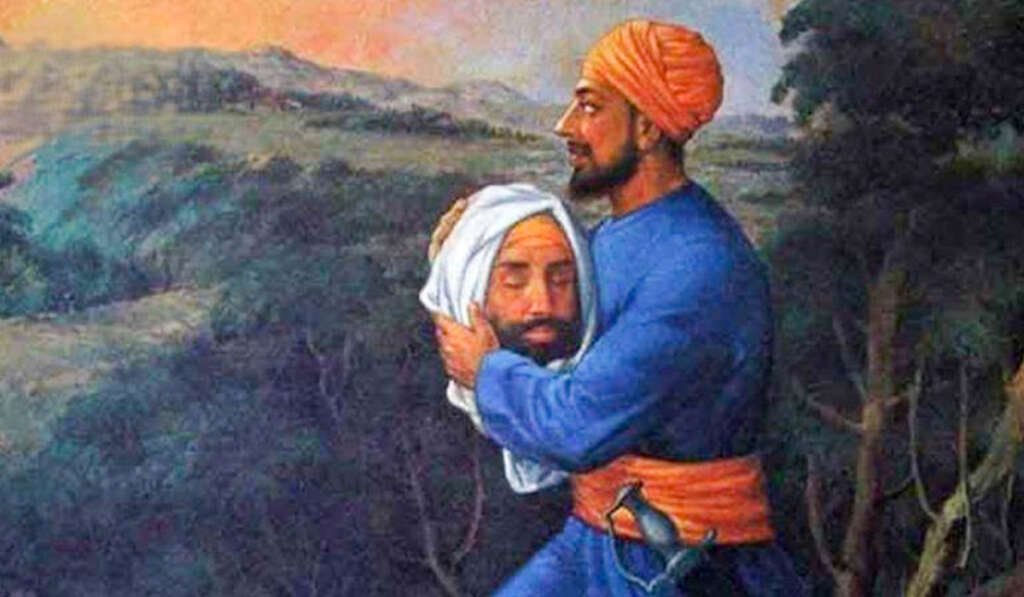
While discussing the relations between the Valmiki community and Sikh history, the mention of Bhai Jaita Ji, also known as Bhai Jivan Singh, is also significant. According to Sikh tradition, after the martyrdom of Guru Tegh Bahadur Sahib in 1675, he brought the Guru’s severed head (Sees) from Delhi to Sri Anandpur Sahib.
This service is remembered in Sikh history as an example of courage, dedication, and devotion towards the Guru. Bhai Jaita Ji’s legacy is also given importance in various social and community traditions.
However, caution is necessary when directly linking the history of Bhai Jaita Ji with Maharishi Valmiki Ji. Valmiki Ji is associated with the ancient Ramayana tradition, whereas Bhai Jaita Ji is a seventeenth-century figure of Sikh history. To understand the connection between the two, historical facts and later community interpretations must be kept separate.
Valmiki Ji’s Place in the Social and Cultural Life of Punjab
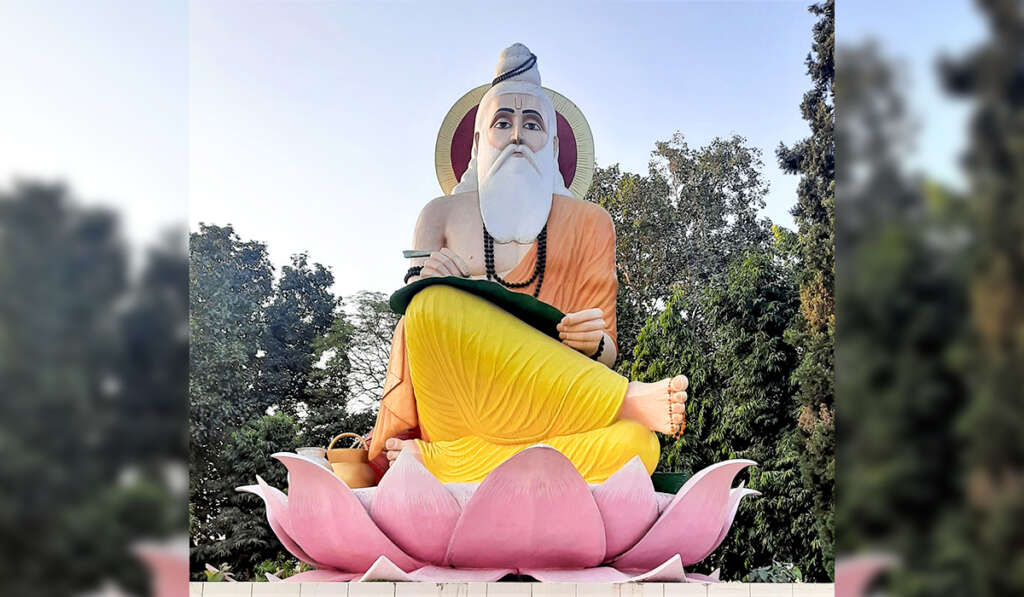
In Punjab, the legacy of Maharishi Valmiki Ji is an important part of social identity and cultural life, along with religious faith. On the occasion of Valmiki Jayanti, Shobha Yatras (processions), religious congregations, and community gatherings are organized in various cities and villages.
On this occasion, the teachings of the Ramayana and the ideals of truth, righteousness, justice, and humanity are remembered. The presence of temples, religious institutions, and social organizations in the name of Valmiki Ji in Punjab also reflects the impact of his legacy.
When considering the literary heritage of Maharishi Valmiki Ji and the teachings of the Sikh Gurus together, topics like human dignity, service, truth, and spiritual life can be discussed. But it is essential to give equal importance to the distinct religious identity and history of both traditions.
Valmiki Ji and Sikhism: Understanding the Historical Difference is Necessary
Calling Maharishi Valmiki Ji a Sikh Bhagat in the historical sense of Sikhism would not be accurate, because his tradition predates the emergence of Sikhism by many centuries. Guru Nanak Dev Ji was born in 1469 AD, whereas Valmiki Ji’s lifespan is tied to ancient religious tradition, and his exact historical date is not certain.
Despite this, his mention in Sri Guru Granth Sahib demonstrates that examples from ancient Indian religious and literary traditions have been used in the context of spiritual instruction within Sikh Gurbani.
Conclusion
Maharishi Valmiki Ji’s connection with Punjab is expressed through Ram Tirath of Amritsar, the religious and cultural heritage of the Valmiki community, and the folk traditions of Punjab. His connection with Sikh history can primarily be understood through his mention in Sri Guru Granth Sahib and the study of some prevalent genealogical traditions.
The importance of this subject lies in the fact that it provides an opportunity to understand Punjab’s multifaceted religious heritage, literary traditions, and social history. By maintaining a clear distinction between historical facts and religious beliefs, Maharishi Valmiki Ji’s legacy can be presented as a significant chapter in the cultural history of Punjab.
Greetings from the Prime Minister, Chief Minister, and Congress on Valmiki Jayanti
Remembering the legacy of Maharishi Valmiki Ji, the political leaders of the country and Punjab have also linked his teachings with humanity, truth, justice, and equality.
Extending his greetings on Valmiki Jayanti, Prime Minister Narendra Modi stated that Maharishi Valmiki Ji’s thoughts have been fundamental elements of Indian culture and heritage. He expressed confidence that Valmiki Ji’s messages for humanity will continue to serve as a guide for coming generations.
Punjab Chief Minister Bhagwant Mann extended his heartfelt congratulations to all the congregations residing in the country and abroad on the occasion of the Pargat Diwas (Jayanti) of Maharishi Bhagwan Valmiki Ji.
The Chief Minister said that the message of truth, righteousness (dharma), and virtue given by the creator of the holy epic ‘Ramayana’ and the Adi Kavi, Maharishi Bhagwan Valmiki Ji, remains a guiding light for society even today. He stated that the great teachings of Bhagwan Valmiki Ji will always continue to guide humanity.
Similarly, the Punjab Congress also conveyed greetings on Valmiki Jayanti, appealing for the adoption of the ideals of truth, justice, equality, and humanity.
These messages illustrate that the legacy of Maharishi Valmiki Ji holds significance in the religious, social, and public life of Punjab even today.

Leave a Comment